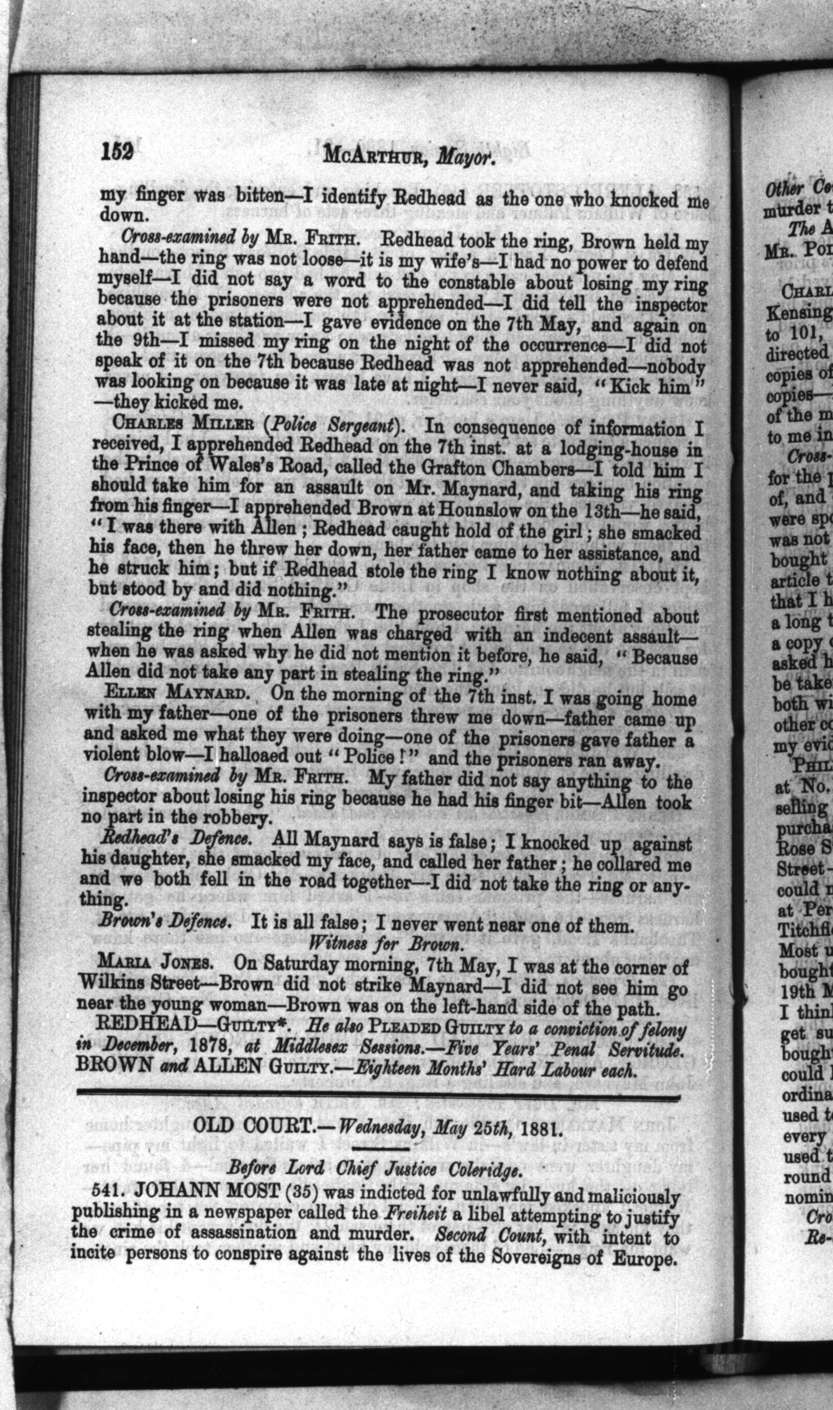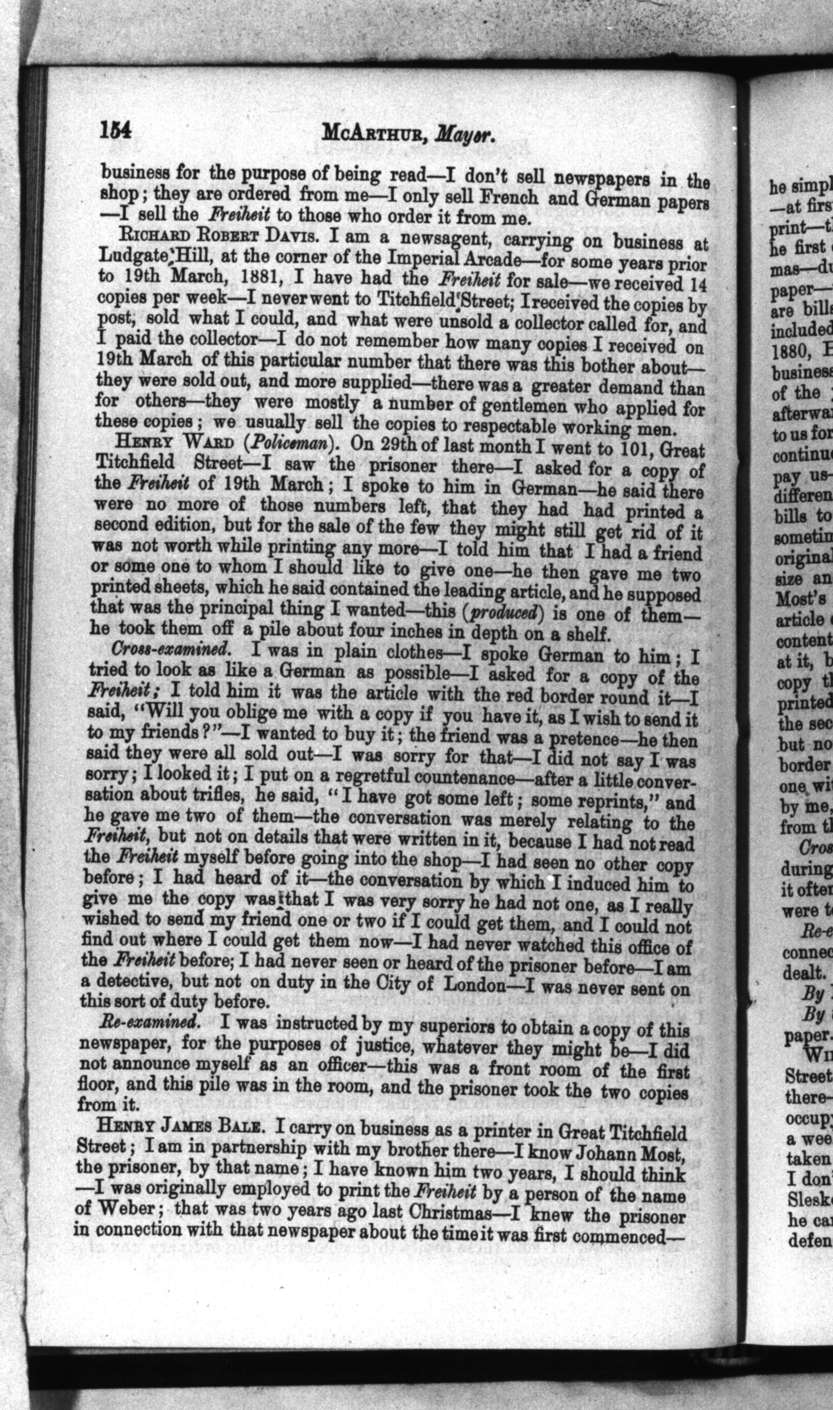
Constable Henry Ward walked into 101 Great Titchfield Street in plain clothes. Speaking German, he asked for the red-bordered issue of Freiheit. According to Ward, Johann Most replied that a second printing had been run off and no copies of that issue remained. Ward said he put on a disappointed look and claimed he was seeking the paper for a friend. After a few words, Most told him he still had reprints, took two sheets from a stack, and handed them over. They contained, Most told him, the leading article from the very issue Ward’s superiors had instructed him to obtain.
Two sheets were enough for the constable. At the Old Bailey, the prosecution would still have to explain who had printed them, who distributed the paper, and at what point an account of a murder committed abroad could become, in the eyes of a London jury, an incitement to commit others.
Receive Free: “The Secret Registry Dossier (La Reynie & Picaud) + 5 Audio MP3s”
The authentic police archives behind our historical novels, unlocked together with 5 complete audio stories read aloud.
The Issue of March 19
Charles Edward Marr, a language teacher, testified that he had bought four copies on March 25. They had been handed to him in the ground-floor parlor. He could not swear to the identity of the man who sold them to him. He explained that he had lived in Russia and Germany and that a conversation had made him curious to read the article people were talking about. Once he had read it, he sent a copy to the Member of Parliament Lord George Hamilton, asking whether the government intended to prosecute.
Among the newsagents, talk centered on orders. Philip Joseph Hall supplied French and German newspapers to customers who requested them. He knew Most, who had sometimes served him. He had taken several dozen copies of that issue, and then part of the second printing; he said he would have sold more had he been able to obtain more. On Ludgate Hill, the newsagent Richard Robert Davis received Freiheit by post. He, too, remembered that the copies had sold out and that he had had to request more. The proceedings do not say what those buyers thought of the paper.
The printer, Henry James Bale, did not read German. For the issue dated March 19, 1881, the type had arrived from Titchfield Street already set. He gave the court a figure of twelve hundred copies for the first printing and estimated the second run at five hundred. He recognized in Ward’s sheet the likely impression of the same type, while stating that he had not printed it himself. Bale had billed Most; Most sometimes came in to settle the accounts, and others brought money as well. Most’s name had appeared as editor on earlier issues, Bale explained, before disappearing.
The Warrant and the Type
On March 30, Inspector Charles Hagan found Most in the workshop behind the yard. He announced that he held a warrant and, at Most’s request, read it aloud in German. According to the inspector, Most had seen in the morning paper that a prosecution was in the offing. He asked whether it concerned his article on the Tsar. Hagan confirmed that it did.
In the workshop lay both standing type and loose type. When Hagan had the material removed, Most told him, according to the deposition, that the type belonged to an association of which he was a member. Under cross-examination, the inspector admitted that the arrest warrant did not authorize him to seize papers and printing type; he said he had acted on the authority of his superior. At the station, asked his occupation, Most described himself as the editor of Freiheit. The jury had before it facts of different orders: a sheet handed to a visitor, a printer’s ledgers, and an answer given to police did not all prove the same thing. Together, they illuminated Most’s role in the publication.
What an Article Could Do
On May 25, before Lord Chief Justice Coleridge, Professor Gustav Reinich confirmed that he had compared the German article with the English translation read in court. The text celebrated the death of Tsar Alexander II and held up the assassination as an example worthy of imitation. The judges were not there to retry the St. Petersburg assassination. Their task was to decide the legal reach of a text printed and circulated in London.
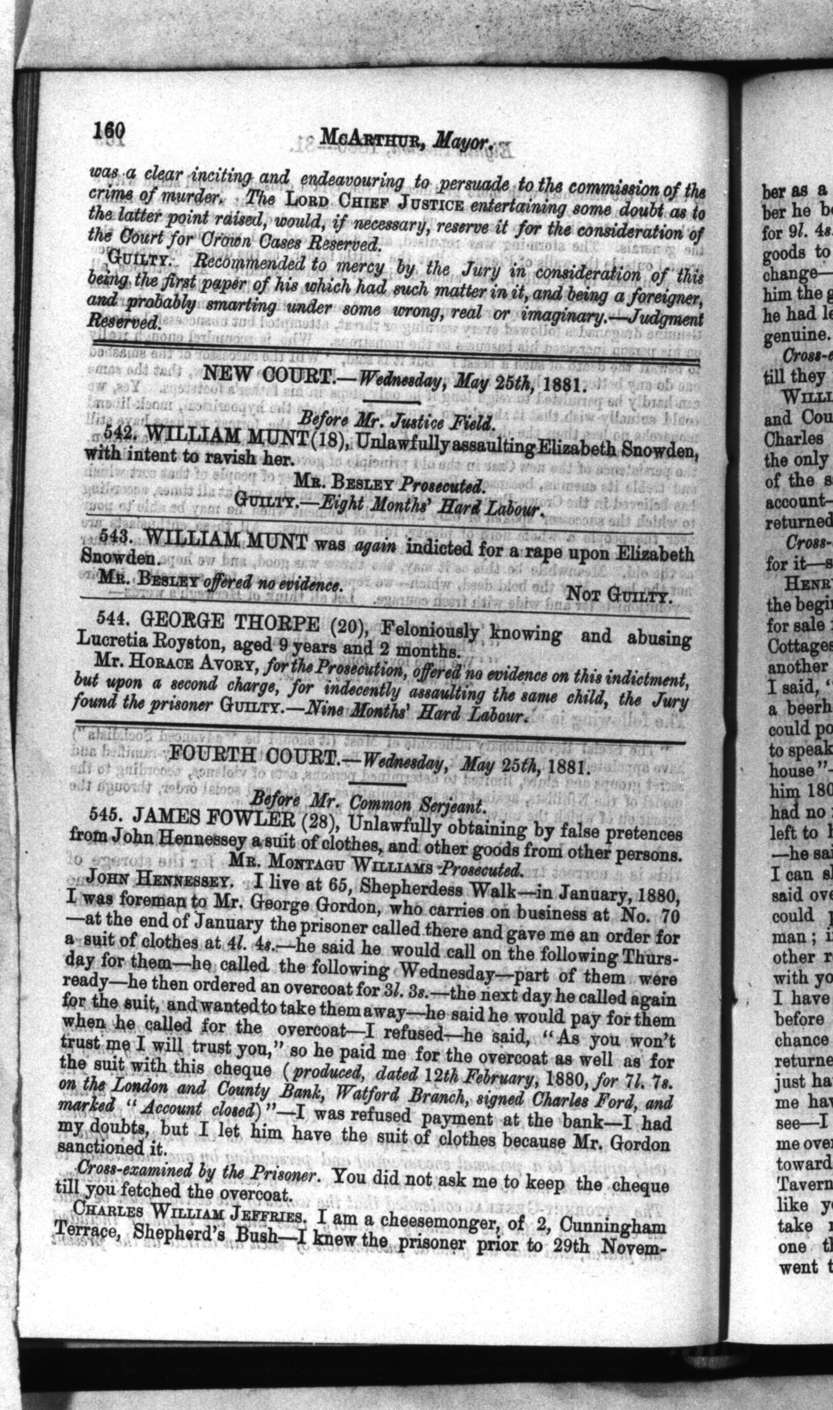
The defense contested two points. It argued that the first counts, grounded in common law, ran up against the territorial limits of those rules. Coleridge rejected that objection. Most’s counsel then contended that the statute invoked for the remaining counts targeted, in his view, the direct incitement of one specific person by another. The Attorney General replied that a publication addressed to many readers could likewise constitute incitement. Coleridge contemplated reserving that second point for the appellate bench hearing Crown cases. The jury found Most guilty and recommended him to mercy. The May proceedings close with judgment respited.
The question went before the Court for Crown Cases Reserved. In a 2006 British appellate decision revisiting the precedent, the Court of Appeal notes that the bench had approved the manner in which Coleridge put the issue of the publication’s intent and effect to the jury. As for the sentence, a dispatch datelined London, June 29, 1881, published on July 7 in the Amrita Bazar Patrika, reports sixteen months’ hard labor.
Ward had called asking for a sold-out newspaper and walked away with two loose sheets. In court, those sheets had brought newsagents, a printer, a constable, and a translator to the stand to explain how a text had circulated. The jury had to decide what its circulation could do beyond carrying the news.