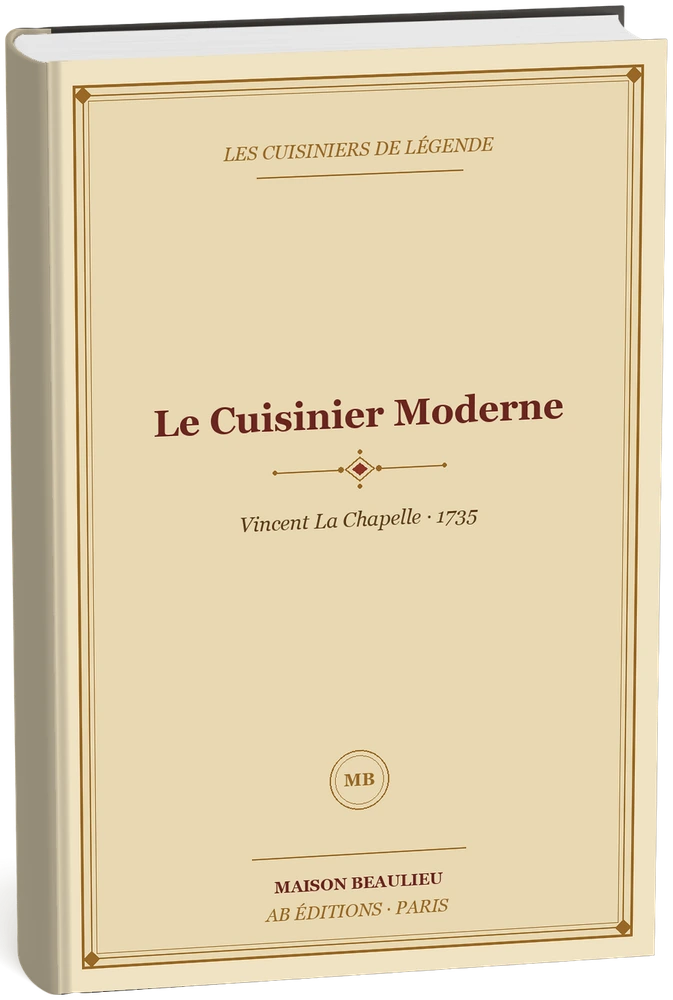
Le Cuisinier Moderne (1735–1742)
Vincent La Chapelle
Les Grands Classiques (Originaux) · Le traité cosmopolite de Londres, La Haye et Versailles
Découvrir l’ouvrage → MAISON BEAULIEUAB ÉDITIONS · CUISINE & LETTRES
La Maison Beaulieu présente l’œuvre de Vincent La Chapelle selon son architecture éditoriale complète : d’abord I. Les Grands Classiques (les textes originaux d’époque), puis II. L’Héritage des Maîtres (l’édition française modernisée — 500 recettes mises au goût du jour), et enfin III. Le Rayonnement International (l’édition modernisée traduite en 10 langues). Tarif officiel Cuisine AB Éditions : Ebook · 9,90 € · Broché (PB) · 24,90 € (+ port réel) · Relié Collector (HC) · 34,90 € (+ port réel).
Le texte historique intégral de Vincent La Chapelle, établi et restauré dans sa typographie et sa langue d’origine, avec ses couvertures de collection originales.
Pour cuisiner réellement Vincent La Chapelle aujourd’hui chez soi sans brigade : chaque recette est codifiée et structurée selon le protocole de la Maison (Ingrédients calibrés en grammes pour 4 personnes · Préparation pas à pas avec temps et températures exacts · Conseil du Chef), dans le respect absolu du goût et de l’esprit du Maître.
Conformément à la doctrine éditoriale de la Maison, ce n’est jamais le français archaïque d’époque qui est traduit, mais notre édition française modernisée (L’Héritage des Maîtres — 500 recettes au goût du jour), afin d’offrir aux lecteurs du monde entier des recettes claires, précises et immédiatement réalisables en 10 langues (EN, DE, ES, IT, PT, NL, SV, PL, JA, ZH) :
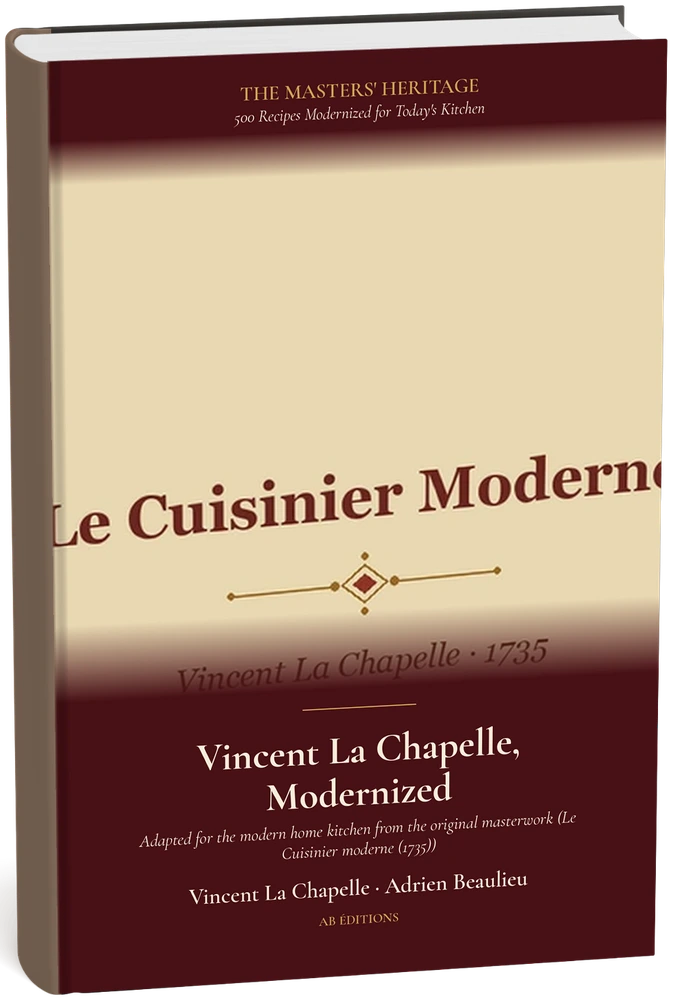
Vincent La Chapelle · Adrien Beaulieu
Édition internationale en Anglais · L'Héritage des Maîtres
Découvrir l’ouvrage →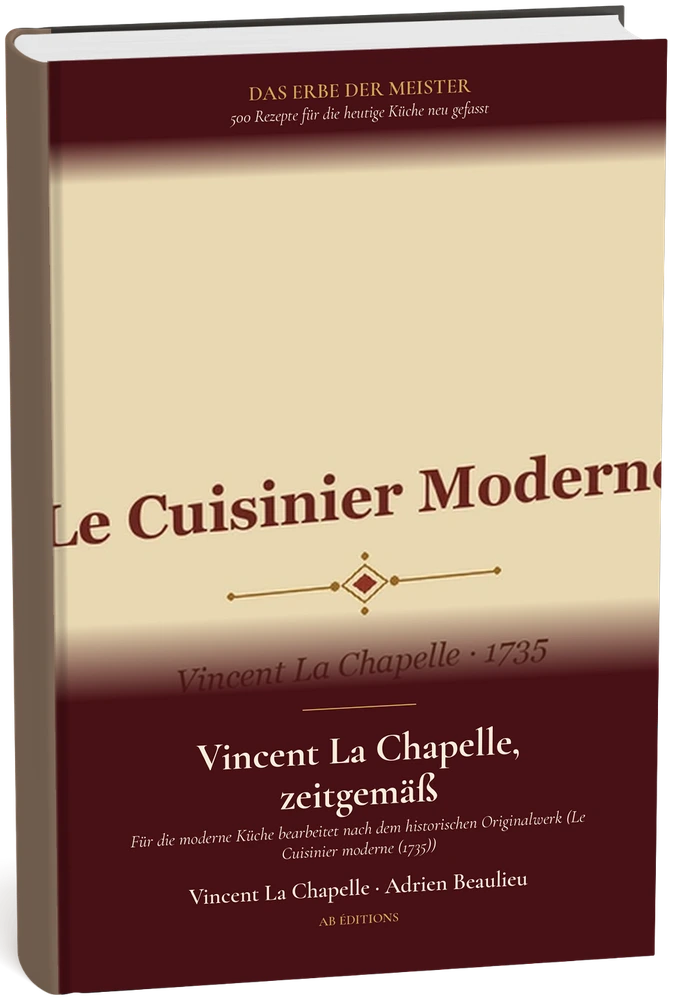
Vincent La Chapelle · Adrien Beaulieu
Édition internationale en Allemand · L'Héritage des Maîtres
Découvrir l’ouvrage →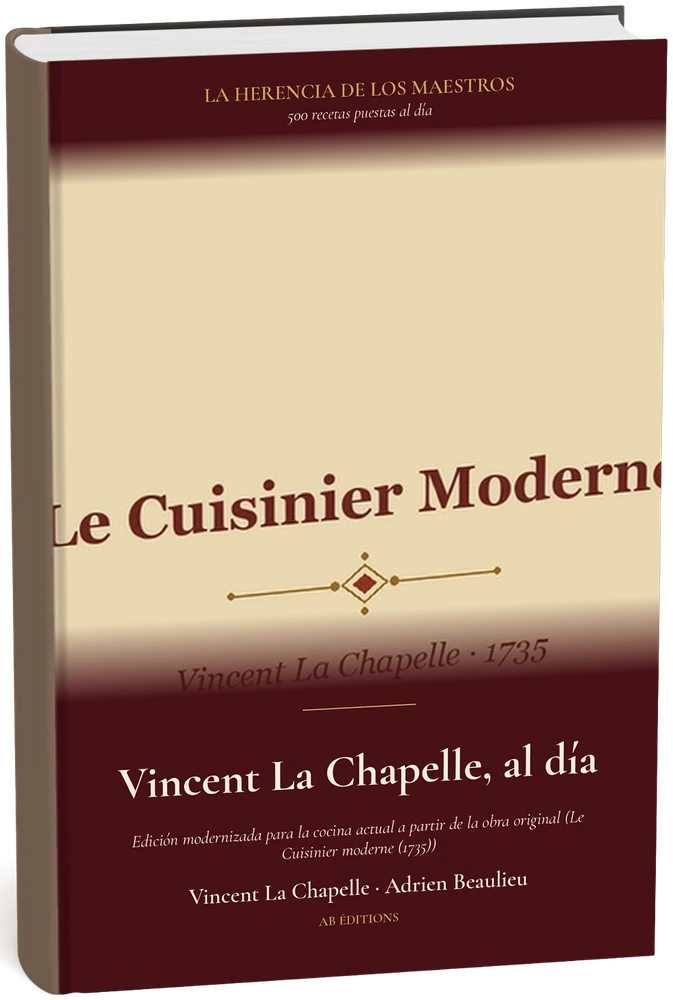
Vincent La Chapelle · Adrien Beaulieu
Édition internationale en Espagnol · L'Héritage des Maîtres
Découvrir l’ouvrage →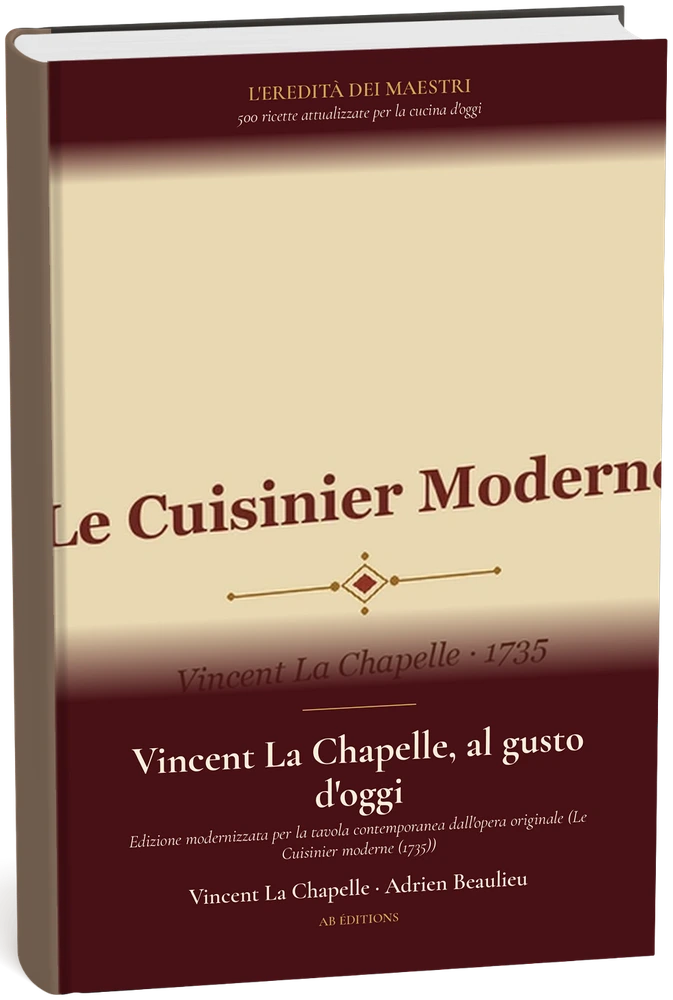
Vincent La Chapelle · Adrien Beaulieu
Édition internationale en Italien · L'Héritage des Maîtres
Découvrir l’ouvrage →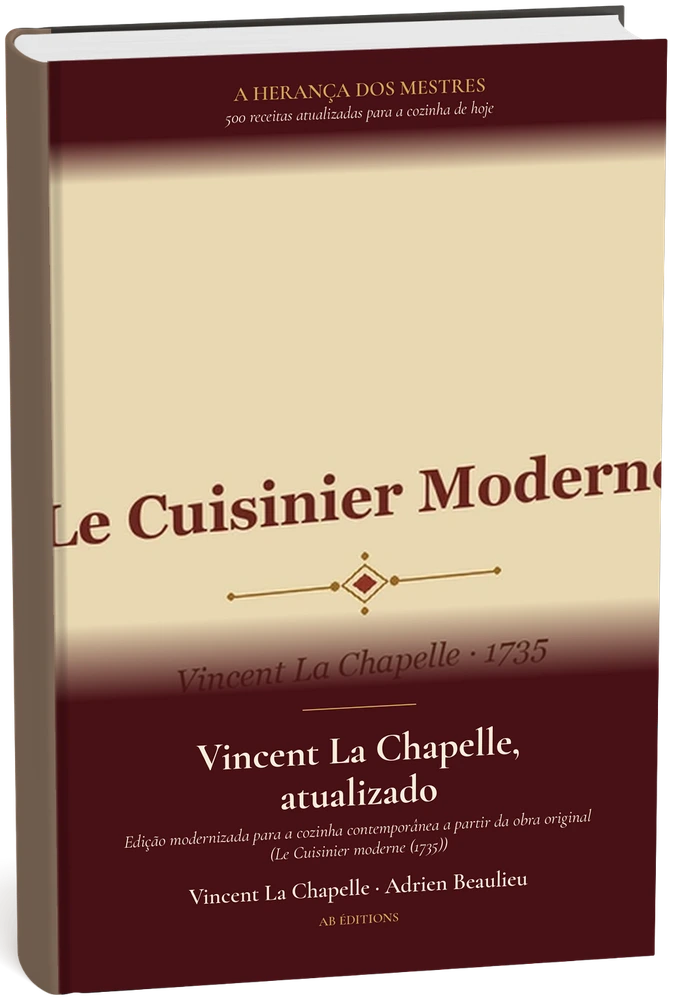
Vincent La Chapelle · Adrien Beaulieu
Édition internationale en Portugais · L'Héritage des Maîtres
Découvrir l’ouvrage →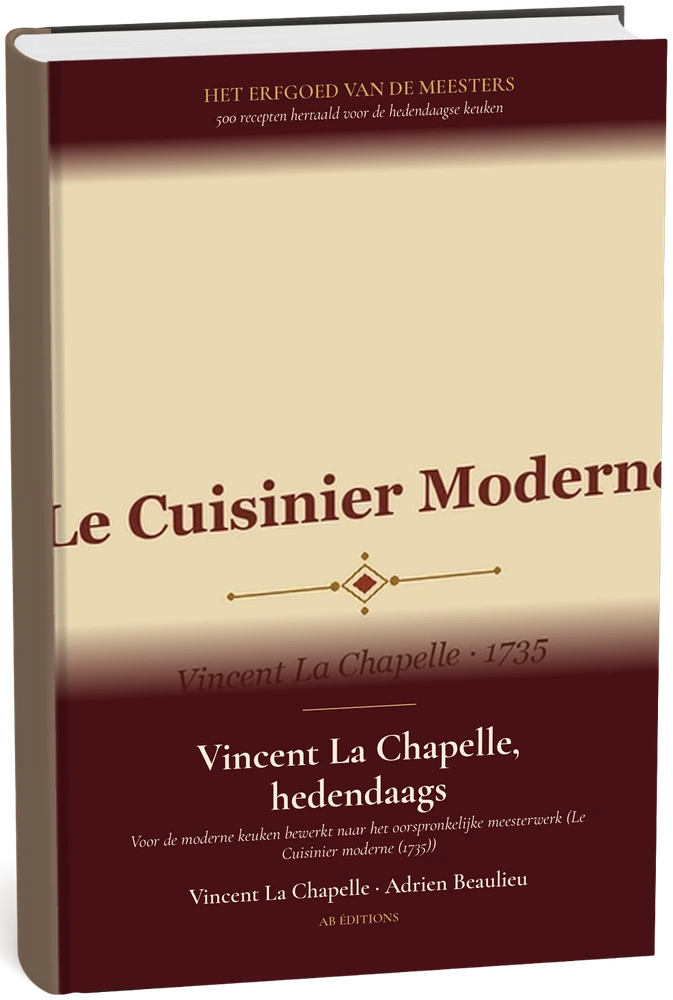
Vincent La Chapelle · Adrien Beaulieu
Édition internationale en Néerlandais · L'Héritage des Maîtres
Découvrir l’ouvrage →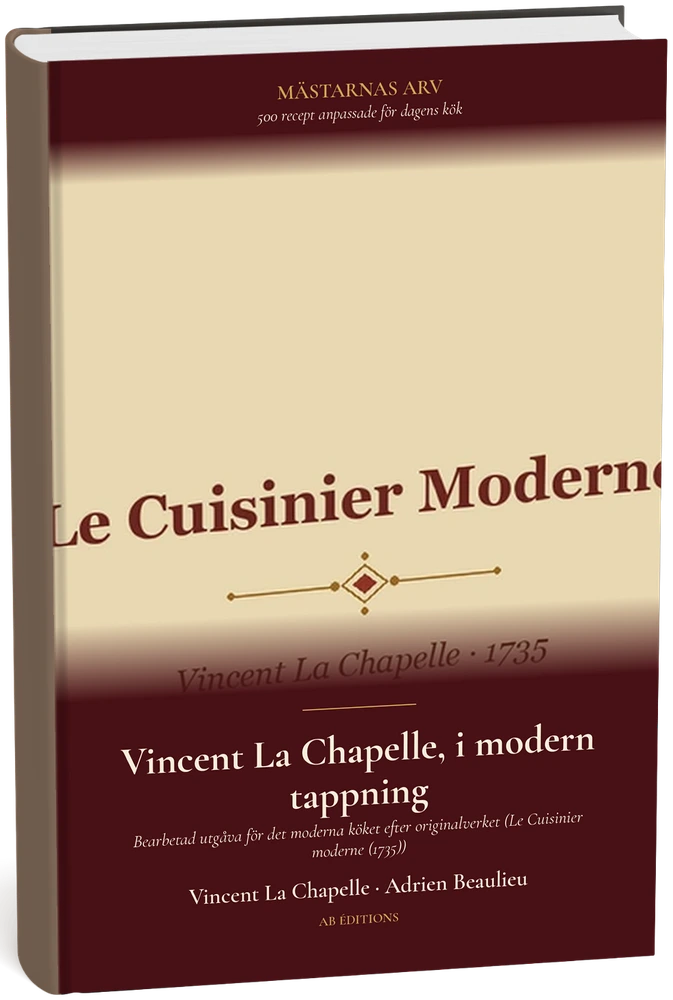
Vincent La Chapelle · Adrien Beaulieu
Édition internationale en Suédois · L'Héritage des Maîtres
Découvrir l’ouvrage →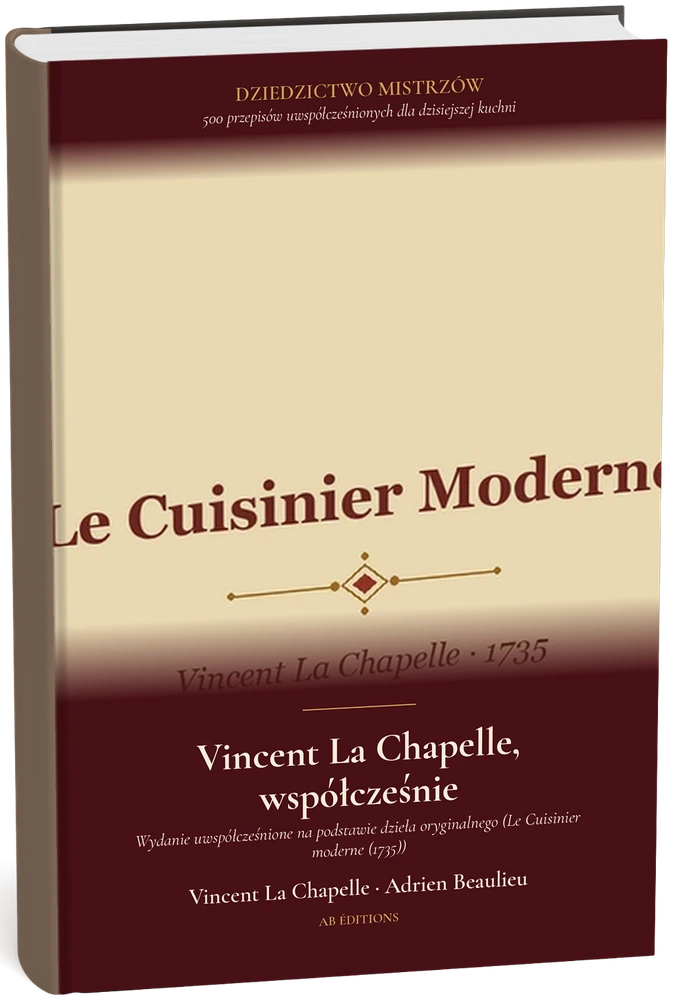
Vincent La Chapelle · Adrien Beaulieu
Édition internationale en Polonais · L'Héritage des Maîtres
Découvrir l’ouvrage →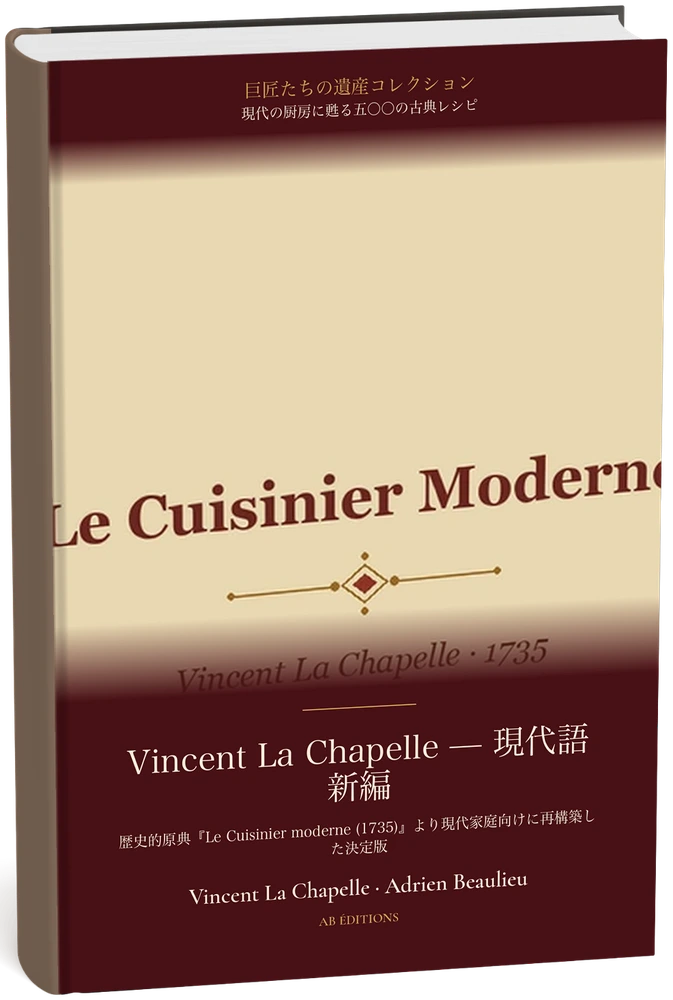
Vincent La Chapelle · Adrien Beaulieu
Édition internationale en Japonais · L'Héritage des Maîtres
Découvrir l’ouvrage →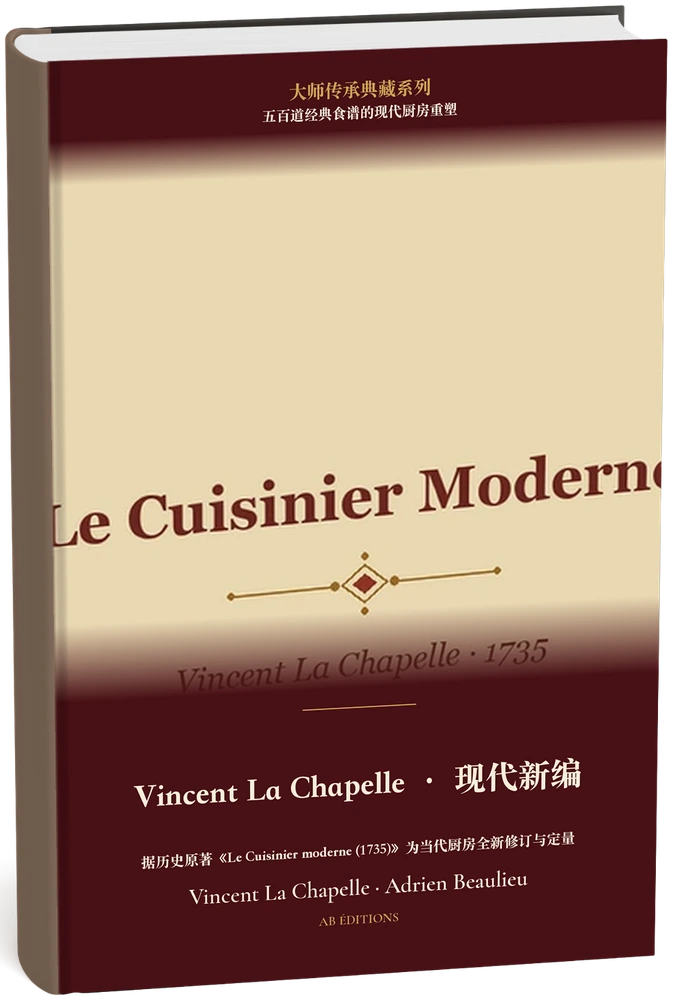
Vincent La Chapelle · Adrien Beaulieu
Édition internationale en Chinois · L'Héritage des Maîtres
Découvrir l’ouvrage →Vincent La Chapelle was a French master whose career marked a decisive turning point in the annals of eighteenth-century European cookery. Born in 1690 (or possibly 1703), he traversed the continent, ministering to sovereign courts and ushering in a modern vision of gastronomy destined to exert a profound sway over the aristocratic dining habits of his age. Serving first as chief cook to Philip Dormer Stanhope, fourth Earl of Chesterfield in England, and subsequently to William IV, Prince of Orange in the Low Countries, La Chapelle proved instrumental in disseminating the culinary genius of France far beyond the frontiers of the realm.
The eighteenth century witnessed a European nobility yearning for fare less burdened by heaviness and elevated by greater finesse. This quest for allied simplicity and sophistication found its consummate expression in the work of Vincent La Chapelle, who delivered his seminal treatise, The Modern Cook, first in English in 1733, and subsequently in French as Le Cuisinier Moderne in 1735. This work introduced groundbreaking tenets, transforming not merely the British table but the broader panorama of European gastronomy by rendering French cookery both intelligible and alluring to foreign palates.
1. Simplification and Accessibility of Receipts
Foremost among La Chapelle’s contributions was his simplification of culinary compositions. Boldly censuring the treatises of his forebears—most notably François Massialot, whose methods he deemed needlessly convoluted—La Chapelle championed a more direct and lucid approach to the French culinary canon. He advocated formulas which, though undeniably exquisite, lay well within the reach of cooks of modest experience. This deliberate clarity fostered the wider circulation of French techniques, particularly across England, where La Chapelle applied himself to accommodating his receipts to a broader public.
2. The Employment of Local and Seasonal Produce
At a time when exotic spices and costly imported provisions still commanded pride of place, La Chapelle advanced the virtue of drawing upon indigenous, seasonal produce. By incorporating native aromatic herbs and vegetables gathered at their zenith, he fostered a cuisine far more attentive to immediate resources, presaging an ethos of sustainability. This philosophy anticipated our contemporary culinary movements and continues to inform modern culinary thought.
3. The Primacy of Culinary Aesthetics
La Chapelle was likewise among the vanguard who elevated the visual presentation of a service to an artistic necessity. Discerning that the sight of a dish was as essential as its savor, he held that every preparation ought to present a feast for the eye. Within The Modern Cook, he furnished meticulous copperplate engravings detailing the arrangement of tables and services—an innovation for the period that governed the theatrical orchestration of banquets and the art of sophisticated dressing. This aesthetic devotion transformed the meal into a veritable spectacle, irrevocably altering the pageantry of aristocratic dining.
4. Diverse and Harmonious Repertoires
Vincent La Chapelle displayed a formidable breadth of invention in Le Cuisinier Moderne, balancing opulent creations with lighter, more delicate offerings. He devoted particular care to diverse dietary needs, setting down receipts for lean days (plats maigres, devoid of meat) to enable the composition of harmonious and varied bills of fare. This care for balance and moderation bore witness to his determination to satisfy the discerning needs of his patrons, securing his standing among the princes of Europe.
5. The French Imprint upon British Cookery
La Chapelle stood as a true pioneer in the naturalization of French cookery upon British soil. In his capacity as master cook to Lord Chesterfield, he deftly adjusted French practices to flatter English palates, blending gallic discipline with local ingredients and native traditions. This synthesis forged a durable bridge between the two culinary cultures, allowing French refinement to take firm root across the Channel. His genius for uniting Gallic elegance with British temperament left an indelible mark on generations of cooks on both sides of the sea.
The recipes of Vincent La Chapelle bear witness to his singular talent for tempering complexity with supreme refinement. Among his most celebrated compositions, the following remain preeminent:
1. Pâté de Perdreaux (Partridge Pie)
This savory creation exemplifies La Chapelle’s gift for elevating modest game to an aristocratic delicacy. By employing fresh garden herbs and gentle, prolonged heat, he obtained a paste of velvety fineness and delicate perfume, tailored to the most exacting tables.
• Principal Ingredients: Young partridges, sweet herbs, fresh butter, fine spices.
• Method: The birds are steeped in an herbed marinade, then gently braised before being worked into a seasoned terrine paste. Commonly served with crisp crusts of bread, this preparation honors the purity of the flesh while achieving an exquisite harmony of seasoning.
2. Ragoût de Homard à la Royale (Royal Lobster Stew)
The royal lobster ragoût stands as a paragon of luxury wedded to simplicity of execution. Here, the shellfish is gently simmered in dry white wine, subtle aromatics, and fine herbs, yielding a dish of magnificent richness that nonetheless avoids ostentatious complication.
• Principal Ingredients: Fresh lobster, white wine, shallots, garden herbs.
• Method: The lobster meat is cooked in a delicate reduction of white wine and shallots, then folded with freshly picked herbs. This receipt casts into relief the pristine freshness of the sea, serving as an emblem of French technique in service to the British table.
3. Aspic de Poires (Pear Aspic)
This confection attests to the exquisite care La Chapelle lavished upon entremets. Orchard pears are suspended in an amber translucence, dressed with architectural precision to produce a striking effect upon a ceremonial board.
• Principal Ingredients: Ripe pears, clarified gelatinous stock, sugar, sweet aromatic spices.
• Method: The pears are gently poached in a perfumed syrup, then set within an immaculate jelly steeped in spiced white wine, creating an ornamental dessert that delights both the eye and the palate.
The legacy of Vincent La Chapelle is woven inextricably into the fabric of European culinary history. Through his reforming zeal and passion for clarity, he elevated the cuisine of France into the preeminent model for European courts, while directly remaking the culinary landscape of Britain.
By introducing French precision and conforming it to the preferences of the English nobility, Vincent La Chapelle steered British cookery toward a more structured and sophisticated tradition. His formulations and treatises on table service informed an entire generation of practitioners in Great Britain, laying the foundations of an Anglo-French culinary dialogue that persists to this day.
The works of Vincent La Chapelle did much to formalize gastronomy as an artistic and disciplined craft. By codifying formulas, imposing rigorous instructions, and enlisting engravings to instruct the practitioner, he facilitated the transmission of professional knowledge. In doing so, he elevated the humble cook to the noble rank of culinary artist.
The weight La Chapelle assigned to the ornamentation of dishes altered the estimation of the chef, who emerged not merely as a master of the hearth, but as an artisan of sensory design. This sensibility helped define haute cuisine through the centuries, ensuring that presentation remains paramount. His devotion to the visual grace of the table remains one of his most durable bequests to modern practitioners.
Vincent La Chapelle was far more than an itinerant officer of royal kitchens; he was an authentic ambassador of French civilization across Europe. By uniting forward-looking invention with ancient foundations, he built an enduring bridge between two great cultures, rendering fine dining an art accessible to the European elite.
Even today, his spirit lingers wherever aesthetic grace and balanced simplicity converge upon the plate. By reimagining the culinary craft—not merely as the sustenance of the body, but as an alluring visual theatre—La Chapelle laid the cornerstones of an artistic haute cuisine that continues to evolve and enchant.
Through The Modern Cook, Vincent La Chapelle etched an indelible mark upon the history of gastronomy. He transformed the craft of the kitchen into a truly cosmopolitan art, reconciling the culinary inclinations of England and France, and proving that refined cooking can be at once elevated, accessible, and exquisitely composed. His legacy remains a beacon for gourmets and practitioners throughout the world, enshrining that spirit of audacity and communion which constitutes the very essence of modern gastronomy.
Recettes, histoires, parutions et éditions de collection — quelques lettres par an, jamais davantage.


