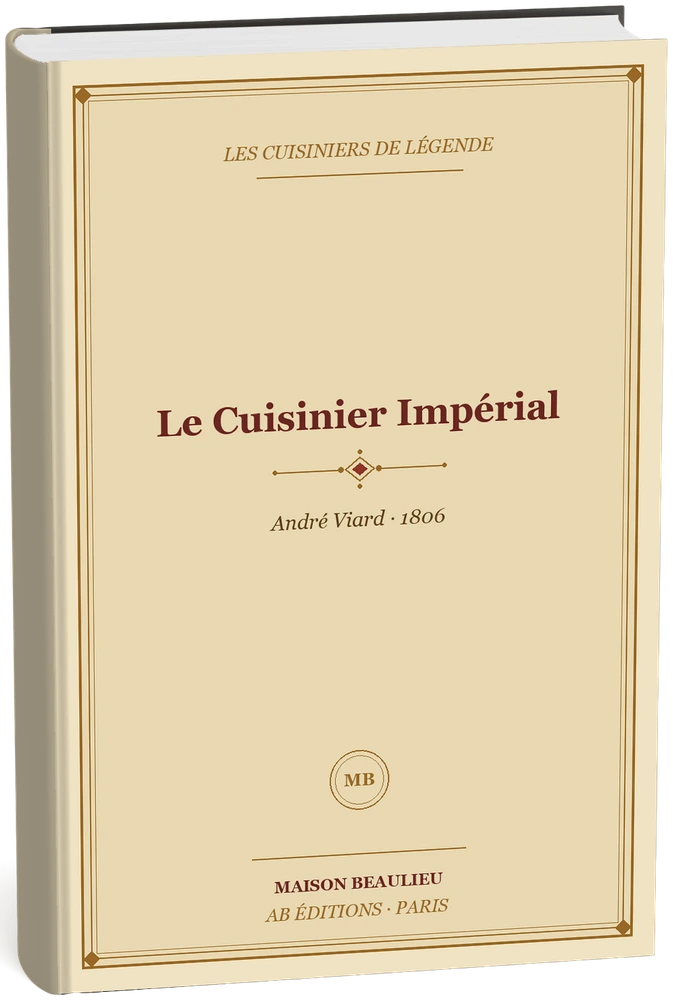
Le Cuisinier Impérial, puis Royal (1806)
Alexandre Viard
Les Grands Classiques (Originaux) · Le manuel de référence des cuisines du Premier Empire (32 éditions)
Découvrir l’ouvrage → MAISON BEAULIEUAB ÉDITIONS · CUISINE & LETTRES
La Maison Beaulieu présente l’œuvre de Alexandre Viard selon son architecture éditoriale complète : d’abord I. Les Grands Classiques (les textes originaux d’époque), puis II. L’Héritage des Maîtres (l’édition française modernisée — 500 recettes mises au goût du jour), et enfin III. Le Rayonnement International (l’édition modernisée traduite en 10 langues). Tarif officiel Cuisine AB Éditions : Ebook · 9,90 € · Broché (PB) · 24,90 € (+ port réel) · Relié Collector (HC) · 34,90 € (+ port réel).
Le texte historique intégral de Alexandre Viard, établi et restauré dans sa typographie et sa langue d’origine, avec ses couvertures de collection originales.
Pour cuisiner réellement Alexandre Viard aujourd’hui chez soi sans brigade : chaque recette est codifiée et structurée selon le protocole de la Maison (Ingrédients calibrés en grammes pour 4 personnes · Préparation pas à pas avec temps et températures exacts · Conseil du Chef), dans le respect absolu du goût et de l’esprit du Maître.
Conformément à la doctrine éditoriale de la Maison, ce n’est jamais le français archaïque d’époque qui est traduit, mais notre édition française modernisée (L’Héritage des Maîtres — 500 recettes au goût du jour), afin d’offrir aux lecteurs du monde entier des recettes claires, précises et immédiatement réalisables en 10 langues (EN, DE, ES, IT, PT, NL, SV, PL, JA, ZH) :
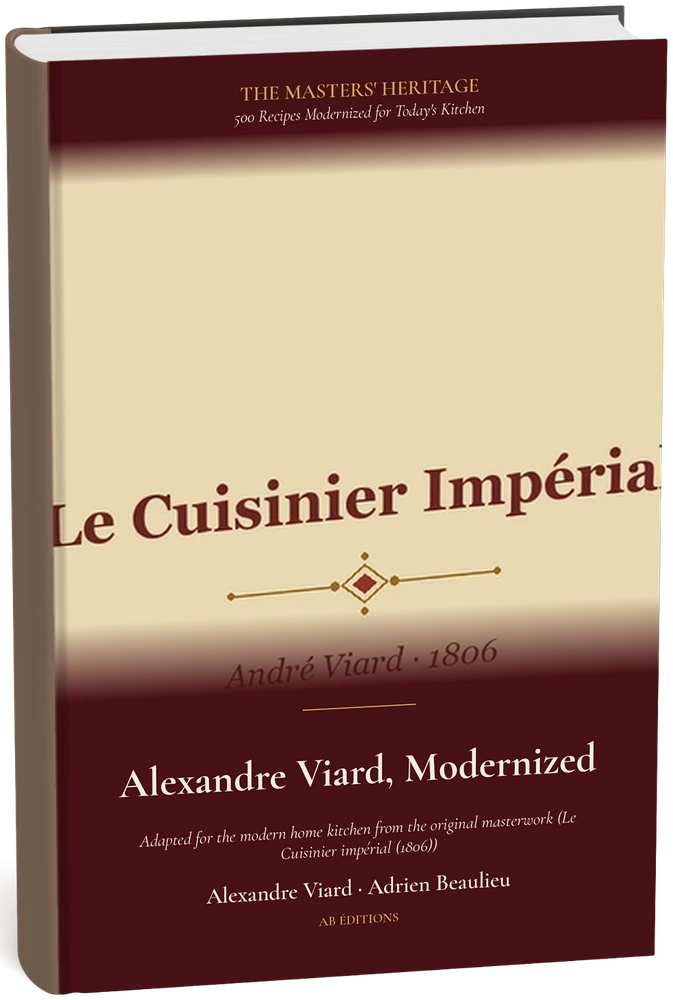
Alexandre Viard · Adrien Beaulieu
Édition internationale en Anglais · L'Héritage des Maîtres
Découvrir l’ouvrage →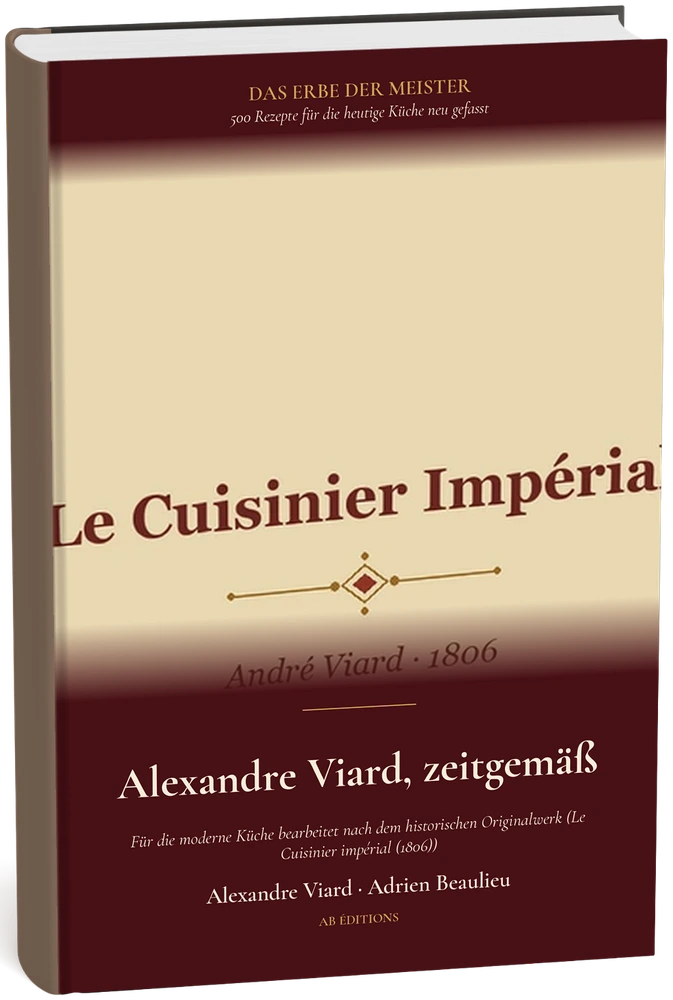
Alexandre Viard · Adrien Beaulieu
Édition internationale en Allemand · L'Héritage des Maîtres
Découvrir l’ouvrage →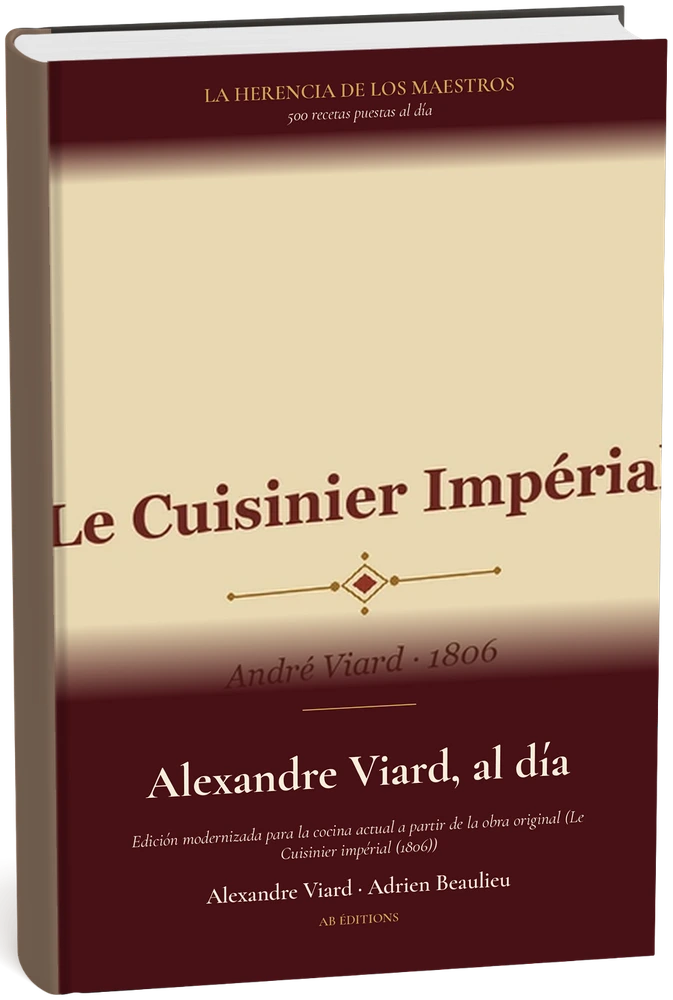
Alexandre Viard · Adrien Beaulieu
Édition internationale en Espagnol · L'Héritage des Maîtres
Découvrir l’ouvrage →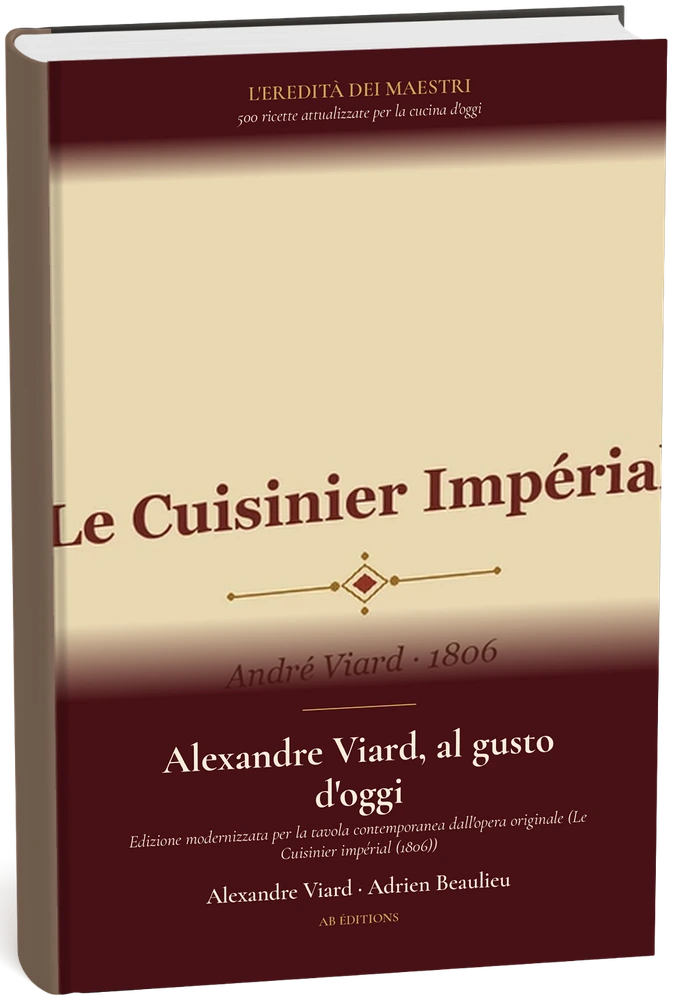
Alexandre Viard · Adrien Beaulieu
Édition internationale en Italien · L'Héritage des Maîtres
Découvrir l’ouvrage →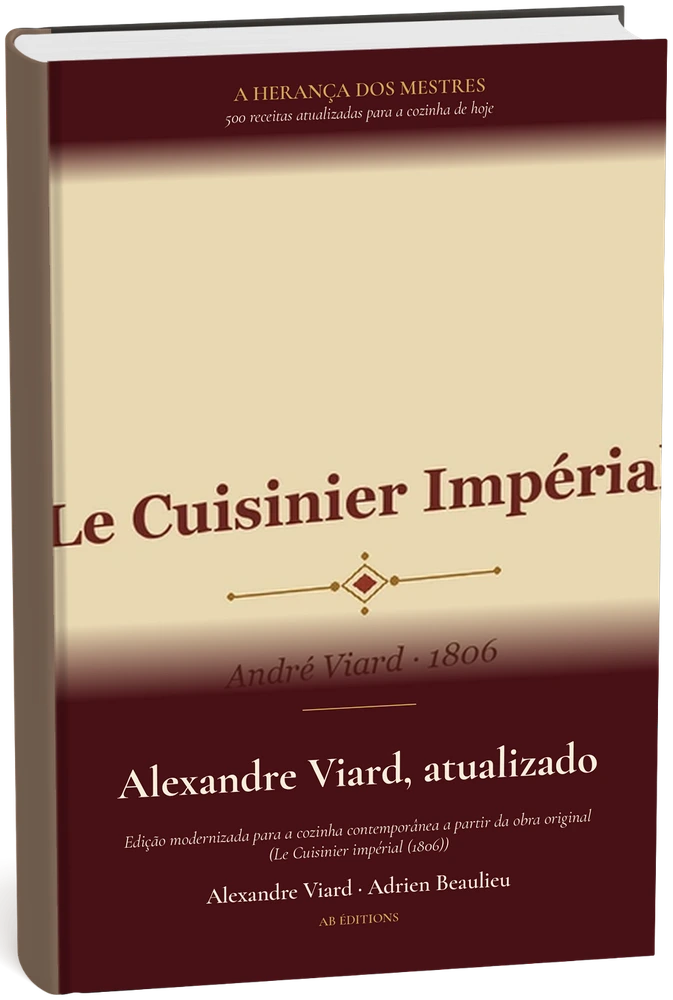
Alexandre Viard · Adrien Beaulieu
Édition internationale en Portugais · L'Héritage des Maîtres
Découvrir l’ouvrage →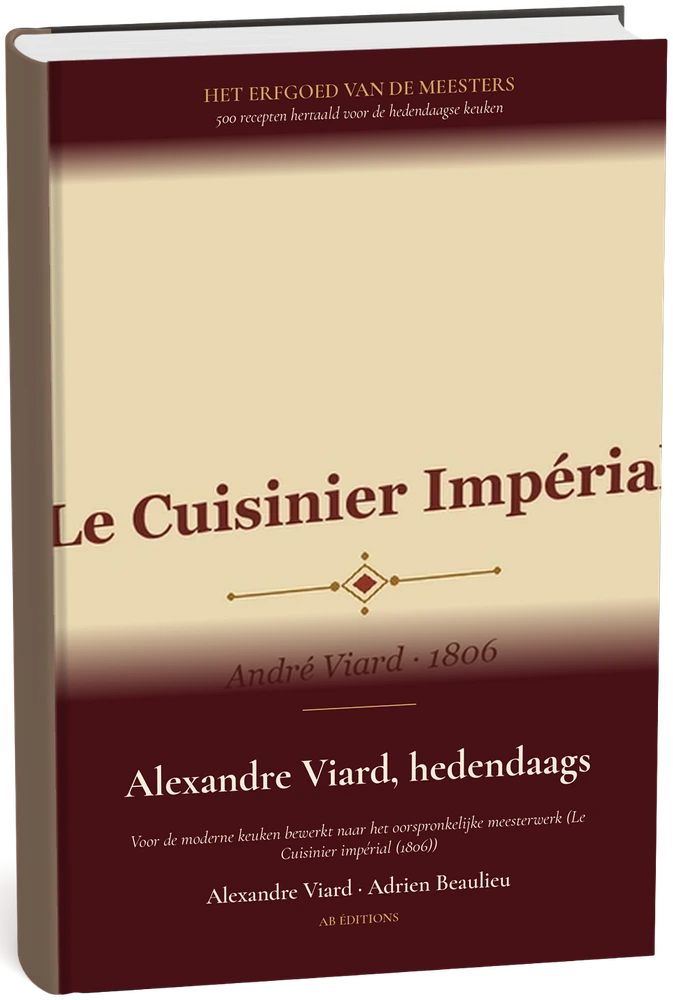
Alexandre Viard · Adrien Beaulieu
Édition internationale en Néerlandais · L'Héritage des Maîtres
Découvrir l’ouvrage →
Alexandre Viard · Adrien Beaulieu
Édition internationale en Suédois · L'Héritage des Maîtres
Découvrir l’ouvrage →
Alexandre Viard · Adrien Beaulieu
Édition internationale en Polonais · L'Héritage des Maîtres
Découvrir l’ouvrage →
Alexandre Viard · Adrien Beaulieu
Édition internationale en Japonais · L'Héritage des Maîtres
Découvrir l’ouvrage →
Alexandre Viard · Adrien Beaulieu
Édition internationale en Chinois · L'Héritage des Maîtres
Découvrir l’ouvrage →André Viard penned Le Cuisinier Impérial, a seminal treatise regarded as the vital bridge between aristocratic court cooking and cuisine bourgeoise. Through it, he democratized access to the most sophisticated secrets of the culinary arts.
André Viard stands among the preeminent masters of French gastronomy, celebrated above all for his monumental work, Le Cuisinier Impérial, first published in 1806. Regarded as the true pioneer of cuisine bourgeoise, Viard dismantled the barriers guarding sophisticated culinary craft, ushering refined technique into middle-class domestic kitchens at the very dawn of an era when gastronomic culture was beginning to flourish beyond aristocratic circles.
Le Cuisinier Impérial was an ambitious culinary compendium whose extraordinary renown spurred more than thirty editions over the course of the nineteenth century. The volume became an indispensable authority for professional practitioners and discerning domestic cooks alike, offering lucid counsel and accessible formulations to the ascending middle ranks of society. Spanning an expansive register of dishes and techniques, the self-styled « Homme de Bouche » generously imparted the wisdom he had garnered while presiding over the kitchens of illustrious lords, most notably the Count de Ségur. His monumental undertaking not only codified the culinary repertoire of the age, but also proved instrumental in charting the future course of French cuisine.
Viard was instrumental in establishing cuisine bourgeoise—a culinary philosophy distinguished by slowly simmered preparations and intricate yet attainable recipes tailored to the middle classes. In stark contrast to the courtly table, steeped in ostentatious wealth and boundless luxury, bourgeois cookery exalted pristine, locally sourced produce and elegant execution devoid of excessive theatricality. This culinary ethos, championed and popularized by Viard, redefined the social tenets of dining: the art of the stove and the table was elevated into an outward emblem of cultural refinement and bourgeois distinction.
The enduring contributions of André Viard to the French culinary canon remain vast, echoing vividly across the tables of our modern era:
• Viard formalized culinary methodology, codifying disparate practices into an orderly, standardized canon. This rigorous systematization threw open the gates to professional craftsmanship, placing it within reach of a broader populace and fortifying the foundations of a unified French culinary identity.
• Le Cuisinier Impérial served as a guiding archetype for countless culinary treatises that followed, not only across the European continent but far beyond the seas. In Mexico, for instance, culinary chroniclers adapted his bourgeois precepts to native ingredients and palates, testifying to the universal resonance of his doctrine.
• Through Viard’s vision, dining became an eloquent badge of social stature, giving palpable form to middle-class culture and savoir-vivre. The bourgeois meal, refined by his techniques, transcended mere sustenance to become a ritual celebration where aesthetics, craftsmanship, and quiet distinction converged.
• By opening the doors of grand gastronomy to the many and extolling the innate purity of seasonal ingredients, Viard prefigured modern culinary sensibilities. He laid the path toward the philosophy that would later blossom into Nouvelle Cuisine, wherein technical mastery and unencumbered elegance take precedence over heavy grandeur.
In bridging the chasm between the lavish banquets of the Ancien Régime and the domestic bourgeois hearth, André Viard permanently democratized French gastronomy. His Cuisinier Impérial dismantled the mystique of high cuisine, setting forth enduring standards that celebrated both rigor and hospitality. His legacy endures in contemporary gastronomy, where the graceful balance between technical finesse and unadorned simplicity remains the true hallmark of culinary excellence.
Recettes, histoires, parutions et éditions de collection — quelques lettres par an, jamais davantage.