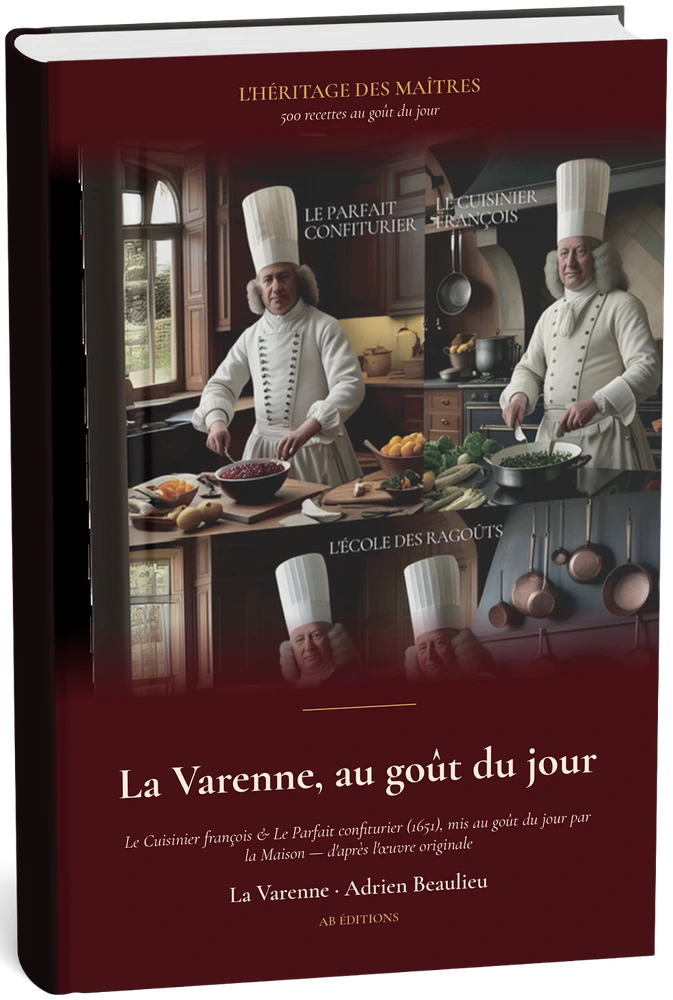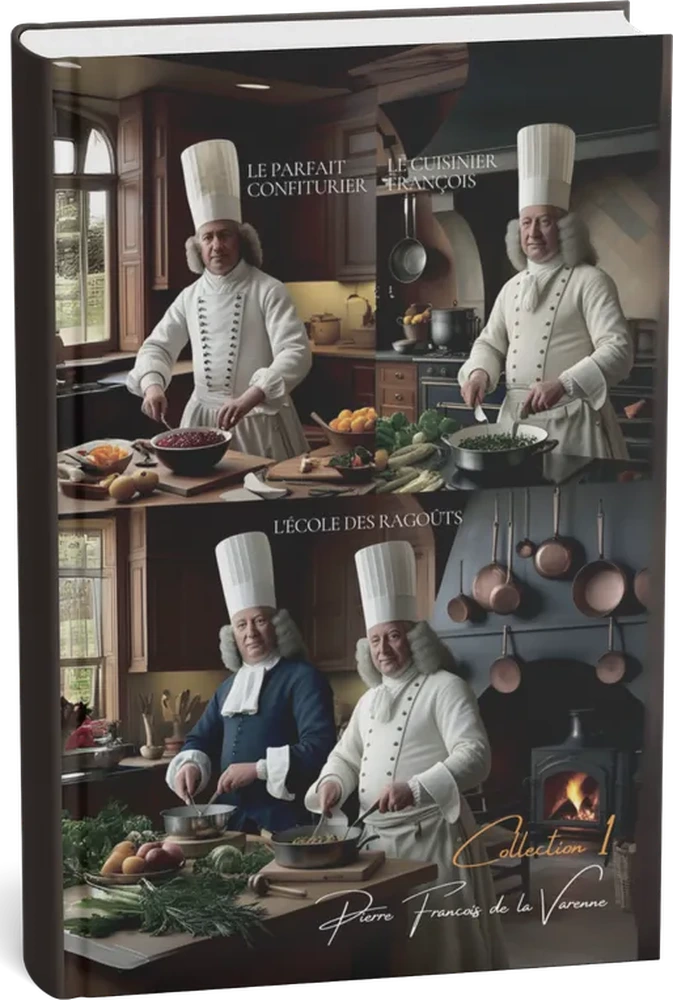
Le Cuisinier François (1651)
François Pierre de La Varenne
Les Grands Classiques (Originaux) · Le monument fondateur du Grand Siècle
Découvrir l’ouvrage → MAISON BEAULIEUAB ÉDITIONS · CUISINE & LETTRES
La Maison Beaulieu présente l’œuvre de François Pierre de La Varenne selon son architecture éditoriale complète : d’abord I. Les Grands Classiques (les textes originaux d’époque), puis II. L’Héritage des Maîtres (l’édition française modernisée — 500 recettes mises au goût du jour), et enfin III. Le Rayonnement International (l’édition modernisée traduite en 10 langues). Tarif officiel Cuisine AB Éditions : Ebook · 9,90 € · Broché (PB) · 24,90 € (+ port réel) · Relié Collector (HC) · 34,90 € (+ port réel).
Le texte historique intégral de François Pierre de La Varenne, établi et restauré dans sa typographie et sa langue d’origine, avec ses couvertures de collection originales.
François Pierre de La Varenne
Les Grands Classiques (Originaux) · Le monument fondateur du Grand Siècle
Découvrir l’ouvrage →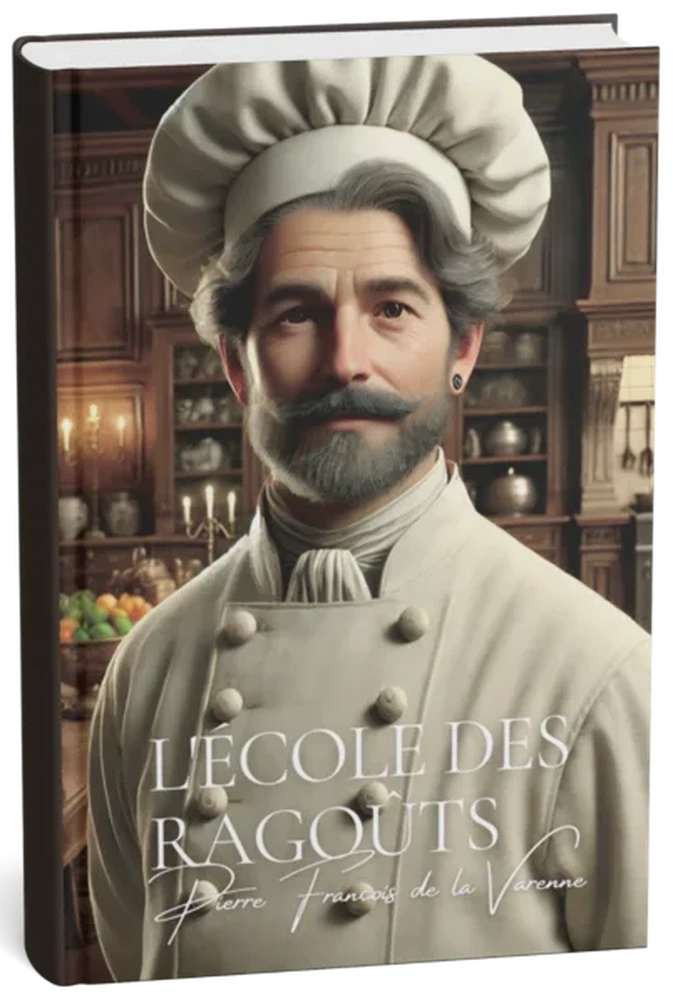
François Pierre de La Varenne
Les Grands Classiques (Originaux) · Traité historique des sauces et ragoûts
Découvrir l’ouvrage →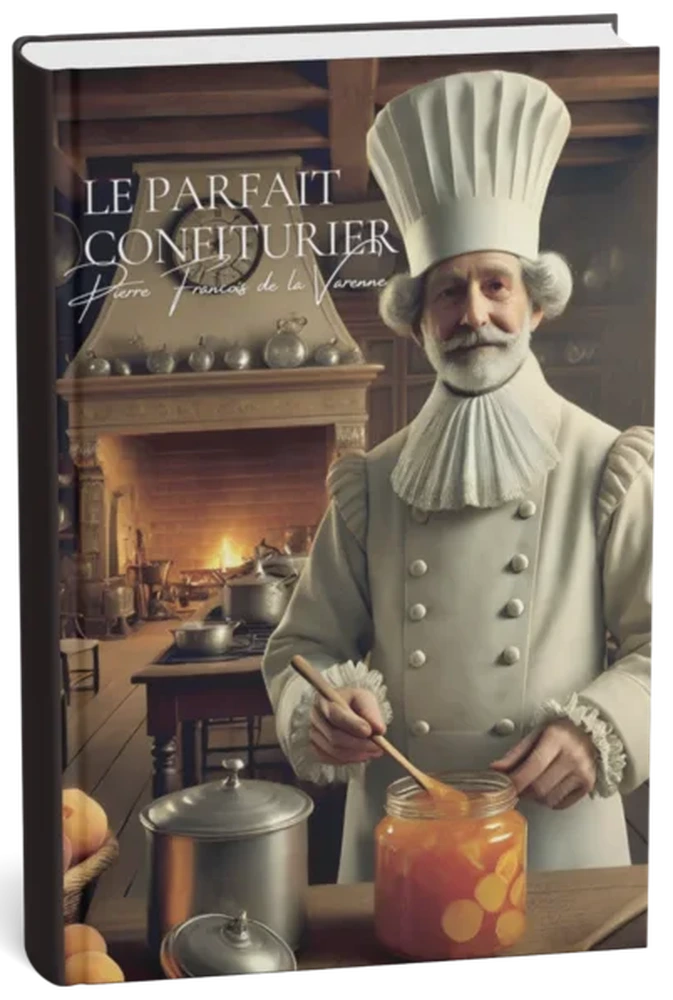
François Pierre de La Varenne
Les Grands Classiques (Originaux) · Confitures, dragées, sirops et fruits confits
Découvrir l’ouvrage →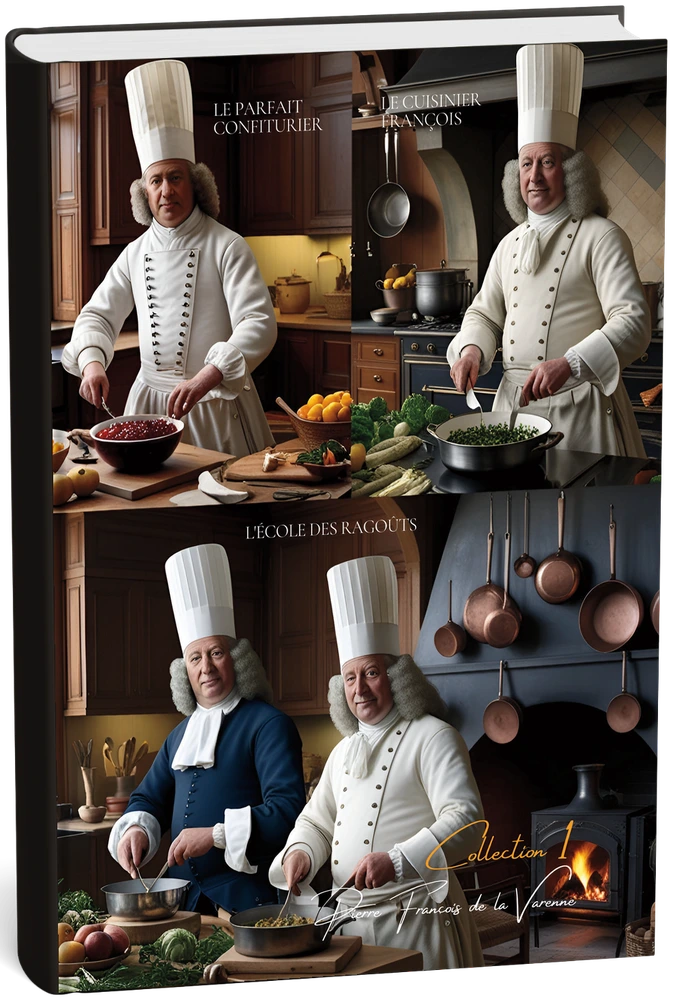
François Pierre de La Varenne
Les Grands Classiques (Originaux) · Le Cuisinier François + L'École des Ragoûts + Le Parfait Confiturier
Découvrir l’ouvrage →Pour cuisiner réellement François Pierre de La Varenne aujourd’hui chez soi sans brigade : chaque recette est codifiée et structurée selon le protocole de la Maison (Ingrédients calibrés en grammes pour 4 personnes · Préparation pas à pas avec temps et températures exacts · Conseil du Chef), dans le respect absolu du goût et de l’esprit du Maître.
Conformément à la doctrine éditoriale de la Maison, ce n’est jamais le français archaïque d’époque qui est traduit, mais notre édition française modernisée (L’Héritage des Maîtres — 500 recettes au goût du jour), afin d’offrir aux lecteurs du monde entier des recettes claires, précises et immédiatement réalisables en 10 langues (EN, DE, ES, IT, PT, NL, SV, PL, JA, ZH) :
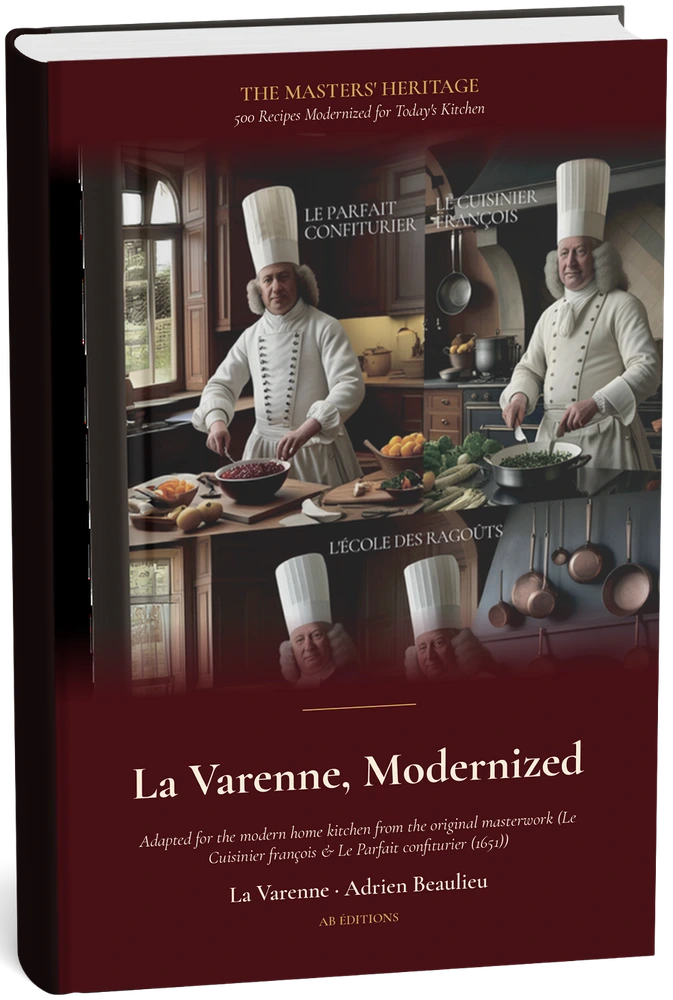
François Pierre de La Varenne · Adrien Beaulieu
Édition internationale en Anglais · L'Héritage des Maîtres
Découvrir l’ouvrage →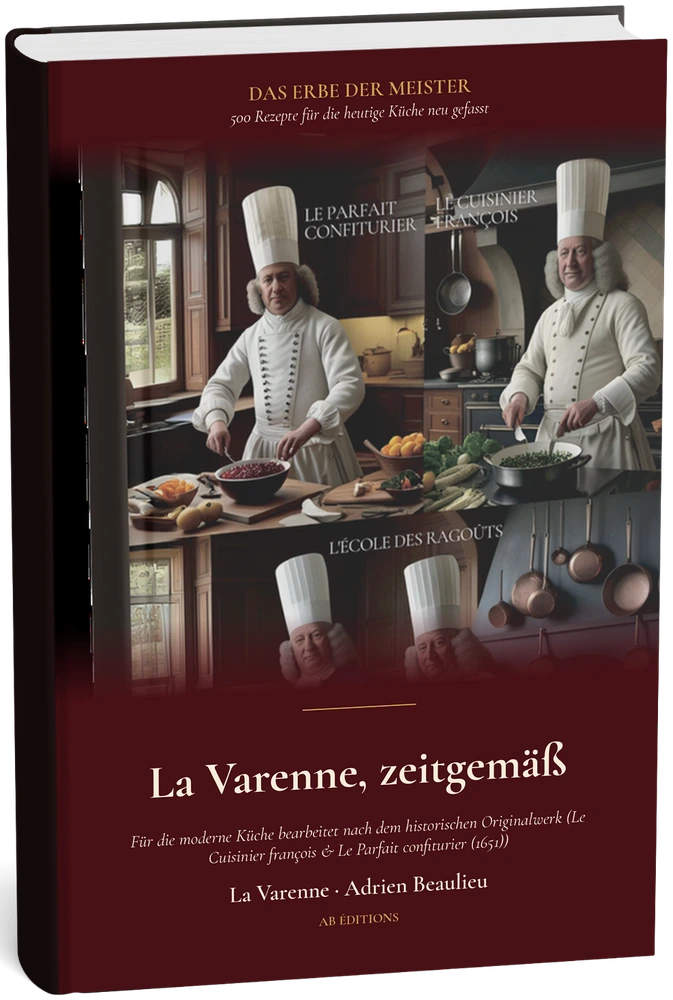
François Pierre de La Varenne · Adrien Beaulieu
Édition internationale en Allemand · L'Héritage des Maîtres
Découvrir l’ouvrage →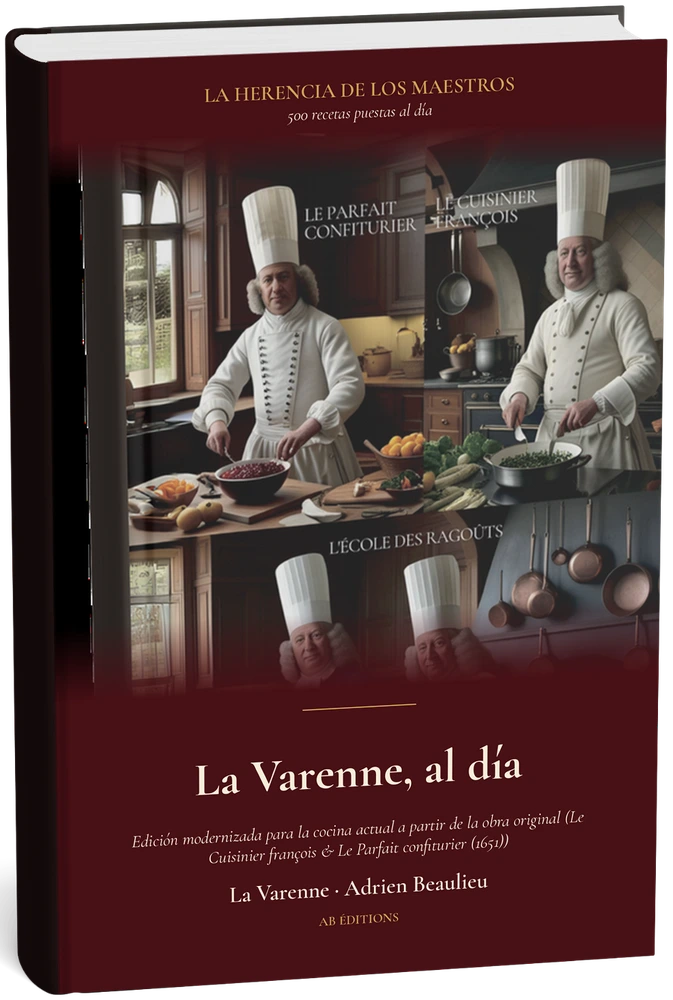
François Pierre de La Varenne · Adrien Beaulieu
Édition internationale en Espagnol · L'Héritage des Maîtres
Découvrir l’ouvrage →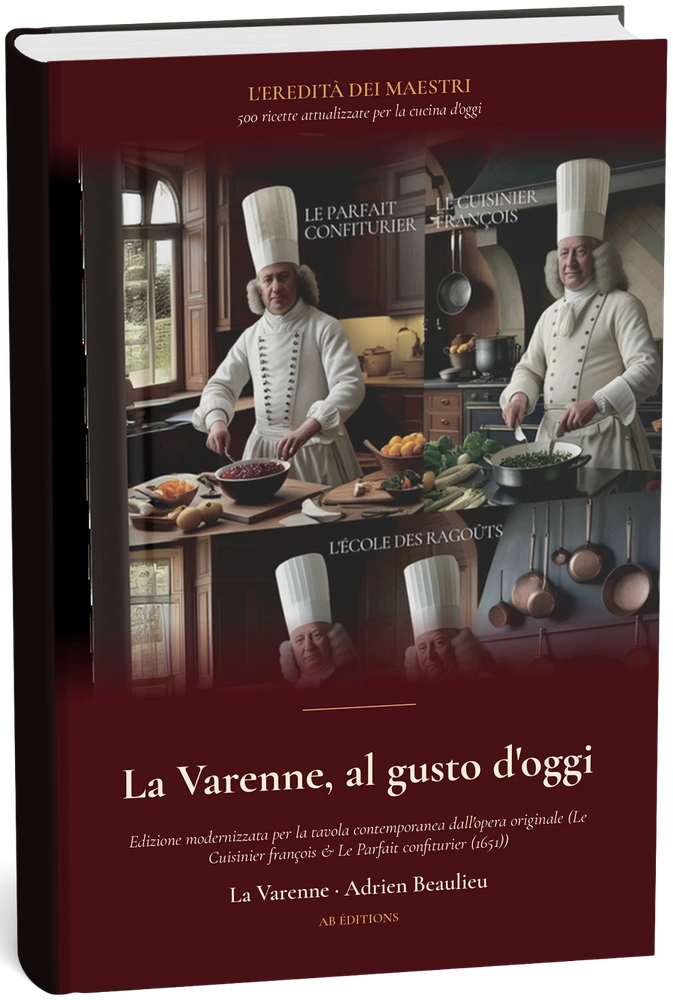
François Pierre de La Varenne · Adrien Beaulieu
Édition internationale en Italien · L'Héritage des Maîtres
Découvrir l’ouvrage →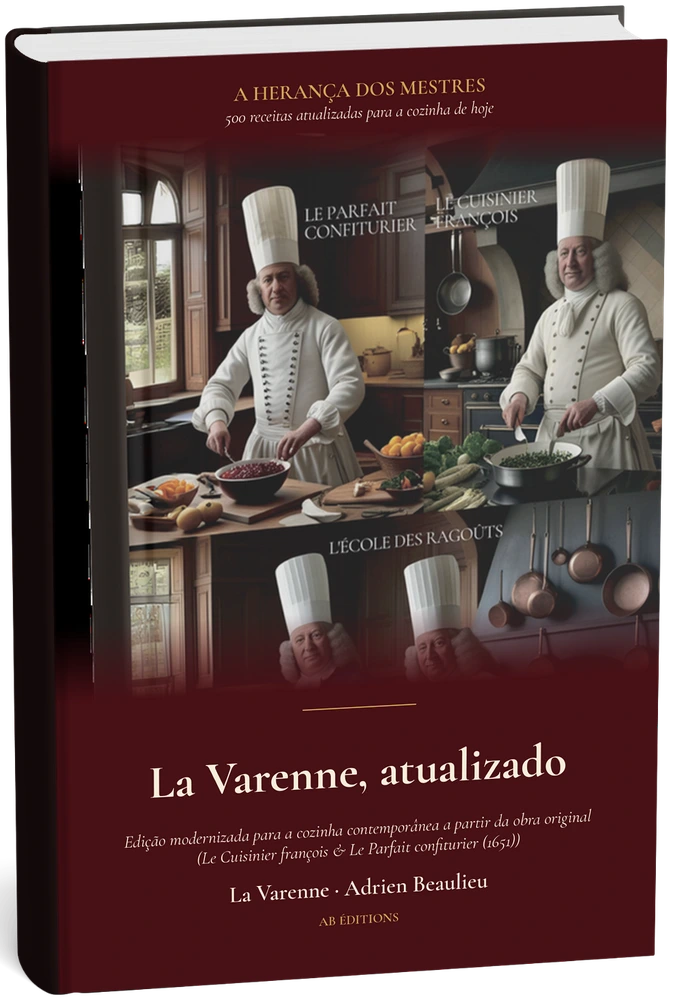
François Pierre de La Varenne · Adrien Beaulieu
Édition internationale en Portugais · L'Héritage des Maîtres
Découvrir l’ouvrage →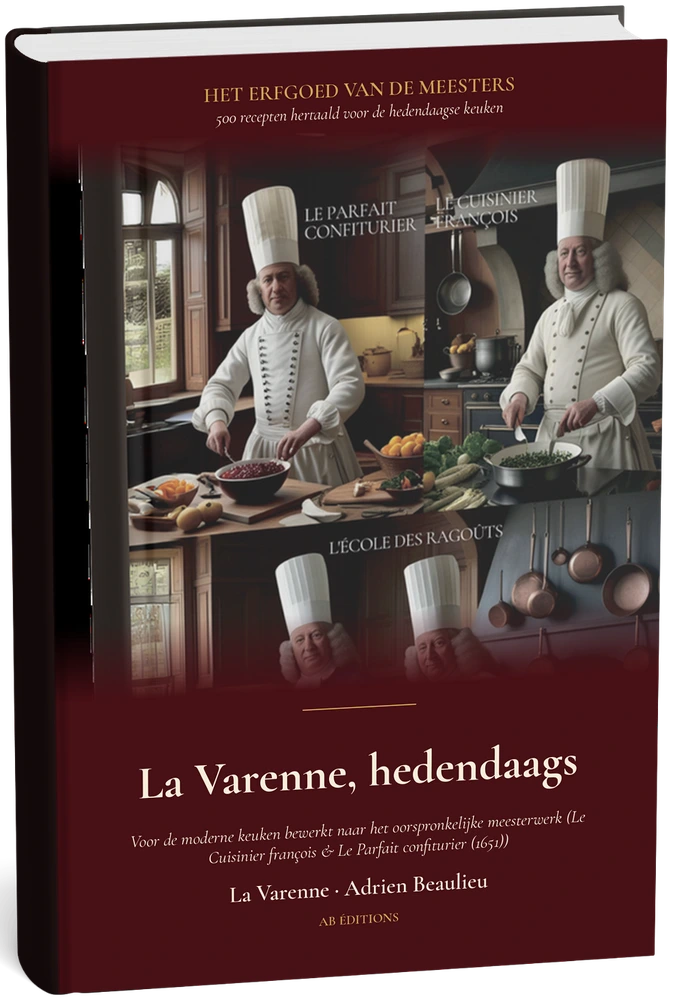
François Pierre de La Varenne · Adrien Beaulieu
Édition internationale en Néerlandais · L'Héritage des Maîtres
Découvrir l’ouvrage →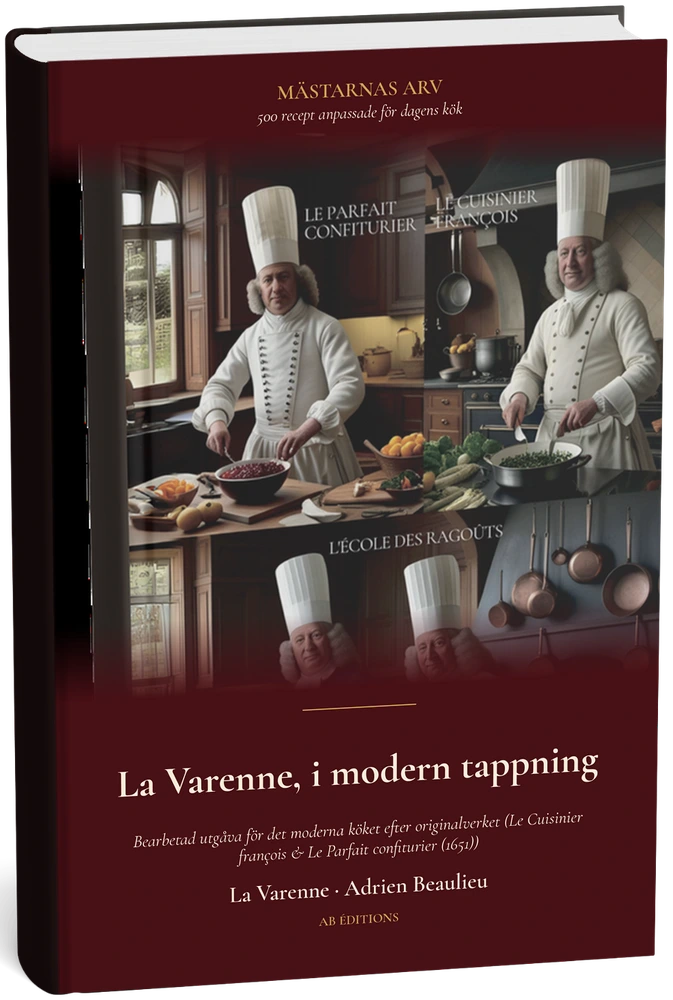
François Pierre de La Varenne · Adrien Beaulieu
Édition internationale en Suédois · L'Héritage des Maîtres
Découvrir l’ouvrage →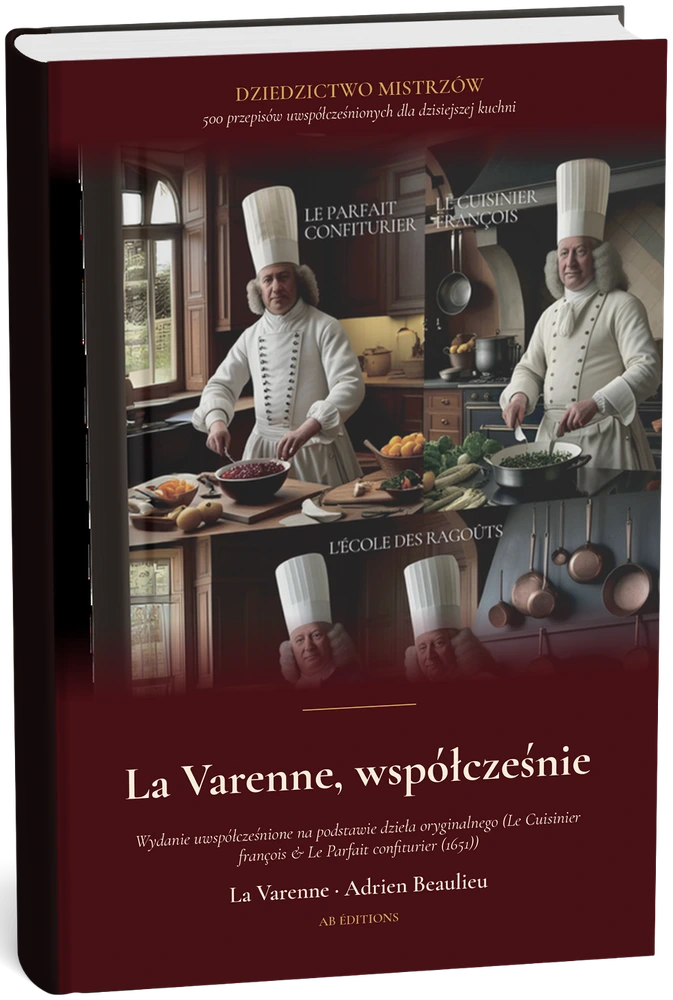
François Pierre de La Varenne · Adrien Beaulieu
Édition internationale en Polonais · L'Héritage des Maîtres
Découvrir l’ouvrage →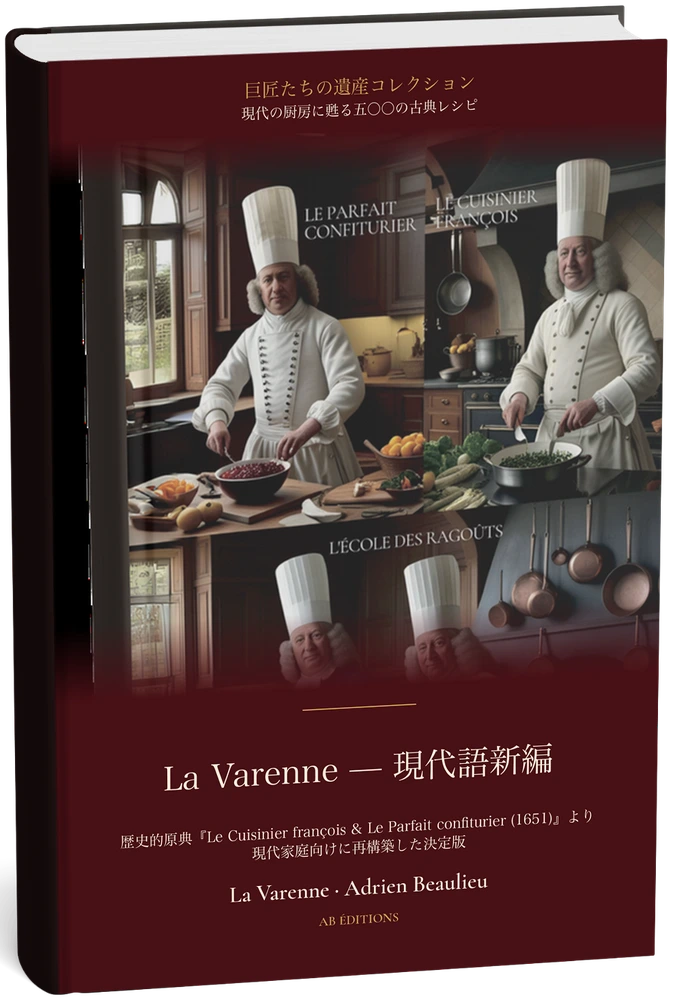
François Pierre de La Varenne · Adrien Beaulieu
Édition internationale en Japonais · L'Héritage des Maîtres
Découvrir l’ouvrage →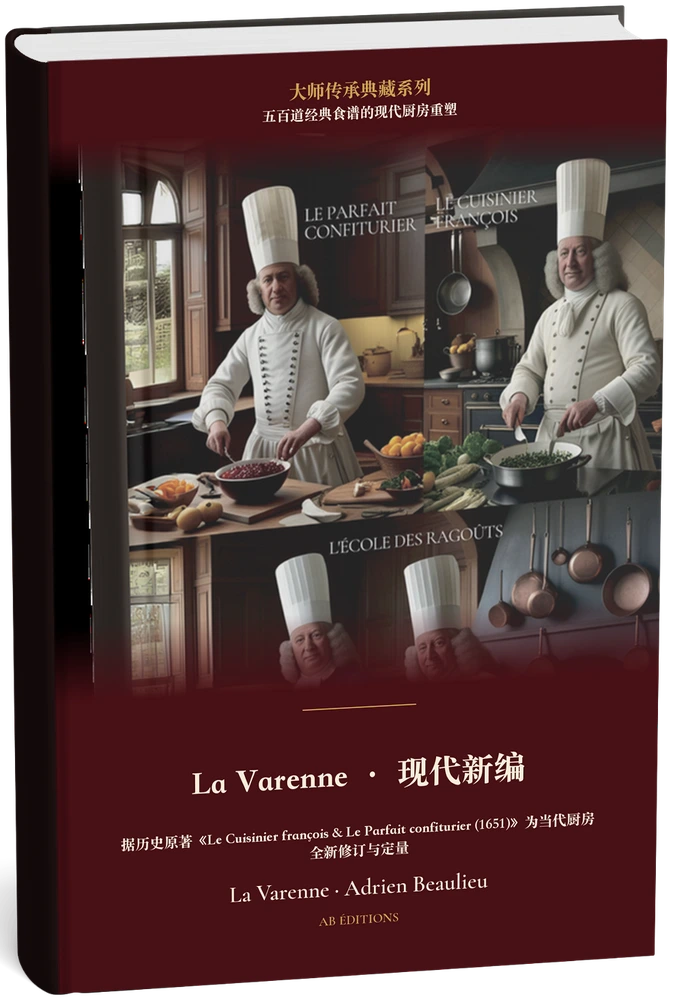
François Pierre de La Varenne · Adrien Beaulieu
Édition internationale en Chinois · L'Héritage des Maîtres
Découvrir l’ouvrage →The seventeenth century in France was an epoch of profound transformation in the art of the hearth and the philosophical conception of dining. With the ascendance of a burgeoning bourgeoisie eager for cultivated refinement, the exuberant mannerisms of the Renaissance—which favoured rare, heavily scented spices and overpowering flavours—began to yield to an aesthetic of sobriety, nuance, and subtlety. Amidst this pivotal evolution, François Pierre de La Varenne distinguished himself as the singular vanguard, marking an irrevocable rupture between the medieval feast and that which would become French haute cuisine.
Born in Dijon in 1615, La Varenne published Le Cuisinier François in 1651—a seminal work that stood as one of the first treatises to codify culinary technique and introduce modern principles, notably the primacy of indigenous produce and aromatic herbs. This manual was far more than a mere miscellany of receipts; it was an exacting doctrine that systematised elementary methods, rendering cookery rational, accessible, and reproducible. By championing fresh garden produce and curbing the lavish excess of foreign spices in favour of local aromatics, La Varenne effected a quiet yet formidable revolution at the stove.
1. The Eclipse of Spices by Indigenous Herbs
La Varenne set himself apart by forsaking costly exotic spices—ginger, cinnamon, and nutmeg, long the darlings of the medieval and Renaissance palate—in favour of terroir-bound herbs such as parsley, thyme, and bay laurel. Through this deliberate shift, he allowed the innate essence of ingredients to unfold upon the tongue, imparting to every dish a purer balance and truth of flavour. Such reform was the cornerstone of his philosophy: that culinary craft should never obscure, but rather exalt, the authentic virtues of nature’s bounty.
2. The Introduction of Novel Garden Vegetables
He expanded the culinary repertoire of the Grand Siècle by introducing vegetables that were then relative novelties upon French tables, notably cauliflower, asparagus, and the globe artichoke. Rather than drowning their delicate character under ponderous sauces or pungent spices, he instituted measured, deliberate cooking methods designed to preserve their garden-fresh crispness and subtle perfumes. This reverent attention to vegetables marked a profound turning point toward a lighter, more natural cuisine.
3. The Codification of Culinary Technique
With Le Cuisinier François, La Varenne became the first to formalise culinary techniques that had hitherto remained trade secrets or unwritten lore: braising, poaching, and the patient art of reduction. By laying out these processes in methodical fashion, he demystified the hearth, ensuring reliable and uniform results. For the first time, cooks were armed with a rigorous canon enabling them to execute dishes to an exacting standard of excellence—an indispensable requisite for the birth of haute cuisine.
4. The Creation of Iconic Sauces
Sauces have long been the quintessential soul of French cuisine, and to their evolution La Varenne brought decisive genius. He was the progenitor of both the sauce béchamel and the crustacean bisque, twin triumphs that endure as immortal classics. By abandoning the medieval practice of thickening pan juices with soaked bread in favour of a roux—a cooked union of flour and butter—he bestowed upon sauces an unprecedented silkiness and cohesion, transforming them into delicate veils that complemented rather than overwhelmed the dish.
5. The Formalisation of Modern Culinary Lexicon
La Varenne likewise gifted the modern kitchen its indelible vocabulary. Nomenclature such as bouquet garni, fonds de cuisine, and réduction first flowed from his quill, taking permanent root in the parlance of the profession. Through this clear and precise terminology, technique could be faithfully transmitted and mastered, establishing a common idiom for cooks and opening the gates of gastronomy to discerning amateurs.
6. Reverence for Ingredients and Simplicity
La Varenne advocated an ethic of profound reverence toward raw produce, prizing unadulterated flavours and banishing ostentatious artifice. His celebrated maxim, “When I eat cabbage soup, I wish it to taste of cabbage,” encapsulates his steadfast devotion to the essential character of each constituent part. This creed—honouring the fundamental truth of flavours—remains the beating heart of French gastronomy to this day.
7. Contributions to French Pâtisserie
In 1653, La Varenne published Le Pâtissier François, laying the very bedrock of French confectionery and baking. This volume offered systematic formulas and pastry arts hitherto shrouded in empirical improvisation, enriching the French culinary canon with pastries of supreme delicacy. La Varenne’s disciplined, scientific approach brought the sweet art into harmony with the savoury kitchen, elevating both into complementary movements of a grand symphonic meal.
The creations of François Pierre de La Varenne form the cornerstone of classic French cooking, remaining seminal touchstones for chefs across the globe. Among his most celebrated inventions and refinements are:
1. Sauce Béchamel
Perhaps the most iconic monument of La Varenne’s repertoire, sauce béchamel is fashioned from a pale roux (flour cooked in melted butter) infused with milk, yielding a velvety, mild foundation indispensable to gratins, soufflés, and a multitude of classical preparations.
2. Potage à la Julienne
The potage à la julienne stands as the consummate illustration of La Varenne’s devotion to the garden. Composed of an assortment of seasonal vegetables sliced into slender filaments and gently simmered in a delicate broth, it embodies his ideal of showcasing prime market produce while preserving its pristine, distinct flavours.
3. Poulet au Gros Sel
This preparation—wherein fowl is poached simply with aromatics and coarse sea salt—exemplifies La Varenne’s quest to heighten natural taste. A stark departure from the heavily spiced stews of the Middle Ages, this chicken was treated with consummate attention to succulent texture and the unvarnished purity of the bird itself.
4. Artichauts à la Barigoule
The culinary championing of the globe artichoke was among La Varenne’s proudest accomplishments, and artichauts à la barigoule ranks among his most inspired innovations. Stuffed with a fine mince of wild mushrooms, then braised gently with herbs and white wine, it displays his gift for conjuring exquisite elegance from unpretentious gifts of the earth.
The imprint of François Pierre de La Varenne remains ubiquitous throughout modern French cooking. His visionary reforms swept away medieval artifice and erected the pillars of a culinary tradition that has endured for more than three centuries. By systematising kitchen methods, establishing an enduring technical vernacular, and holding sacred the integrity of the ingredient, La Varenne elevated French cookery to a rigorous, consummate art.
The reach of Le Cuisinier François extended far beyond the borders of France. Translated into several European tongues, it decisively altered the gastronomy of the continent. In England, the translation known as The French Cook introduced novel methods and aesthetic ideals, naturalising French culinary nomenclature across the Channel. The princely and royal courts of Germany and Poland likewise adopted La Varenne’s disciplines, permanently imbuing their noble banquets with the finesse of the French school.
Among La Varenne’s most far-reaching achievements was paving the way for the cuisine bourgeoise that would flourish throughout the eighteenth century. By codifying techniques accessible to cooks of modest households yet ambitious enough to embrace refined dining, he democratised gastronomy, welcoming an emerging social class to the cultivated pleasures of the table. This movement toward a more accessible cuisine, anchored in the honest quality of produce, remains the living marrow of French culinary culture.
To this day, the enduring spirit of François Pierre de La Varenne breathes in every sauce reduction, every crystalline potage, and every dish that exalts the unadorned integrity of raw produce. His guiding ethos—a cuisine respectful of its elements, grounded in restraint yet ceaselessly striving for perfection—remains the beating heart of French haute cuisine. As the true father of modern cookery, La Varenne transformed French gastronomy into an enduring symbol of refinement, distinction, and grace—an inheritance that continues to nourish and inspire tables throughout the civilized world.
Recettes, histoires, parutions et éditions de collection — quelques lettres par an, jamais davantage.