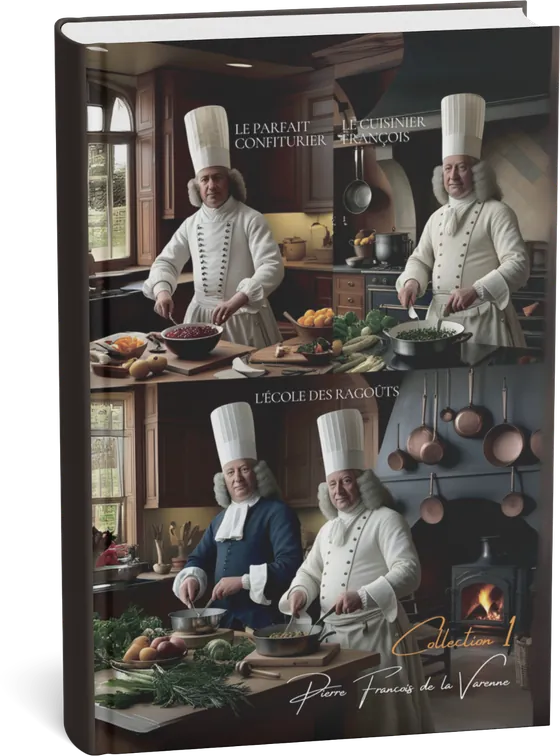
Le Cuisinier François (1651)
François Pierre de La Varenne
La table du Grand Siècle racontée dans les Lettres
Découvrir l’ouvrage → MAISON BEAULIEUAB ÉDITIONS · CUISINE & LETTRES
Though history never enrolled Marie de Rabutin-Chantal, Marquise de Sévigné, among the masters of the turning spit or the officiants of royal stewpans, her epistolary corpus constitutes one of the most vibrant, luminous testaments to French tablecraft ever committed to paper. Reared amidst the refined humanism of the seventeenth century and widowed young by a duel, she directed her supreme genius into that daily, breathless correspondence with her beloved daughter, Madame de Grignan. In those pages—scrawled with a goose quill between her Parisian residence at the Hôtel Carnavalet and the distant pastures of Brittany—the art of eating ceased to be mere sustenance and became high literature.
The Marquise possessed that supreme attribute of the genuine gourmand: an unsparing eye married to an exquisite palate. While the reign of Louis XIV was codified by strict hierarchies and royal magnificence, Madame de Sévigné chronicled the secret murmurings of the appetite. Through her ink, posterity inhaled the fragrance of roasting capons, weighed the subtleties of courtly confectioners, and deciphered the psychological theatre of the seventeenth-century dining chamber with an intimacy that neither Saint-Simon nor La Varenne could match.
It is to her matchless reportage that literature owes its most harrowing and indelible gastronomic drama: the suicide of François Vatel, grand maître d'hôtel to the Prince de Condé. In April of 1671, the Great Condé received the Sun King at Chantilly for three days and nights of uninterrupted festivity. On Friday the twenty-fourth, under the weight of an honour that bordered on terror, Vatel saw the morning's deliveries fail: the cartloads of sea fish, expected from every port of the Channel, had not arrived in time for the Lenten collation.
“He went up to his room, set his sword against the door, and ran it through his heart,” she recorded with piercing elegance. In recounting the catastrophe to her daughter, Sévigné captured both the unbearable dignity of seventeenth-century domestic service and the macabre extravagance of royal banquets, where honour was weighed in hampers of turbot and baskets of sole. By turning this tragic dawn into an immortal moral chronicle, she elevated culinary administration to the rank of classical tragedy.
No chronicle of Grand Siècle gastronomy would be complete without Madame de Sévigné’s turbulent, celebrated romance with the newly arrived nectar of the Americas: chocolate. Throughout the 1670s, her letters chart the court’s vacillation between ecstatic indulgence and superstitious dread. One month she hailed it as a miraculous restorative that sustained life and defied melancholy; the next, alarmed by the whispering physicians of Versailles, she warned her daughter against its supposed combustions and internal fevers.
“It flatters you for a while, and then suddenly kindles in you a continuous fever that leads to death,” she would write, before inevitably succumbing once more to the silver chocolatière, frothing the dark, spiced brew with cinnamon, vanilla, and amber. In these delightfully contradictory passages, she sketched the dawn of modern culinary addiction, depicting a Parisian nobility hostage to the exotic seductions of the palate and the fickle dictums of the faculty of medicine.
Beyond the gilded halls of Versailles, Madame de Sévigné was a wanderer of the provinces, observing regional cuisines with singular acuity. At her château of Les Rochers in Brittany, she attuned herself to rural simplicity: golden churned butter, roasted chestnuts, hearty game, and rustic partridges devoured after woodland strolls. She celebrated the rustic bounties of the earth with a directness that foreshadowed the pastoral sensibilities of Rousseau and the nineteenth-century regionalists.
Yet when her correspondence turned southward toward Provence, where Madame de Grignan resided, her ink glowed with Mediterranean heat. She rhapsodized over sweet muscat grapes, succulent figs bursting upon the branch, melons fragrant with sunshine, and ortolans fattened for the spit. She warned her fragile daughter against excess while concurrently celebrating the intoxicating richness of the southern sun, leaving behind an encyclopedic mosaic of France’s nascent regional gastronomy.
Madame de Sévigné passed away in 1696 at the Château de Grignan, having recorded seven decades of tastes, feasts, anxieties, and delights. She was neither cook nor court steward, but she remains one of the founding spirits of French culinary literature. Her legacy demonstrated that the table is not merely a place of mastication, but the beating heart of social life, emotional communion, and psychological truth.
Long before Brillat-Savarin penned his aphorisms or Alexandre Dumas opened his grand dictionary, the Marquise had captured the essence of gastronomy: that the flavor of an oyster, the tragedy of a delayed fish cart, or the perfume of a steaming cup of cacao are the very threads from which human memory is woven.
Découvrez dans la collection Les Cuisiniers de Légende les grands traités culinaires contemporains de son époque :
François Pierre de La Varenne
La table du Grand Siècle racontée dans les Lettres
Découvrir l’ouvrage →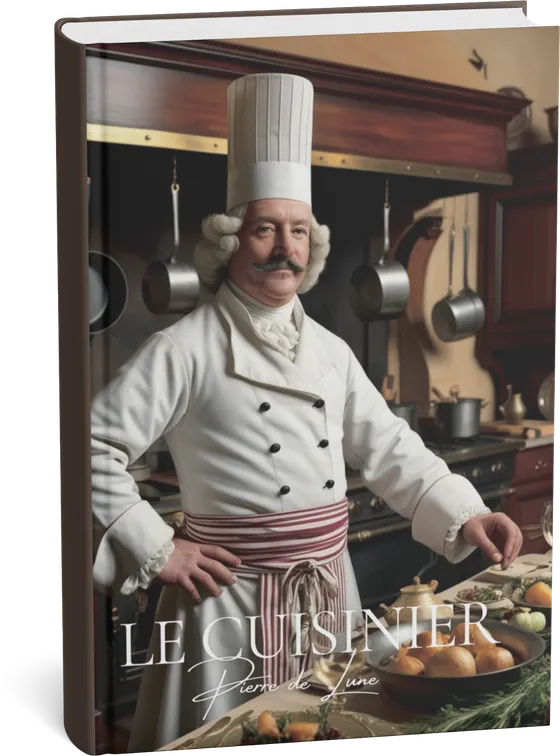
Pierre de Lune
Les tables aristocratiques du XVIIᵉ siècle
Découvrir l’ouvrage →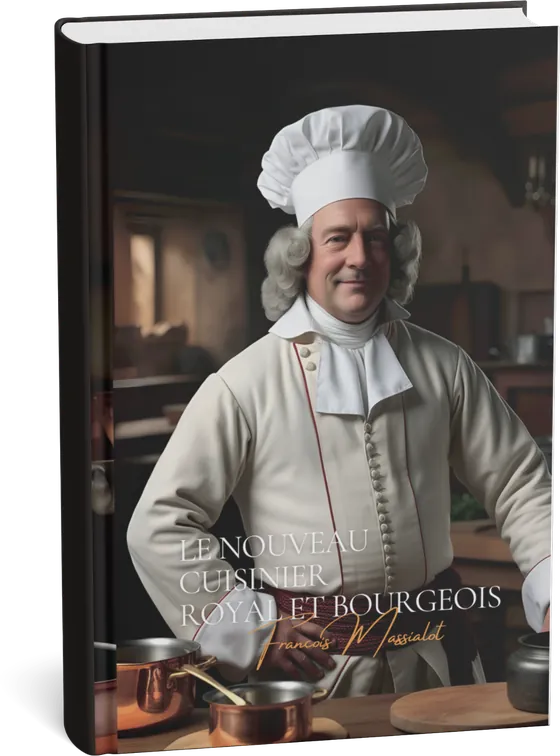
François Massialot
Les soupers de Versailles et de Paris
Découvrir l’ouvrage →Recettes, histoires, parutions et éditions de collection — quelques lettres par an, jamais davantage.