La Cuisine Médiévale : Taillevent, Chiquart & Le Ménagier de Paris
Taillevent, Chiquart & Anonyme
Les Grands Classiques (Originaux) · Les trois traités fondateurs du Moyen Âge réunis
Découvrir l’ouvrage → MAISON BEAULIEUAB ÉDITIONS · CUISINE & LETTRES
La Maison Beaulieu présente l’œuvre de Taillevent, Chiquart & Anonyme selon son architecture éditoriale complète : d’abord I. Les Grands Classiques (les textes originaux d’époque), puis II. L’Héritage des Maîtres (l’édition française modernisée — 500 recettes mises au goût du jour), et enfin III. Le Rayonnement International (l’édition modernisée traduite en 10 langues). Tarif officiel Cuisine AB Éditions : Ebook · 9,90 € · Broché (PB) · 24,90 € (+ port réel) · Relié Collector (HC) · 34,90 € (+ port réel).
Le texte historique intégral de Taillevent, Chiquart & Anonyme, établi et restauré dans sa typographie et sa langue d’origine, avec ses couvertures de collection originales.
Pour cuisiner réellement Taillevent, Chiquart & Anonyme aujourd’hui chez soi sans brigade : chaque recette est codifiée et structurée selon le protocole de la Maison (Ingrédients calibrés en grammes pour 4 personnes · Préparation pas à pas avec temps et températures exacts · Conseil du Chef), dans le respect absolu du goût et de l’esprit du Maître.
Conformément à la doctrine éditoriale de la Maison, ce n’est jamais le français archaïque d’époque qui est traduit, mais notre édition française modernisée (L’Héritage des Maîtres — 500 recettes au goût du jour), afin d’offrir aux lecteurs du monde entier des recettes claires, précises et immédiatement réalisables en 10 langues (EN, DE, ES, IT, PT, NL, SV, PL, JA, ZH) :
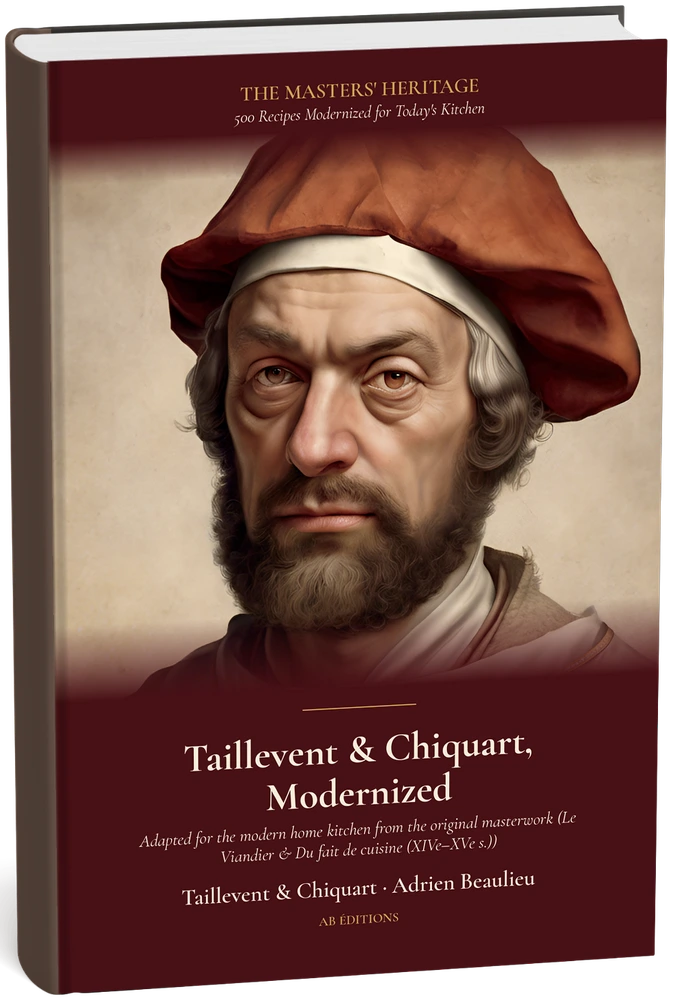
Taillevent, Chiquart & Anonyme · Adrien Beaulieu
Édition internationale en Anglais · L'Héritage des Maîtres
Découvrir l’ouvrage →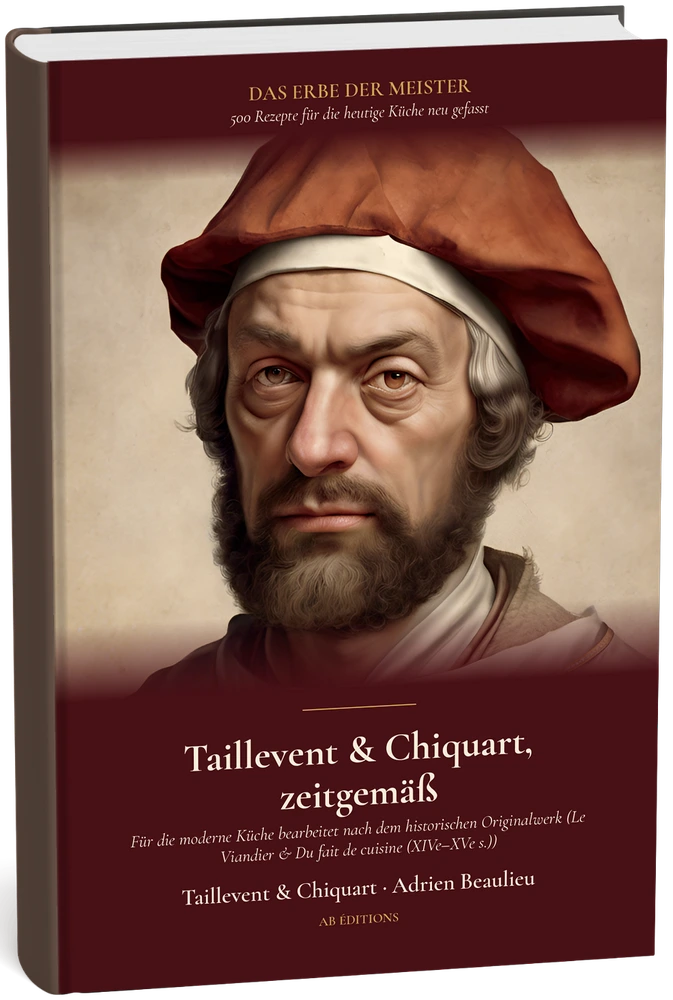
Taillevent, Chiquart & Anonyme · Adrien Beaulieu
Édition internationale en Allemand · L'Héritage des Maîtres
Découvrir l’ouvrage →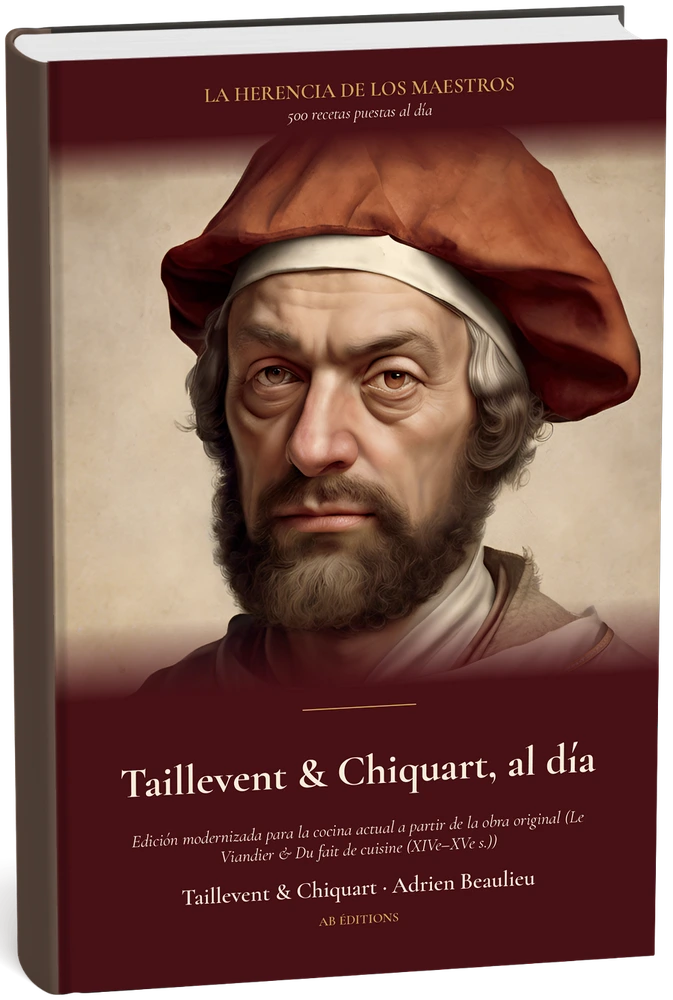
Taillevent, Chiquart & Anonyme · Adrien Beaulieu
Édition internationale en Espagnol · L'Héritage des Maîtres
Découvrir l’ouvrage →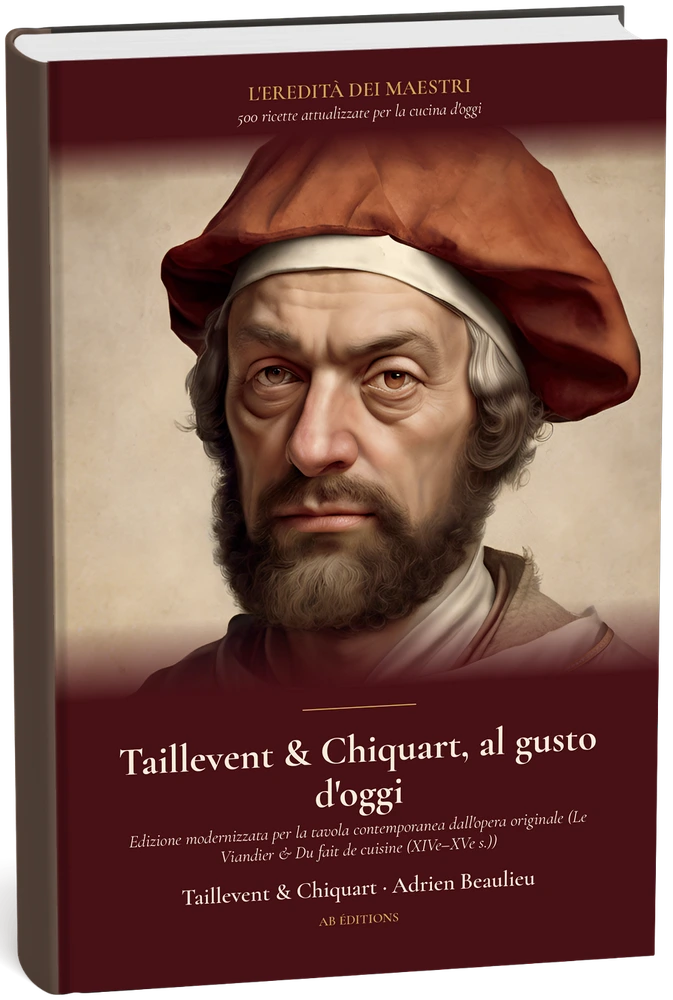
Taillevent, Chiquart & Anonyme · Adrien Beaulieu
Édition internationale en Italien · L'Héritage des Maîtres
Découvrir l’ouvrage →
Taillevent, Chiquart & Anonyme · Adrien Beaulieu
Édition internationale en Portugais · L'Héritage des Maîtres
Découvrir l’ouvrage →
Taillevent, Chiquart & Anonyme · Adrien Beaulieu
Édition internationale en Néerlandais · L'Héritage des Maîtres
Découvrir l’ouvrage →
Taillevent, Chiquart & Anonyme · Adrien Beaulieu
Édition internationale en Suédois · L'Héritage des Maîtres
Découvrir l’ouvrage →
Taillevent, Chiquart & Anonyme · Adrien Beaulieu
Édition internationale en Polonais · L'Héritage des Maîtres
Découvrir l’ouvrage →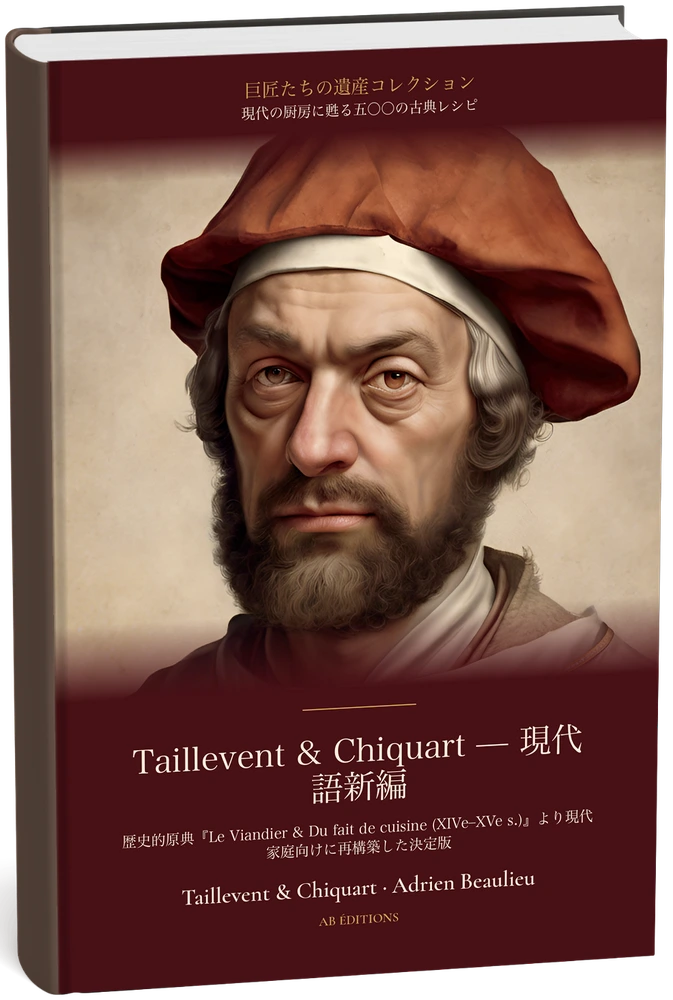
Taillevent, Chiquart & Anonyme · Adrien Beaulieu
Édition internationale en Japonais · L'Héritage des Maîtres
Découvrir l’ouvrage →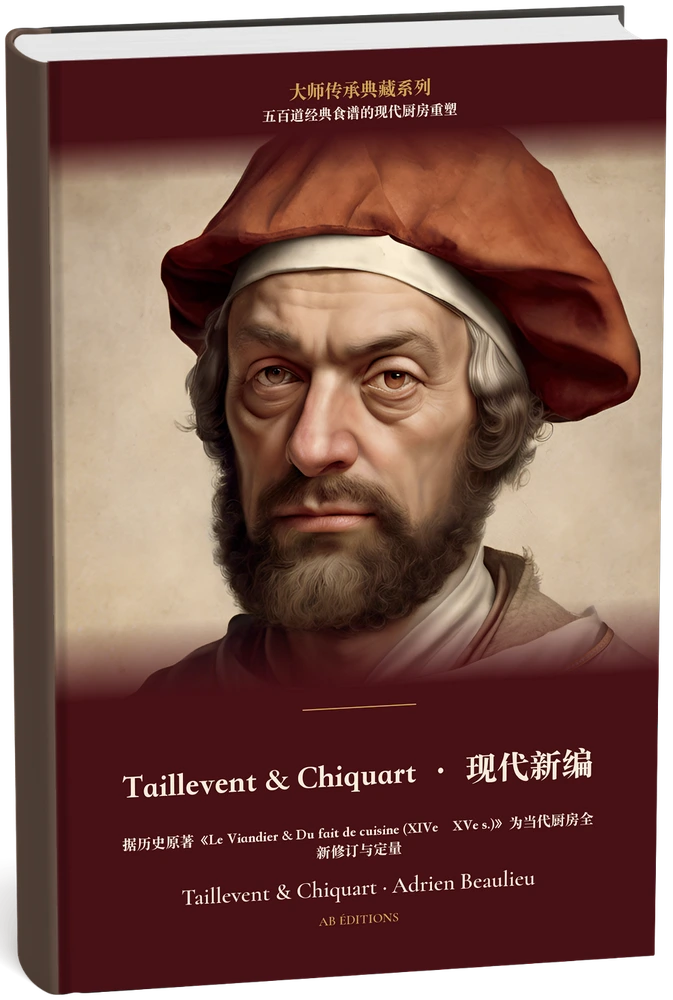
Taillevent, Chiquart & Anonyme · Adrien Beaulieu
Édition internationale en Chinois · L'Héritage des Maîtres
Découvrir l’ouvrage →Medieval French cuisine is a fascinating realm of exotic flavors, elaborate techniques, and refined ceremonies, flourishing at an epoch when the culinary arts served as a paramount instrument of power and prestige. Between the fourteenth and fifteenth centuries, the banquet was above all a means to display high lineage and assert one's social ascendancy, most brilliantly upon the grand stages of royal and princely courts.
This fertile landscape fostered the emergence of master cooks such as Guillaume Tirel, immortalized under the name of Taillevent, and Chiquart, personal master cook to Amadeus VIII, Duke of Savoy. Their foundational treatises, accompanied by a rich constellation of anonymous manuscripts, laid the cornerstones of French *haute cuisine* and guided the generations of chefs who followed in their footsteps. Medieval court gastronomy distinguished itself above all through the lavish use of exotic spices and an acute, theatrical devotion to the visual presentation of every dish.
Guillaume Tirel, born in Normandy circa 1310, began his career as a modest kitchen apprentice (*écuyer de cuisine*) before ascending to the prestigious post of *maître queux* to Kings Charles V and Charles VI. He left an indelible mark upon gastronomic history with his seminal work, Le Viandier, one of the earliest recipe collections in the French canon. This monumental text bears witness to his technical mastery, his keen instinct for innovation, and his genius for orchestrating the vast machinery of a royal kitchen.
Within the pages of Le Viandier, Taillevent placed singular emphasis on seasoning and the harmonious balance of flavors, summoning spices imported at colossal expense—black pepper, ginger, cinnamon, and golden saffron. These precious aromatics symbolized the supreme refinement of medieval gastronomy and were the unmistakable hallmarks of sovereign wealth. The techniques codified by Taillevent, notably the art of spit-roasting and the deliberate composition of acid-bright sauces, were destined to become the bedrock of classical French cooking.
Chiquart, flourishing at the turn of the fifteenth century, brought his own magnificent contribution to the culinary arts with his treatise Du fait de cuisine, penned in 1420 for the Duke of Savoy. This work is exceptional for its encyclopedic wealth of detail and its breathtaking ambition. In it, Chiquart details the staging of sumptuous banquets designed to unfold over multiple days, providing minute instructions for the execution of every single dish.
Chiquart was profoundly devoted to the aesthetics and theatrical pageantry of table service, regarding each feast as an authentic work of art. Rare luxury ingredients, prized spices, intricate cooking methods, and dramatic visual presentations were all marshaled to hold the assembled lords in awe. His scrupulous attention to detail—extending to the chromatic harmony of the viands and the architectural arrangement of the platters—vividly reflects the diplomatic weight of gastronomy in courtly statecraft.
Beside the illustrious texts of Taillevent and Chiquart, a wealth of anonymous manuscripts from the era bears witness to regional and domestic culinary practices. These documents, far less ornate in ambition, reveal another face of medieval cookery—that of modest hearths and countryside taverns. They illustrate a simple, nourishing table reliant on local provisions and sensible ingenuity, showcasing the potages, robust stews, and grain porridges that were tailored to the seasonal harvests of each province.
These manuscripts are invaluable to any understanding of the evolution of French gastronomy, uncovering the rich tapestry of cooking traditions that flourished beyond aristocratic salons. While these recipes lacked courtly artifice, they represent an enduring culinary heritage that shaped France’s regional identity and transmitted indispensable ancestral skills through the ages.
• Roast Swan with Spices: A dish that epitomized the theatrical luxury of royal feasts. Taillevent seasoned the noble bird with costly spices such as ginger and cloves, which functioned not merely as enhancers of flavor, but as potent heralds of sovereign wealth.
• Fine Herb Potages: Taillevent championed delicate pottages composed from fresh garden herbs and choice meats, demonstrating an exacting attention to detail and an exquisite equilibrium of flavors.
• Eel Pie: A preparation requiring meticulous craftsmanship, wherein the flesh of the eel was pounded into a delicate paste and baked within an ornate crust. This union of textures and mastery of spices showcased Chiquart’s supreme authority over the grand table.
• Blancmange with Almonds and Capon: Blancmange was a rich and delicate dish, prepared with almond milk and finely shredded poultry. This preparation reveals Chiquart’s fascination with marrying sweet and savory flavors, reflecting the sophisticated complexity of the late medieval palate.
• Barley Porridge with Garden Herbs: A rustic yet deeply restorative dish celebrating indigenous grains. Porridge was a staple across many provinces, testifying to an honest culinary wisdom sustained by the land.
• Broad Bean Stew: A humble dish typical of common households, demonstrating the essential role of legumes in the medieval diet, thoughtfully enlivened with sprigs of thyme and parsley to elevate its natural savor.
Medieval cuisine, distant though it may seem from contemporary dining, laid the profound foundations of modern French gastronomy. Taillevent and Chiquart, through their respective masterpieces, each helped codify culinary practices that endure to this day. Their labor elevated cookery to the dignity of a fine art, highlighting the paramount virtues of meticulous technique and deliberate aesthetic presentation.
The calculated use of spices, omnipresent in Taillevent’s recipes, introduced a culture of flavor sophistication that remains an enduring signature of French culinary philosophy. Similarly, the rhythm of a banquet divided into multiple successive courses, already taking shape in the medieval hall, prefigured the modern dining experience as a coherent, symphonic progression.
Chiquart’s visionary approach to table decoration and banquet choreography established the groundwork for modern state dinners and high hospitality, while the regional traditions preserved in anonymous manuscripts bequeathed to French cuisine its boundless depth and local authenticity. Taken together, these archives demonstrate that the medieval table was already a vibrant mirror of the culture, commerce, and social diplomacy of its day.
In revisiting the writings of Taillevent, Chiquart, and their anonymous peers, we enter a world where cookery was far more than mere subsistence—it was a manifestation of prestige, an instrument of statecraft, a display of sovereign power, and the expression of a shared cultural spirit. These medieval master cooks and scribes constitute a foundational chapter of our culinary heritage, and their influence still reverberates through the kitchens of the world's most accomplished chefs.
The enduring spirit of medieval cuisine lives on wherever presentation, flavor, and the guest's sensory experience are orchestrated with deliberate mastery. Taillevent and Chiquart pointed the way forward; thanks to their vision, we may still savor something of that ancient courtly grandeur, translated into the elegance of the modern table.
Recettes, histoires, parutions et éditions de collection — quelques lettres par an, jamais davantage.