The Gastronomic Regenerator & The Modern Housewife (Londres, 1846–1855 — VO Anglaise)
Alexis Soyer
Les Grands Classiques (VO Anglaise) · Les grands traités victoriens d'Alexis Soyer en langue originale
Découvrir l’ouvrage → MAISON BEAULIEUAB ÉDITIONS · CUISINE & LETTRES
La Maison Beaulieu présente l’œuvre de Alexis Soyer selon son architecture éditoriale complète : d’abord I. Les Grands Classiques (les textes originaux d’époque), puis II. L’Héritage des Maîtres (l’édition française modernisée — 500 recettes mises au goût du jour), et enfin III. Le Rayonnement International (l’édition modernisée traduite en 10 langues). Tarif officiel Cuisine AB Éditions : Ebook · 9,90 € · Broché (PB) · 24,90 € (+ port réel) · Relié Collector (HC) · 34,90 € (+ port réel).
L’œuvre historique de Alexis Soyer publiée dans sa langue d’origine (édition anglaise d’époque) accompagnée de sa première traduction française intégrale fidèle à la lettre par la Maison Beaulieu.
Alexis Soyer
Les Grands Classiques (VO Anglaise) · Les grands traités victoriens d'Alexis Soyer en langue originale
Découvrir l’ouvrage →
Alexis Soyer
Les Ressuscités (VF Intégrale) · Sauces, potages, poissons, relevés, flancs et entrées (334 pages)
Découvrir l’ouvrage →
Alexis Soyer
Les Ressuscités (VF Intégrale) · Entrées, rôtis, légumes et entremets du Reform Club (356 pages)
Découvrir l’ouvrage →
Alexis Soyer
Les Ressuscités (VF Intégrale) · Près de 1 000 recettes bourgeoises en lettres (1849 · 462 pages)
Découvrir l’ouvrage →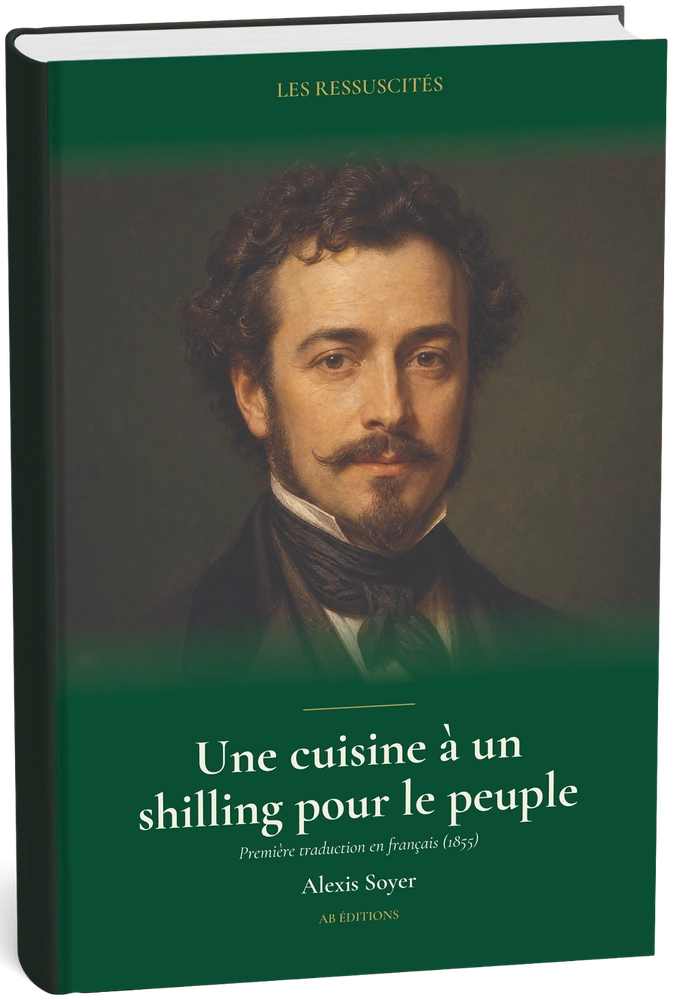
Alexis Soyer
Les Ressuscités (VF Intégrale) · Le chef-d'œuvre philanthropique et populaire de Soyer (1855 · 292 pages)
Découvrir l’ouvrage →Pour cuisiner réellement Alexis Soyer aujourd’hui chez soi sans brigade : chaque recette est codifiée et structurée selon le protocole de la Maison (Ingrédients calibrés en grammes pour 4 personnes · Préparation pas à pas avec temps et températures exacts · Conseil du Chef), dans le respect absolu du goût et de l’esprit du Maître.
Conformément à la doctrine éditoriale de la Maison, ce n’est jamais le français archaïque d’époque qui est traduit, mais notre édition française modernisée (L’Héritage des Maîtres — 500 recettes au goût du jour), afin d’offrir aux lecteurs du monde entier des recettes claires, précises et immédiatement réalisables en 10 langues (EN, DE, ES, IT, PT, NL, SV, PL, JA, ZH) :
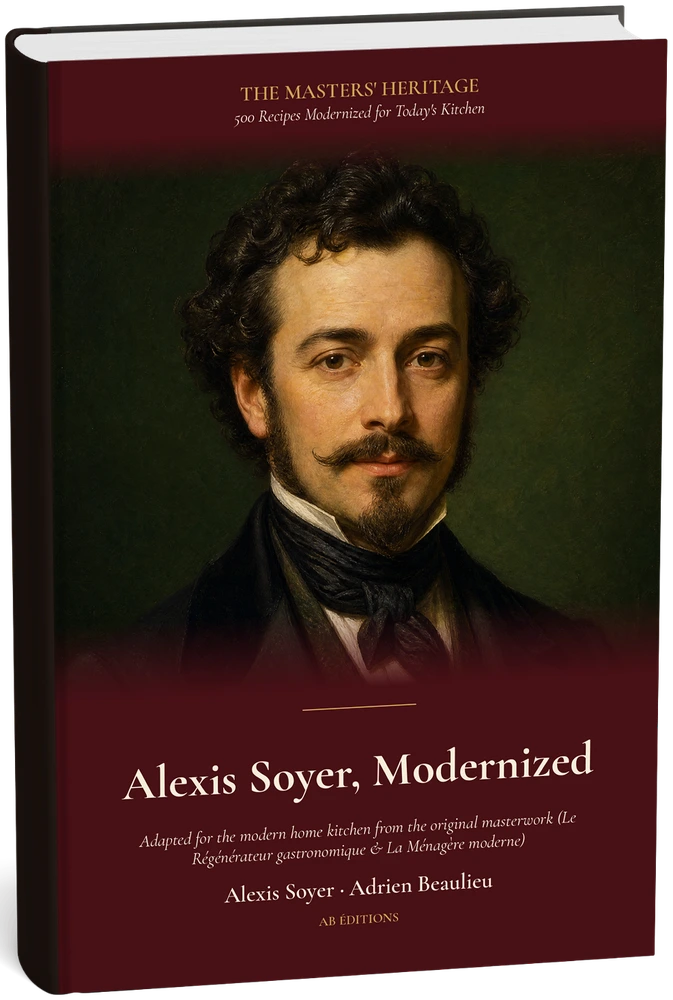
Alexis Soyer · Adrien Beaulieu
Édition internationale en Anglais · L'Héritage des Maîtres
Découvrir l’ouvrage →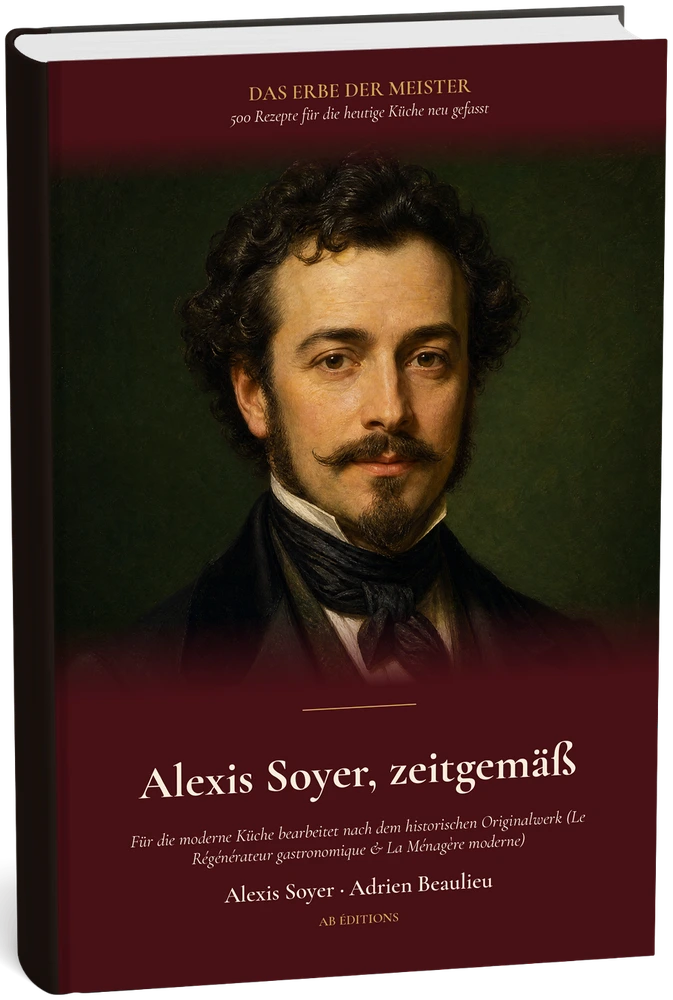
Alexis Soyer · Adrien Beaulieu
Édition internationale en Allemand · L'Héritage des Maîtres
Découvrir l’ouvrage →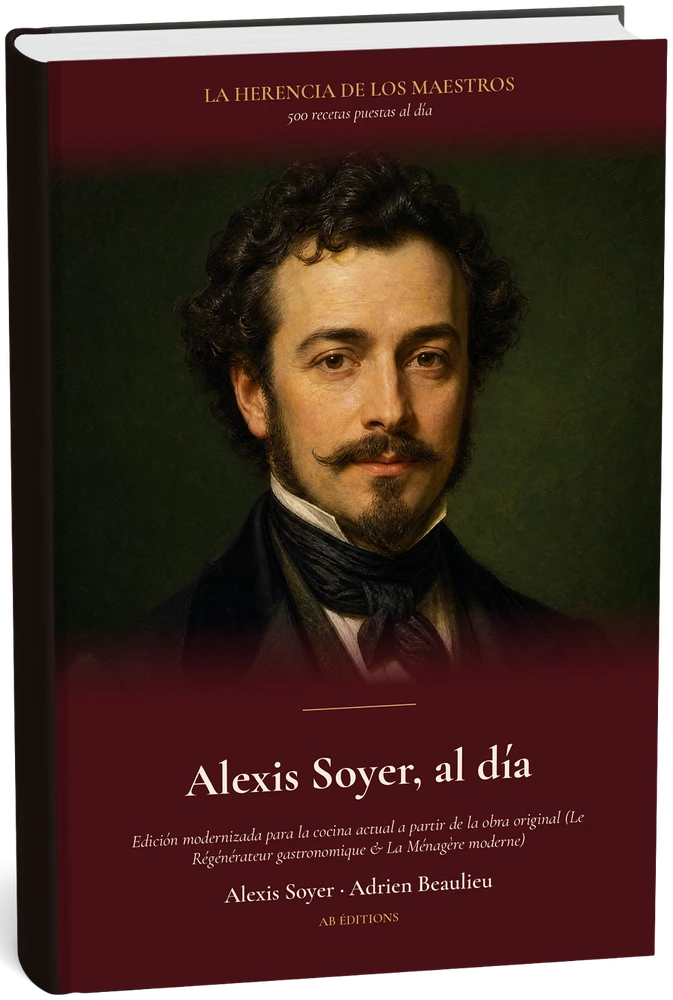
Alexis Soyer · Adrien Beaulieu
Édition internationale en Espagnol · L'Héritage des Maîtres
Découvrir l’ouvrage →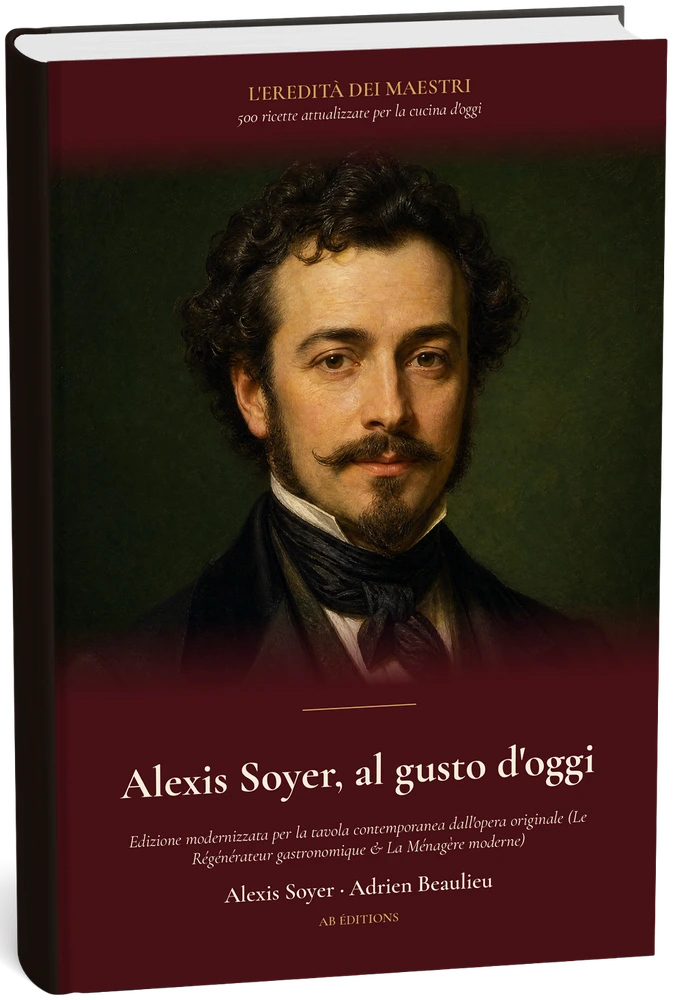
Alexis Soyer · Adrien Beaulieu
Édition internationale en Italien · L'Héritage des Maîtres
Découvrir l’ouvrage →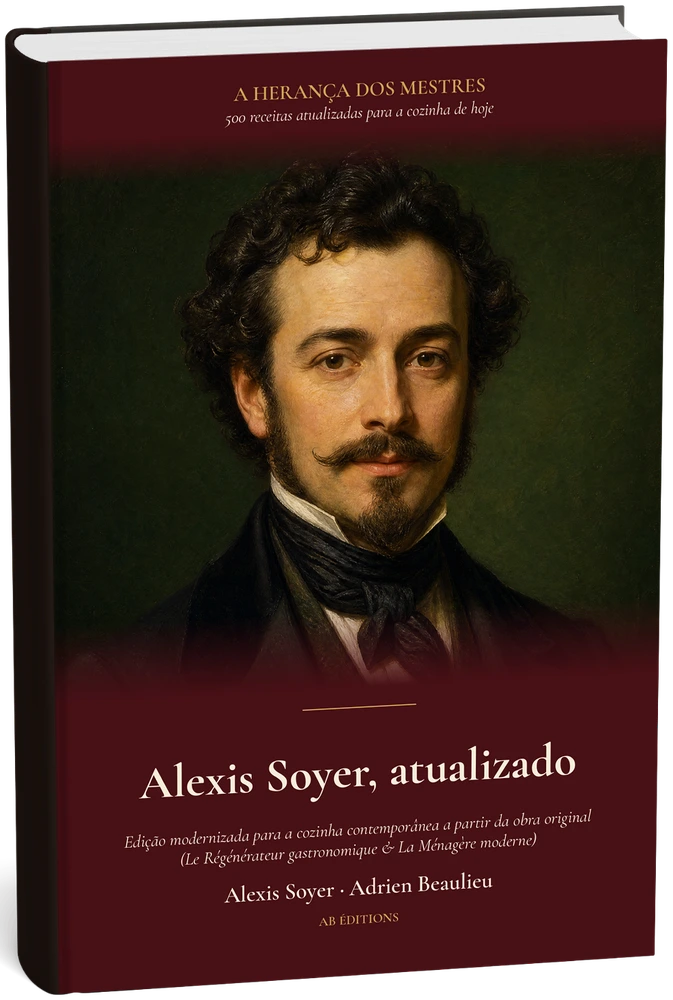
Alexis Soyer · Adrien Beaulieu
Édition internationale en Portugais · L'Héritage des Maîtres
Découvrir l’ouvrage →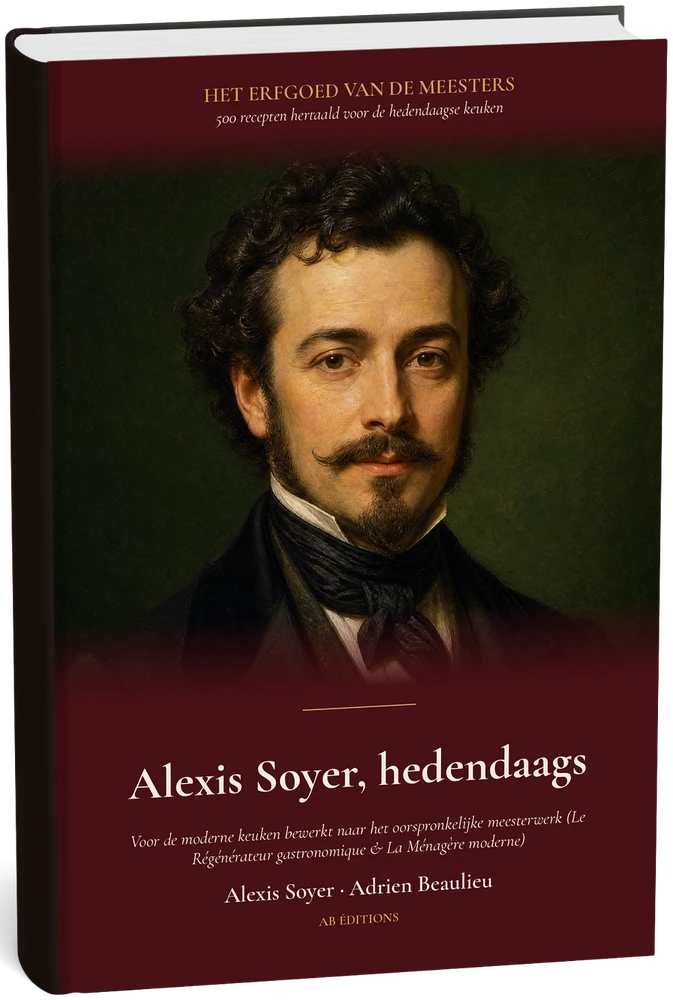
Alexis Soyer · Adrien Beaulieu
Édition internationale en Néerlandais · L'Héritage des Maîtres
Découvrir l’ouvrage →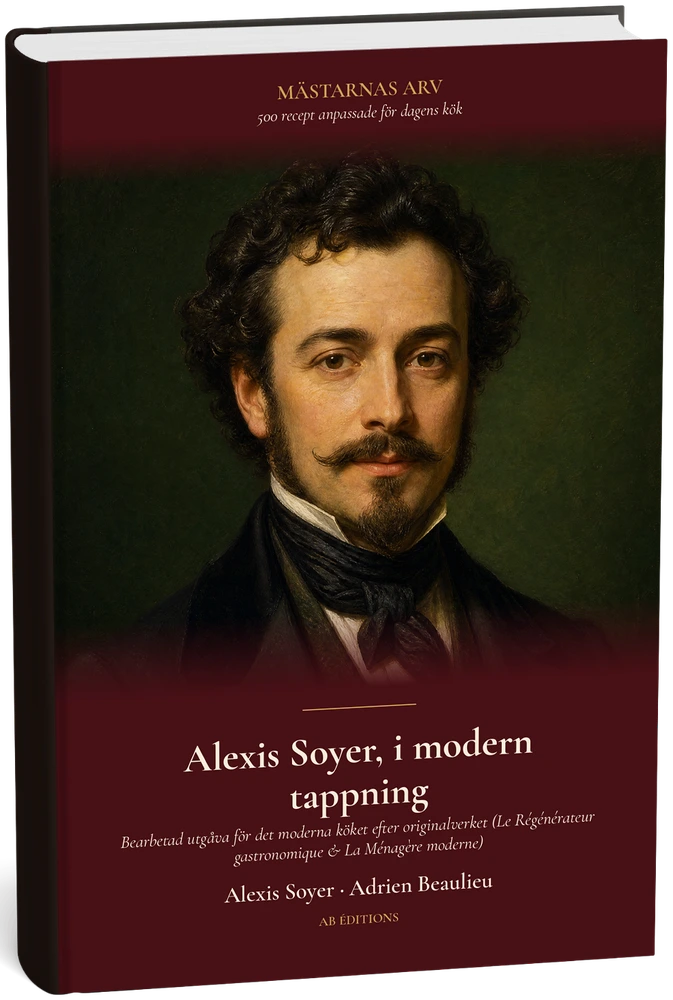
Alexis Soyer · Adrien Beaulieu
Édition internationale en Suédois · L'Héritage des Maîtres
Découvrir l’ouvrage →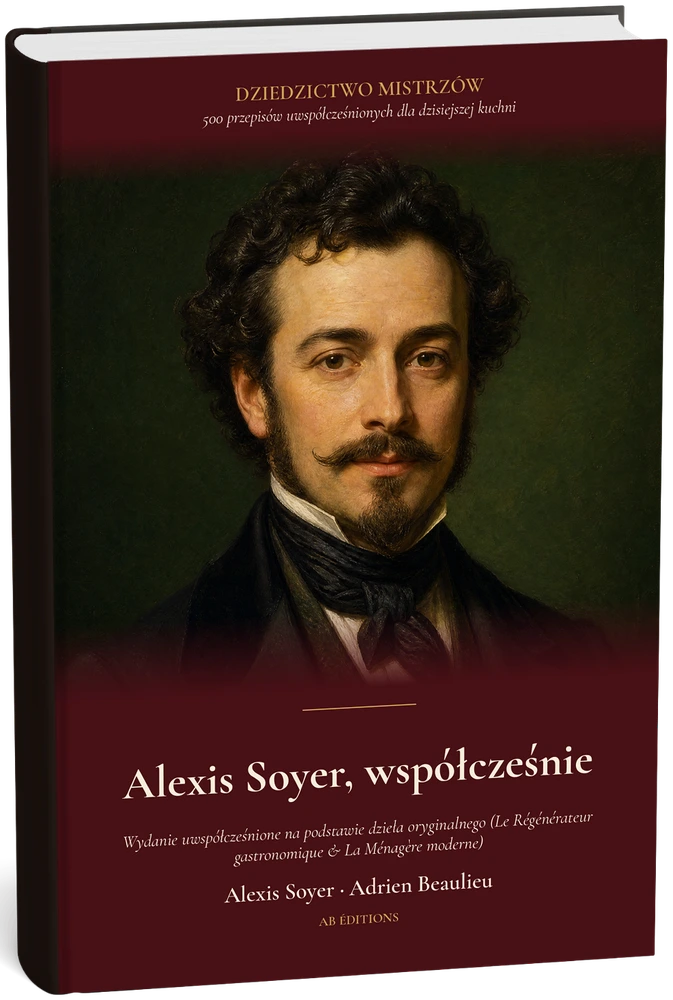
Alexis Soyer · Adrien Beaulieu
Édition internationale en Polonais · L'Héritage des Maîtres
Découvrir l’ouvrage →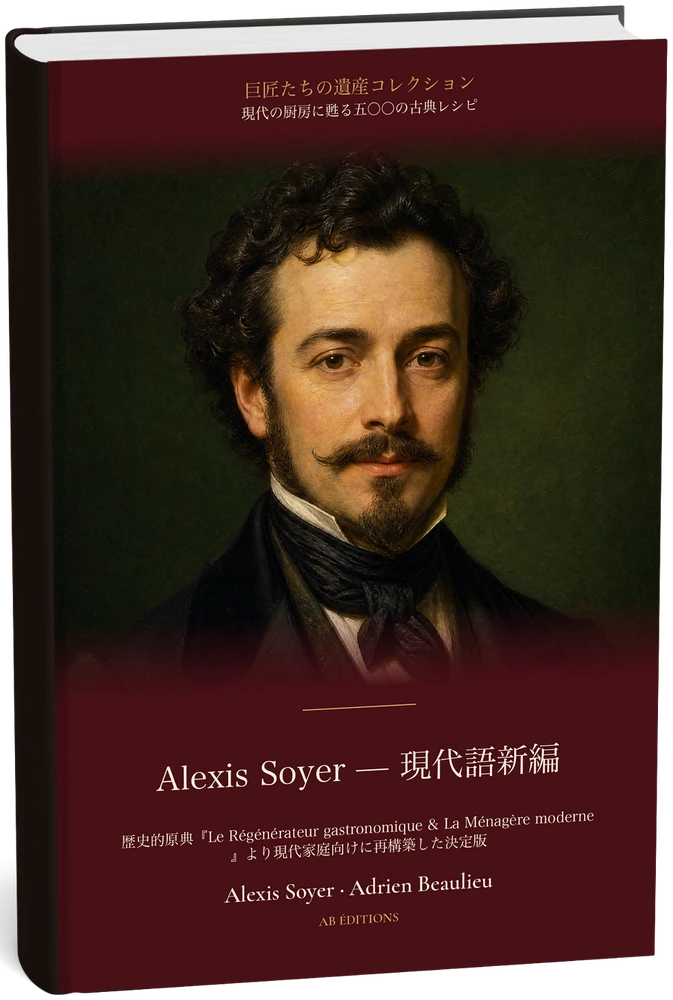
Alexis Soyer · Adrien Beaulieu
Édition internationale en Japonais · L'Héritage des Maîtres
Découvrir l’ouvrage →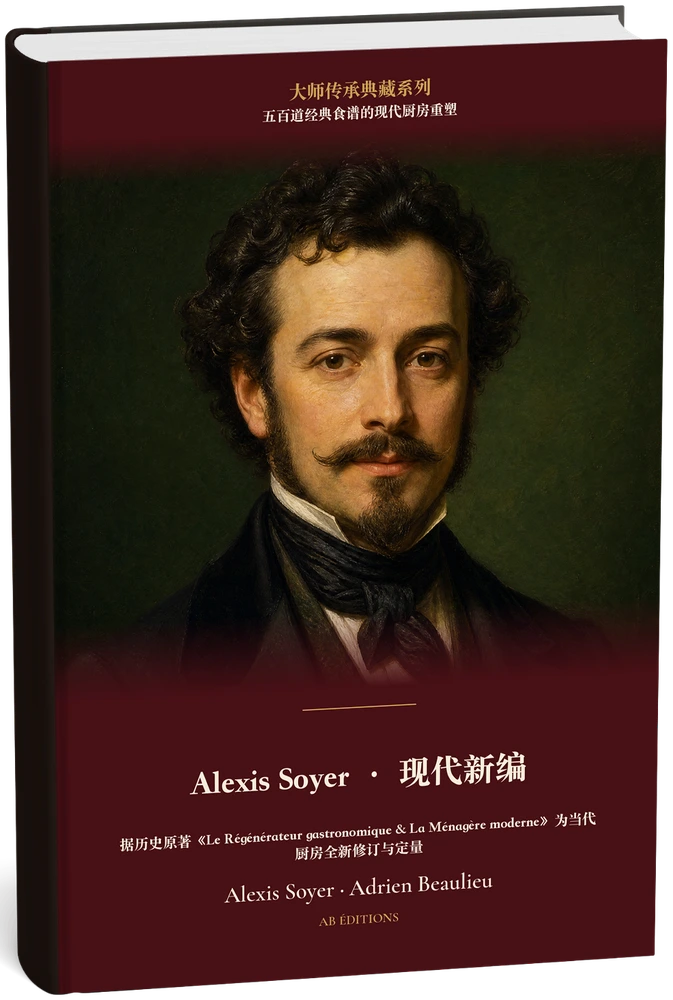
Alexis Soyer · Adrien Beaulieu
Édition internationale en Chinois · L'Héritage des Maîtres
Découvrir l’ouvrage →Alexis Soyer is remembered not merely for his peerless culinary artistry, but equally for his ardent social conscience. Having labored tirelessly within military galleys, he wrought profound transformations upon the nutritional fare of the common soldier. His seminal treatise, The Gastronomic Regenerator, proved singularly influential in popularizing the tenets of modern culinary technique across a broader public.
Born in 1810 at Meaux-en-Brie, France, Alexis Soyer stands as a pioneering master who indelibly shaped nineteenth-century gastronomy—celebrated not solely for his virtuosic palate, but for an uncompromising social and humanitarian devotion. Soyer achieved renown through his revolutionary contributions to military sustenance and his boundless philanthropy, most notably in Ireland during the harrowing years of the Great Famine. Through a prolific output of writings and mechanical inventions, he introduced an astonishing array of culinary advancements.
1. Philanthropic and Humanitarian Devotion
Soyer distinguished himself above all through his tender solicitude for the destitute. In the midst of the Great Famine in Ireland (1845–1849), he hastened to Dublin to erect a model soup kitchen designed to nourish the starving multitude. At its zenith, this benevolent establishment dispensed upwards of 8,750 rations each day. Soyer also published Soyer’s Charitable Cookery, a compendium of wholesome, economical receipts whose proceeds were consecrated entirely to charitable relief, achieving sales exceeding 250,000 copies over the years. His pragmatic and deeply humanitarian approach proved that the culinary art could serve as a noble instrument of mercy for those in direst need.
2. The Transformation of Military Subsistence
During the Crimean War, Soyer was summoned to redress the appalling dietary conditions afflicting British troops, who were perishing in droves from scurvy, dysentery, and starvation. Working hand in hand with Florence Nightingale, he reorganized the kitchens of the military hospitals at Scutari and Balaklava, introducing rigorous hygiene, nutritional balance, and systematic methods of meal distribution. His crowning technological triumph for the armed forces—the celebrated “Soyer Field Stove,” a portable apparatus engineered for outdoor campaigning—permitted the preparation of wholesome food en masse under the most adverse conditions. This ingenious stove proved so enduringly revolutionary that it remained in continuous military service, with minor modifications, for well over a century.
3. Culinary Inventions and Modern Techniques
Soyer was a visionary in introducing gas cooking to grand institutional kitchens—most famously at the Reform Club in London—thereby rendering culinary preparation markedly cleaner, faster, and more easily regulated. His inquisitive mind and mechanical flair yielded a host of modern utensils and culinary apparatuses, fundamentally altering kitchen architecture and daily practice across both civilian and martial spheres.
4. Literary Treatises and the Democratization of Culinary Science
Soyer penned several monumental works, among them The Gastronomic Regenerator and A Culinary Campaign, which succeeded in making advanced gastronomy intelligible and actionable for the wider public. These volumes, while offering sumptuous receipts, provided pragmatic counsel on wholesome, economical fare accessible to households of modest means. Through his prolific pen, he democratized the culinary arts, placing professional standards and ingenious domestic methods within reach of even the novice cook.
• Humanitarian Gastronomy: Soyer demonstrated that culinary mastery could become an instrument of social justice and compassionate relief. His model soup kitchen in Dublin became the prototype for countless civic endeavors designed to nourish impoverished populations in times of crisis.
• Standardization of Military Catering: By establishing hygienic protocols and instructing designated army cooks within military hospitals, Soyer exerted an enduring influence upon armed forces catering. His engineering feats, foremost among them the “Soyer Field Stove,” remain classic studies in efficient victualing under austere and catastrophic circumstances.
• Influence upon Modern Culinary Practice: As one of the earliest champions of gas-fueled cookery and organized kitchen brigades, Soyer transformed the mechanics of the profession. His rationalized recipe formats and spatial logistics influenced generations of both professional chefs and domestic cooks, inaugurating an era of enlightened, accessible gastronomy.
• Archetype of the Philanthropic Chef: His civic devotion established a noble precedent for modern cuisiniers who aspire to deploy their craft for the public good. His unique ability to marry virtuosic culinary brilliance with urgent humanitarian aid remains an enduring beacon for chefs seeking to effect tangible change in the world.
In sum, Alexis Soyer did far more than revolutionize nineteenth-century cookery through technical prowess and theatrical flair; he proved that gastronomy could act as a potent engine of social progress. His humanitarian vision, boundless generosity, and steadfast devotion to the disinherited crown him as one of the most original, noble, and inspiring figures in the annals of world culinary history.
Recettes, histoires, parutions et éditions de collection — quelques lettres par an, jamais davantage.