Le Nouveau Cuisinier Royal et Bourgeois (1691)
François Massialot
Les Grands Classiques (Originaux) · Le premier dictionnaire culinaire de la cour de Louis XIV
Découvrir l’ouvrage → MAISON BEAULIEUAB ÉDITIONS · CUISINE & LETTRES
La Maison Beaulieu présente l’œuvre de François Massialot selon son architecture éditoriale complète : d’abord I. Les Grands Classiques (les textes originaux d’époque), puis II. L’Héritage des Maîtres (l’édition française modernisée — 500 recettes mises au goût du jour), et enfin III. Le Rayonnement International (l’édition modernisée traduite en 10 langues). Tarif officiel Cuisine AB Éditions : Ebook · 9,90 € · Broché (PB) · 24,90 € (+ port réel) · Relié Collector (HC) · 34,90 € (+ port réel).
Le texte historique intégral de François Massialot, établi et restauré dans sa typographie et sa langue d’origine, avec ses couvertures de collection originales.
François Massialot
Les Grands Classiques (Originaux) · Le premier dictionnaire culinaire de la cour de Louis XIV
Découvrir l’ouvrage →
François Massialot
Les Grands Classiques (Originaux) · L'art de l'office royal, crèmes brûlées, sorbets et ratafias
Découvrir l’ouvrage →
François Massialot
Les Grands Classiques (Originaux) · Les deux traités majeurs réunis en un volume
Découvrir l’ouvrage →Pour cuisiner réellement François Massialot aujourd’hui chez soi sans brigade : chaque recette est codifiée et structurée selon le protocole de la Maison (Ingrédients calibrés en grammes pour 4 personnes · Préparation pas à pas avec temps et températures exacts · Conseil du Chef), dans le respect absolu du goût et de l’esprit du Maître.
Conformément à la doctrine éditoriale de la Maison, ce n’est jamais le français archaïque d’époque qui est traduit, mais notre édition française modernisée (L’Héritage des Maîtres — 500 recettes au goût du jour), afin d’offrir aux lecteurs du monde entier des recettes claires, précises et immédiatement réalisables en 10 langues (EN, DE, ES, IT, PT, NL, SV, PL, JA, ZH) :
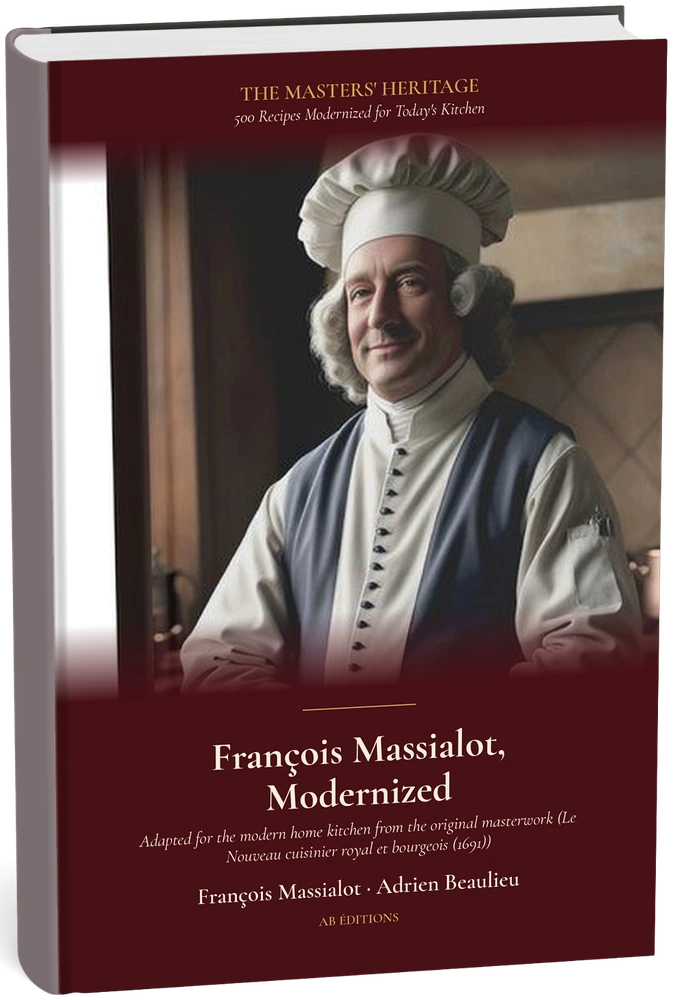
François Massialot · Adrien Beaulieu
Édition internationale en Anglais · L'Héritage des Maîtres
Découvrir l’ouvrage →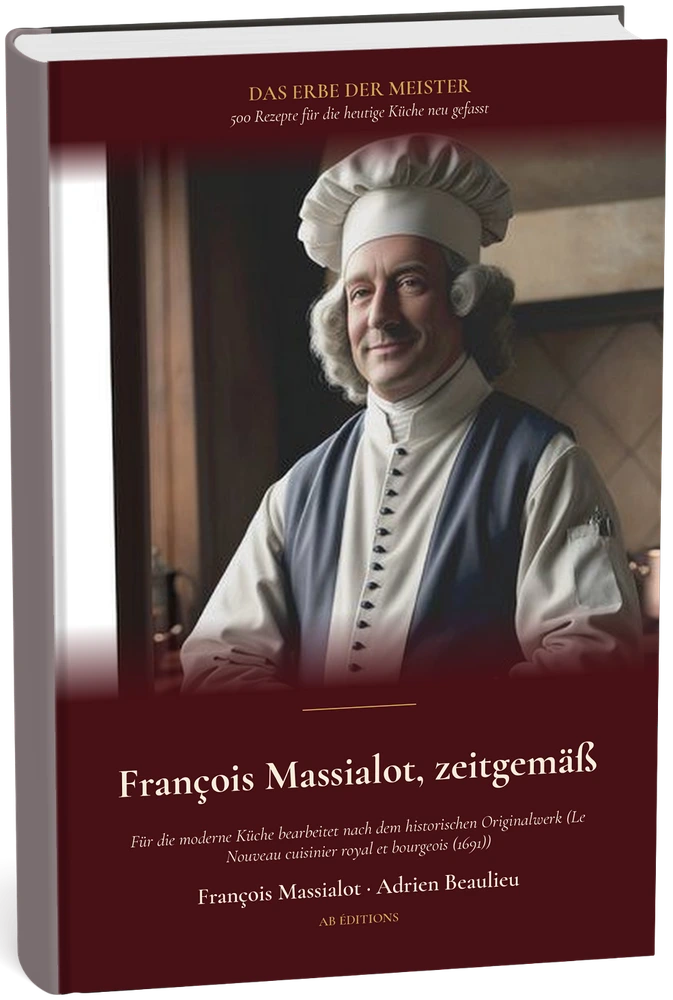
François Massialot · Adrien Beaulieu
Édition internationale en Allemand · L'Héritage des Maîtres
Découvrir l’ouvrage →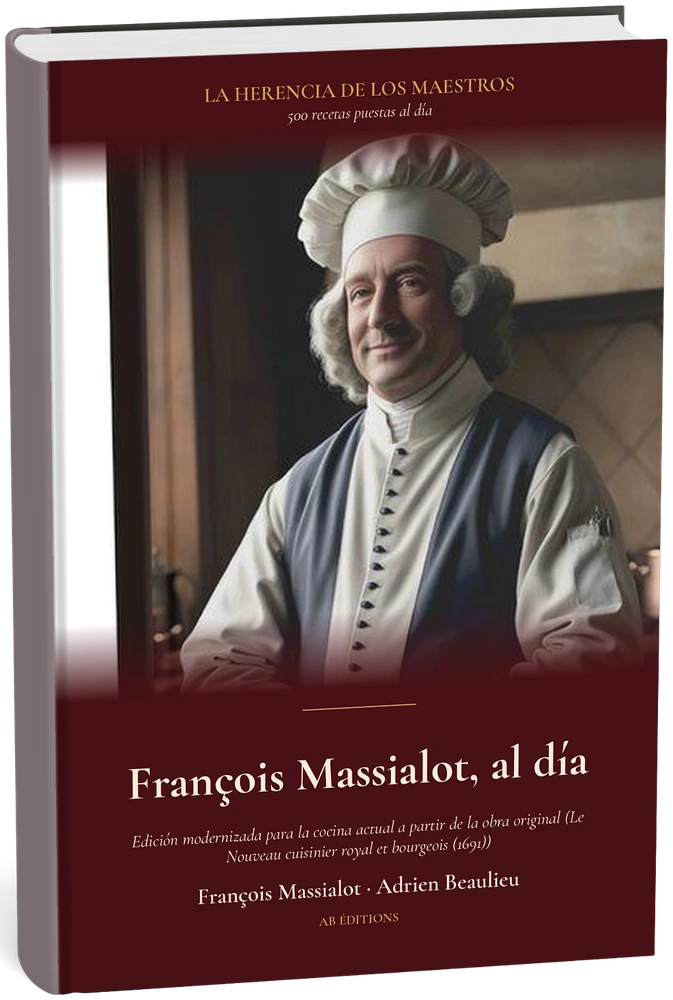
François Massialot · Adrien Beaulieu
Édition internationale en Espagnol · L'Héritage des Maîtres
Découvrir l’ouvrage →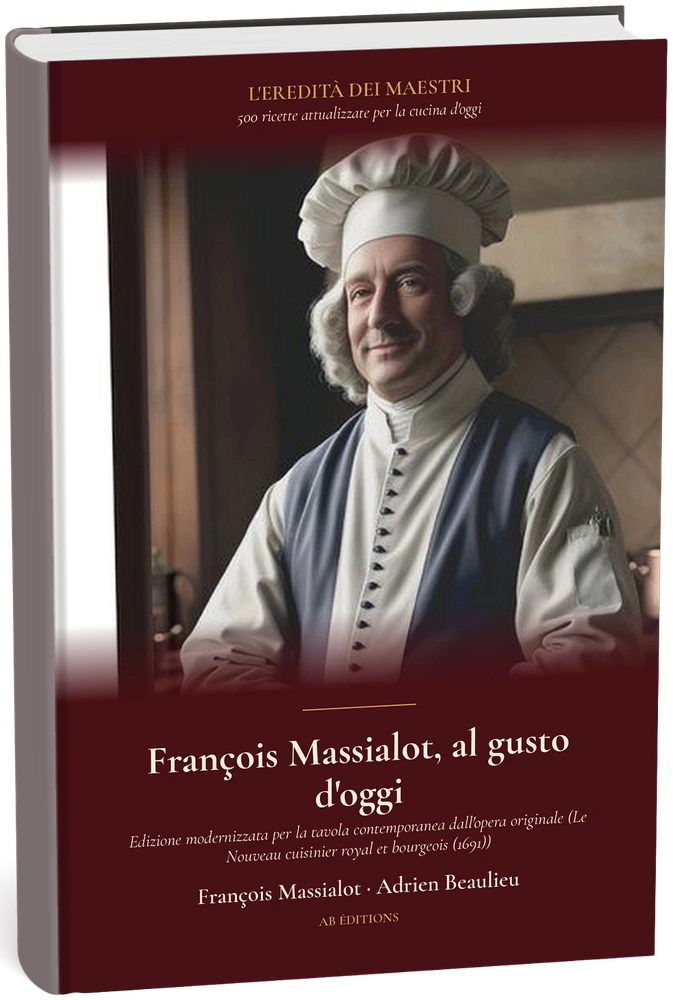
François Massialot · Adrien Beaulieu
Édition internationale en Italien · L'Héritage des Maîtres
Découvrir l’ouvrage →
François Massialot · Adrien Beaulieu
Édition internationale en Portugais · L'Héritage des Maîtres
Découvrir l’ouvrage →
François Massialot · Adrien Beaulieu
Édition internationale en Néerlandais · L'Héritage des Maîtres
Découvrir l’ouvrage →
François Massialot · Adrien Beaulieu
Édition internationale en Suédois · L'Héritage des Maîtres
Découvrir l’ouvrage →
François Massialot · Adrien Beaulieu
Édition internationale en Polonais · L'Héritage des Maîtres
Découvrir l’ouvrage →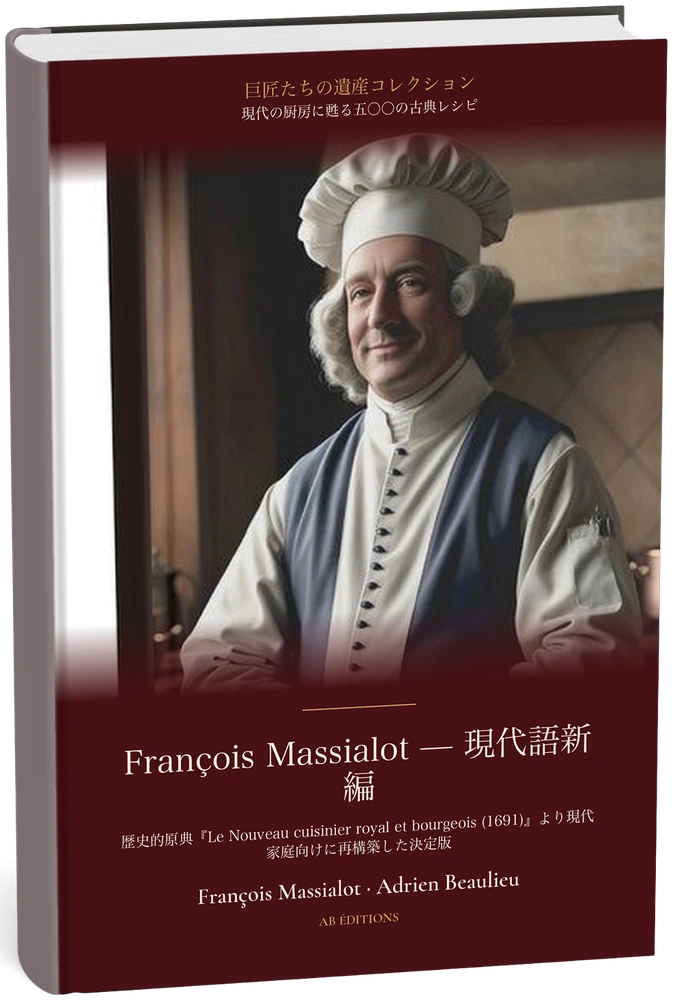
François Massialot · Adrien Beaulieu
Édition internationale en Japonais · L'Héritage des Maîtres
Découvrir l’ouvrage →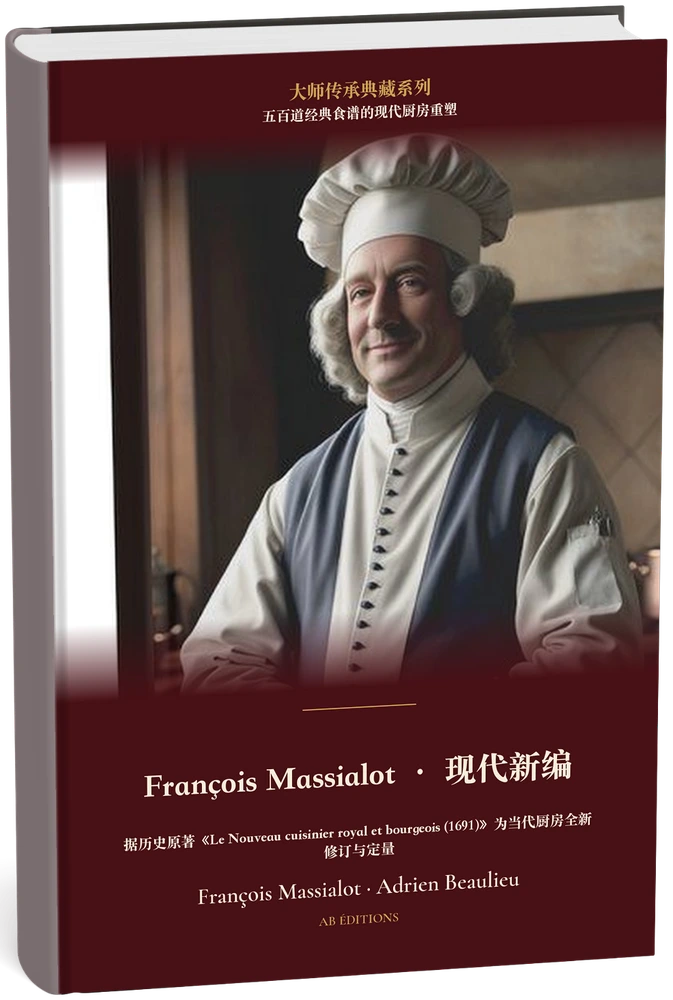
François Massialot · Adrien Beaulieu
Édition internationale en Chinois · L'Héritage des Maîtres
Découvrir l’ouvrage →François Massialot, hailed by his contemporaries as the “Cook of Kings,” stands among the most commanding figures in seventeenth-century French culinary art. Born in 1660, he presided over the grand kitchens of the realm’s most illustrious palaces, not least that of Louis XIV, the Sun King. The environment of unrestrained splendour and courtly magnificence in which he operated profoundly marked his culinary vision, impelling him to experiment, refine, and codify preparations destined to become everlasting touchstones of the table.
Massialot is celebrated above all for his monumental treatise, Le Cuisinier Royal et Bourgeois, published in 1691. This work represents one of the earliest gastronomic volumes to arrange its contents alphabetically, thereby providing a true encyclopedia of the kitchen. By uniting courtly refinement with pragmatic clarity, the work transformed culinary craft, opening its secrets to an ascending and prosperous bourgeoisie. Through his ingenuity and pioneering method, Massialot marked an indispensable epoch in the evolution of French taste, directly informing the masters of succeeding generations, foremost among them Marie-Antoine Carême.
1. The Alphabetical Organization of Recipes
Le Cuisinier Royal et Bourgeois was a signal departure from custom, being among the very first culinary compendia to marshal its preparations in alphabetical order. This lucid arrangement converted a collection of receipts into an accessible dictionary of culinary practice, an indispensable reference work for the practitioners of the Grand Siècle. Massialot’s methodical taxonomy laid the architectural framework for the modern cookbook, demystifying the secrets of the kitchen and rendering them intelligible to all.
2. Mastery of Liaisons and the Emulsified Sauce
Massialot perfected numerous binding techniques that would henceforth serve as the bedrock of classic French cooking. Most notably, he canonized the use of the roux—that intimate alliance of flour and butter—to lend sauces a velvety consistency, uniform texture, and incomparable unction. Furthermore, he pursued the delicate mechanics of warm emulsified sauces, anticipating the Hollandaise and beurre blanc, introducing those satin textures that became the hallmark of the French classical repertoire. These technical triumphs unlocked infinite gradations of flavour and enriched the table with sauces of unmatched nobility.
3. Creation and Codification of Iconic Preparations
To François Massialot belongs the renown of having conceived, or at the very least formalized in print, several of the most famous delicacies of the French canon. Preeminent among these is the crème brûlée, described for the first time under that name in Le Cuisinier Royal et Bourgeois. This confection, presenting a brittle mantle of caramelized sugar over an unctuous custard, has endured as a supreme emblem of French pastry. Massialot likewise introduced the term “meringue” into culinary literature, marking an epochal advancement in the art of the entremets. By formalizing these recipes, he carved immortal monuments into the cultural heritage of the palate.
4. The Primacy of Bouillons and the Art of Deglazing
Massialot placed supreme importance on rich broths and reductions as the foundation of all sauces and potages. He championed the technique of deglazing, capturing the caramelized pan drippings of roasted meats to yield gravies of profound aromatic intensity. He also formulated the concept of the universal coulis, an enriched, concentrated stock designed to fortify diverse preparations. Such methods allowed the cook to capture and concentrate the true essence of flesh and fowl, steering culinary craft away from heavy spice and toward clarity of taste.
5. The Incorporation of Exotic Commodities
Within his works, Massialot embraced the new luxury commodities that global trade was then delivering to the capital: chocolate, tea, and coffee. By devising recipes that integrated these exotic stimulants into confectionery and dining, Massialot bore witness to the expanding horizon of seventeenth-century commerce, demonstrating that French culinary art possessed an extraordinary capacity to assimilate the treasures of the wider world.
Massialot’s formulations bear witness to his singular talent for uniting technical rigor with effortless grace. Among his most celebrated creations are the following:
1. Crème Brûlée
The crème brûlée remains Massialot’s most immortal legacy, first codified in Le Cuisinier Royal et Bourgeois. The sweet consists of a delicately perfumed egg custard, silky and smooth, crowned by a brittle disk of caramelized sugar.
• Principal Ingredients: Fresh cream, egg yolks, sugar, vanilla.
• Method: The custard is gently cooked over gentle heat or in a water bath, then dusted with fine sugar and passed beneath a glowing-hot salamander or fire iron until the crust crystallizes into glass. The dramatic tension between warm, brittle caramel and chilled, unctuous cream secures its immortality.
2. Meringue
The meringue, codified by Massialot, brought light and airy perfection to the art of the sugar baker. Formed of egg whites and fine sugar, it is dried at low heat to achieve a brittle shell encasing a tender heart.
• Principal Ingredients: Fresh egg whites, refined sugar.
• Method: The whites are beaten into firm peaks with sugar, then slowly dried in an oven of moderate warmth until ethereal and bone-white, serving as an accompaniment to creams or enjoyed in solitary splendor.
3. Pâté en Croûte
An ancient pillar of the French culinary landscape, the pâté en croûte was elevated by Massialot into an object of aristocratic finesse, composed of fragrant forcemeats encased in golden pastry.
• Principal Ingredients: Prime pork, tender veal, garden herbs, rich puff or short paste.
• Method: The meats are seasoned and steeped in wine and aromatics, sealed within a decorative pastry edifice, and gently baked until the crust achieves a glistening amber hue, sealing in the aromatic juices of the farce.
The legacy bequeathed by François Massialot to the art of cookery is of immense proportion. His synthesis of analytical organization, rigorous technical discipline, and aesthetic refinement influenced generations of culinary masters, paving the way directly for Antonin Carême, the high priest of haute cuisine. Massialot prepared the ground upon which the grand architecture of classical gastronomy was erected, establishing methods that remain venerated in professional kitchens to this day.
Massialot was among the primary architects who transformed French culinary tradition from an obscure guild secret into a rational, reproducible discipline. The alphabetical disposition of his manual, paired with clear technical explanations, made Le Cuisinier Royal et Bourgeois the supreme authority of its age. Through this pedagogical rigor, culinary knowledge ceased to be erratic lore and became an organized, transmissible science.
Massialot’s signature preparations, such as the crème brûlée, together with his fundamental maneuvers—the standard roux and warm emulsified sauces—remain foundational elements of gastronomy. These contributions definitively oriented French cooking toward the primacy of the sauce, the harmony of flavors, and the architectural elegance of the plate.
Massialot reconciled the ceremonial luxury of Versailles with the practical demands of the rising urban bourgeoisie. In bringing the high art of the royal table within reach of the private household, and in documenting his recipes with exemplary clarity, he democratized the gastronomic arts, proving that elegance could flourish far beyond the antechambers of princes.
François Massialot established the durable foundations of a cuisine that was refined, methodical, and profoundly accessible. Through his labours, the dining table of seventeenth-century France was elevated to an art without parallel, leaving a timeless imprint upon every kitchen where excellence is prized. His work, uniting technical command, boundless curiosity, and sovereign taste, remains the very definition of the French culinary soul.
By virtue of his organizational genius, his seminal inventions, and his capacity to draw sublime expression from the simplest ingredients, Massialot transformed gastronomy into a noble and respected art. To this day, he stands as an enduring archetype for chefs the world over, his presence felt wherever harmony of flavour reigns supreme and culinary technique is elevated to the sublime.
Recettes, histoires, parutions et éditions de collection — quelques lettres par an, jamais davantage.