La Cuisine Classique (1856)
Urbain Dubois
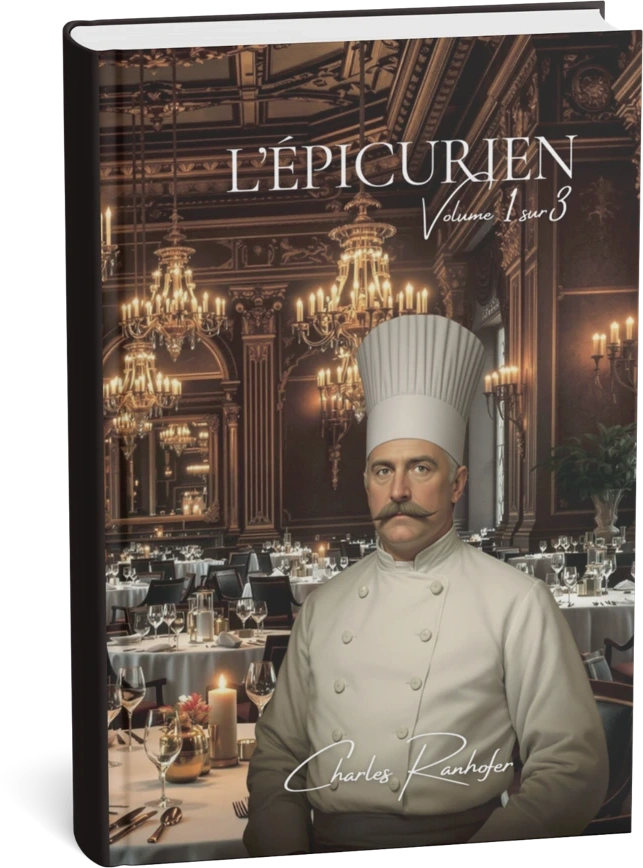
Les Grands Classiques (Originaux) · Le grand traité d'apparat des cours d'Europe et du service à la russe
Découvrir l’ouvrage → MAISON BEAULIEUAB ÉDITIONS · CUISINE & LETTRES
La Maison Beaulieu présente l’œuvre de Urbain Dubois selon son architecture éditoriale complète : d’abord I. Les Grands Classiques (les textes originaux d’époque), puis II. L’Héritage des Maîtres (l’édition française modernisée — 500 recettes mises au goût du jour), et enfin III. Le Rayonnement International (l’édition modernisée traduite en 10 langues). Tarif officiel Cuisine AB Éditions : Ebook · 9,90 € · Broché (PB) · 24,90 € (+ port réel) · Relié Collector (HC) · 34,90 € (+ port réel).
Le texte historique intégral de Urbain Dubois, établi et restauré dans sa typographie et sa langue d’origine, avec ses couvertures de collection originales.
Urbain Dubois
Les Grands Classiques (Originaux) · Le grand traité d'apparat des cours d'Europe et du service à la russe
Découvrir l’ouvrage →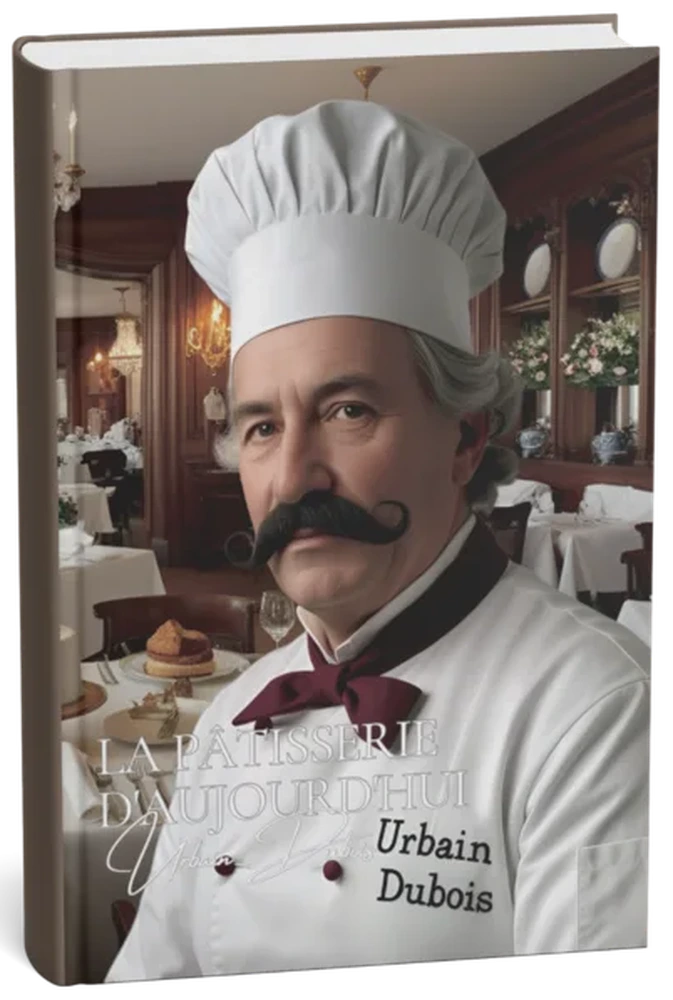
Urbain Dubois
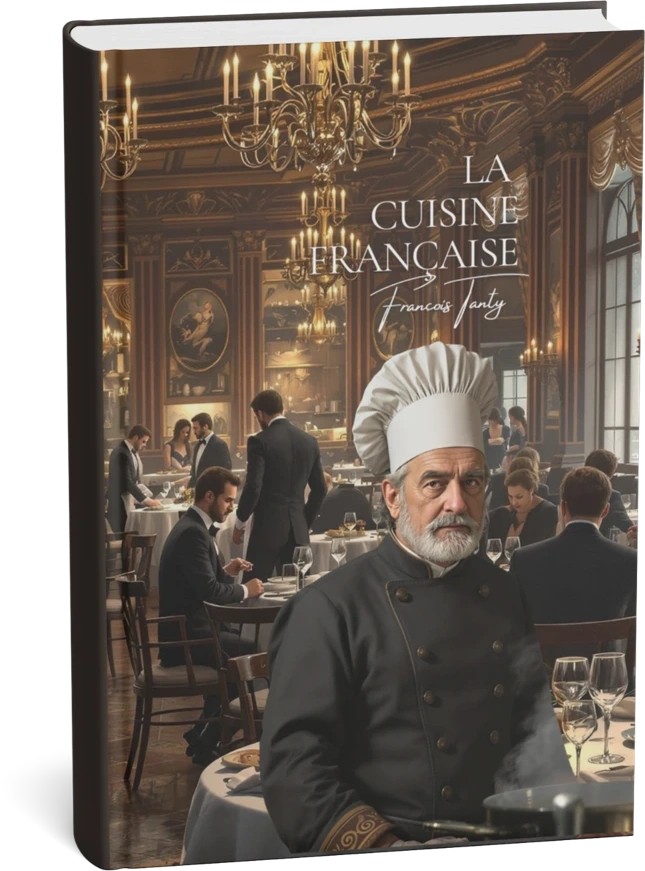
Les Grands Classiques (Originaux) · École des jeunes pâtissiers : grands et petits gâteaux, glaces et confiserie
Découvrir l’ouvrage →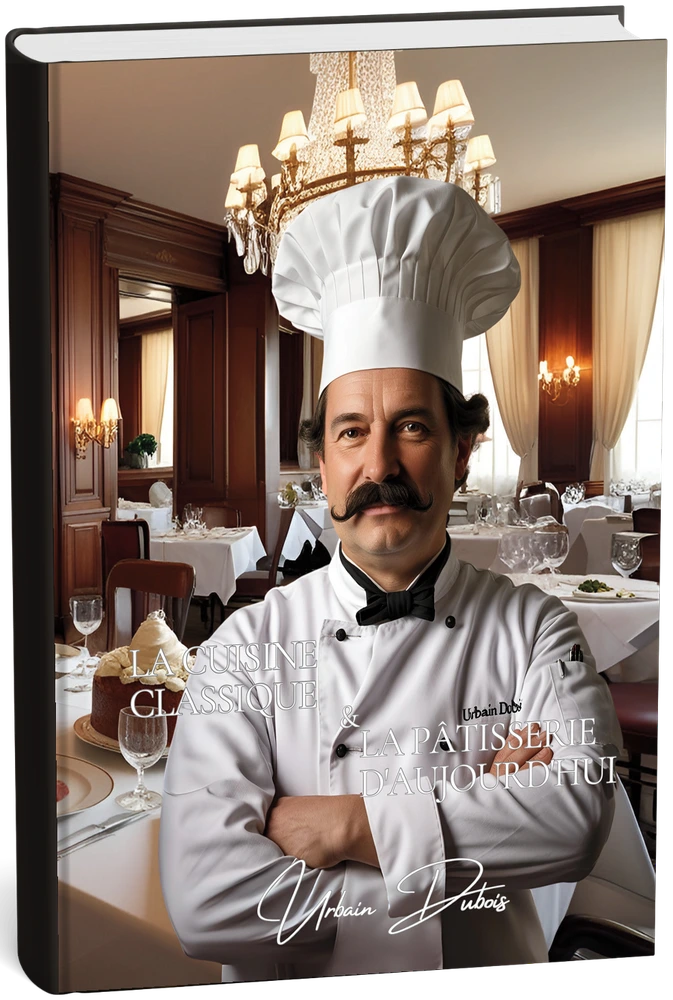
Urbain Dubois
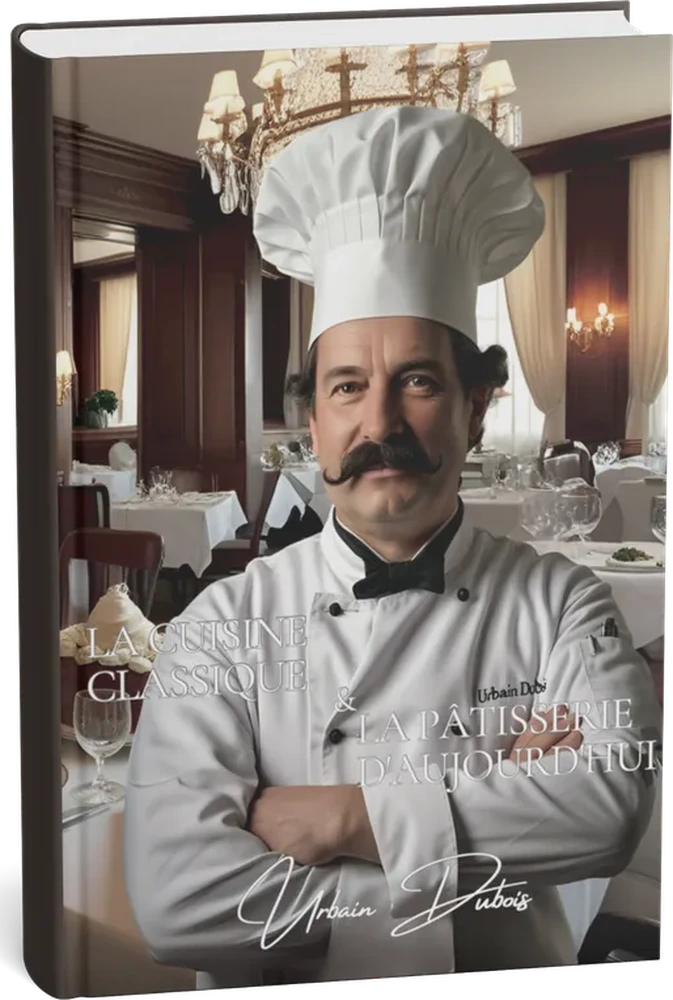
Les Grands Classiques (Originaux) · Les deux monuments d'Urbain Dubois réunis
Découvrir l’ouvrage →Pour cuisiner réellement Urbain Dubois aujourd’hui chez soi sans brigade : chaque recette est codifiée et structurée selon le protocole de la Maison (Ingrédients calibrés en grammes pour 4 personnes · Préparation pas à pas avec temps et températures exacts · Conseil du Chef), dans le respect absolu du goût et de l’esprit du Maître.
Conformément à la doctrine éditoriale de la Maison, ce n’est jamais le français archaïque d’époque qui est traduit, mais notre édition française modernisée (L’Héritage des Maîtres — 500 recettes au goût du jour), afin d’offrir aux lecteurs du monde entier des recettes claires, précises et immédiatement réalisables en 10 langues (EN, DE, ES, IT, PT, NL, SV, PL, JA, ZH) :
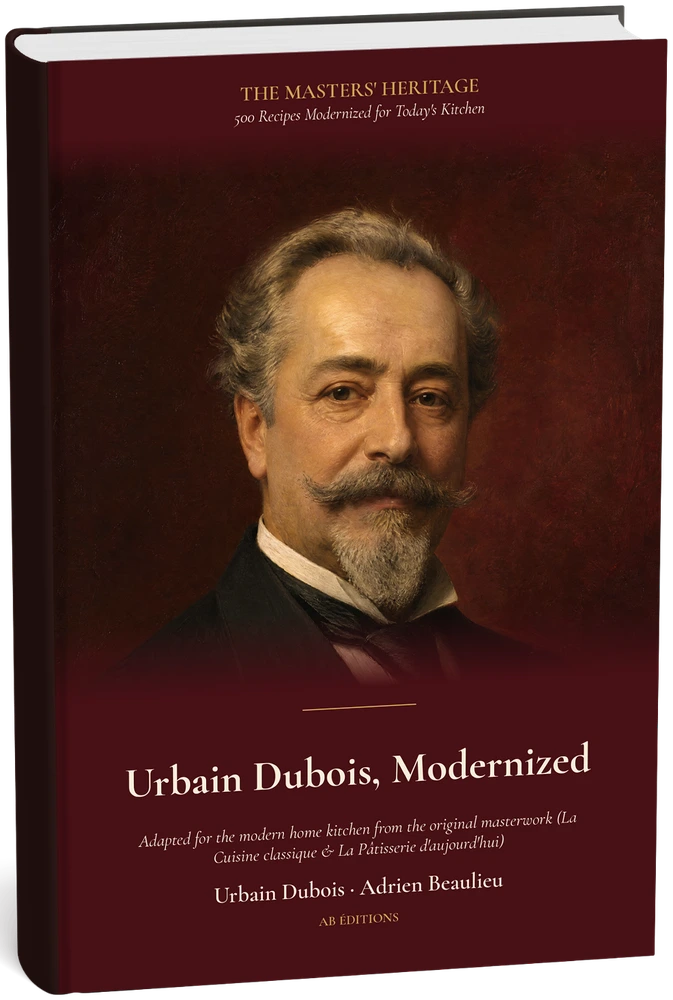
Urbain Dubois · Adrien Beaulieu
Édition internationale en Anglais · L'Héritage des Maîtres
Découvrir l’ouvrage →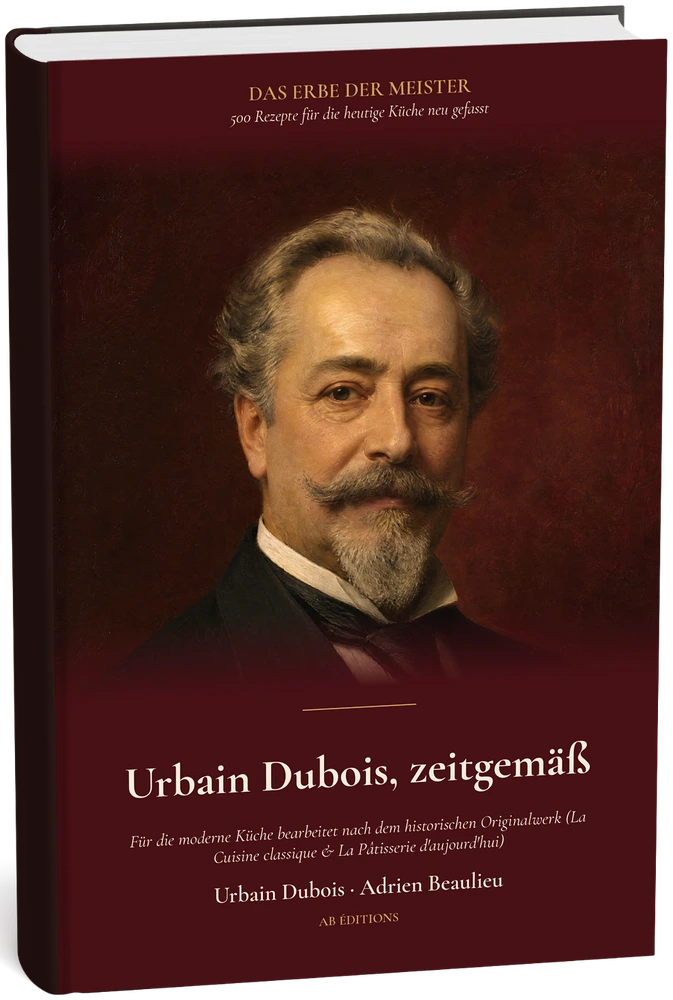
Urbain Dubois · Adrien Beaulieu
Édition internationale en Allemand · L'Héritage des Maîtres
Découvrir l’ouvrage →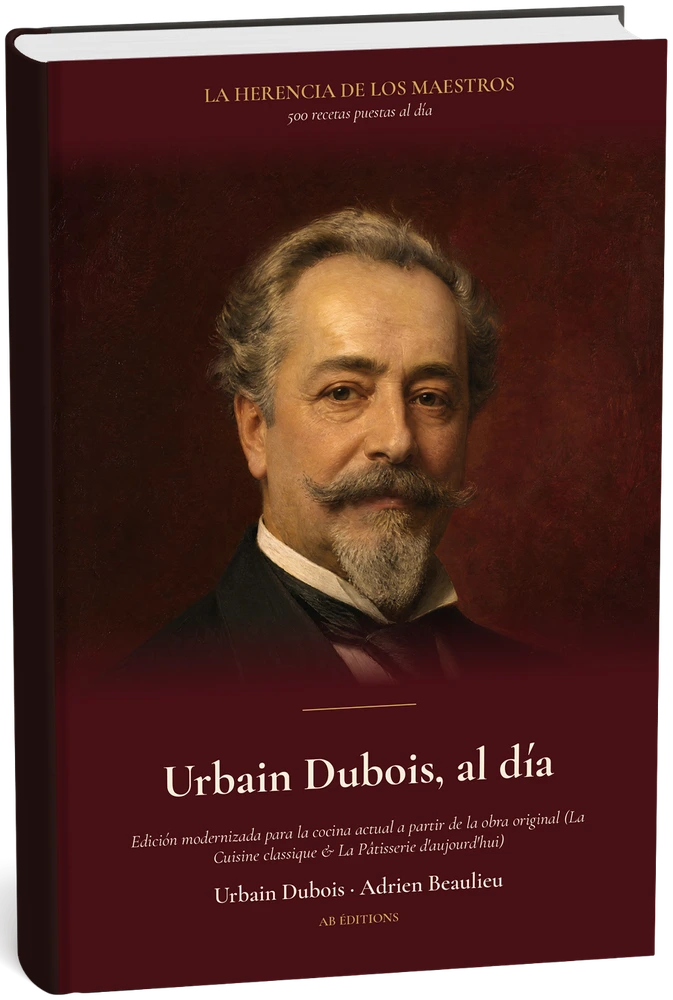
Urbain Dubois · Adrien Beaulieu
Édition internationale en Espagnol · L'Héritage des Maîtres
Découvrir l’ouvrage →
Urbain Dubois · Adrien Beaulieu
Édition internationale en Italien · L'Héritage des Maîtres
Découvrir l’ouvrage →
Urbain Dubois · Adrien Beaulieu
Édition internationale en Portugais · L'Héritage des Maîtres
Découvrir l’ouvrage →
Urbain Dubois · Adrien Beaulieu
Édition internationale en Néerlandais · L'Héritage des Maîtres
Découvrir l’ouvrage →
Urbain Dubois · Adrien Beaulieu
Édition internationale en Suédois · L'Héritage des Maîtres
Découvrir l’ouvrage →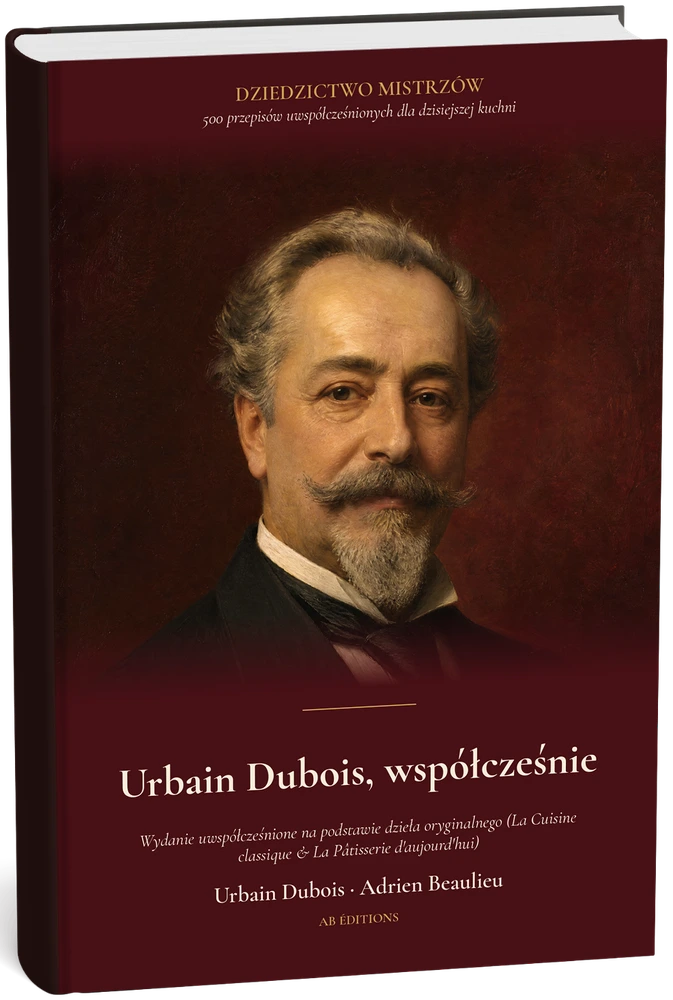
Urbain Dubois · Adrien Beaulieu
Édition internationale en Polonais · L'Héritage des Maîtres
Découvrir l’ouvrage →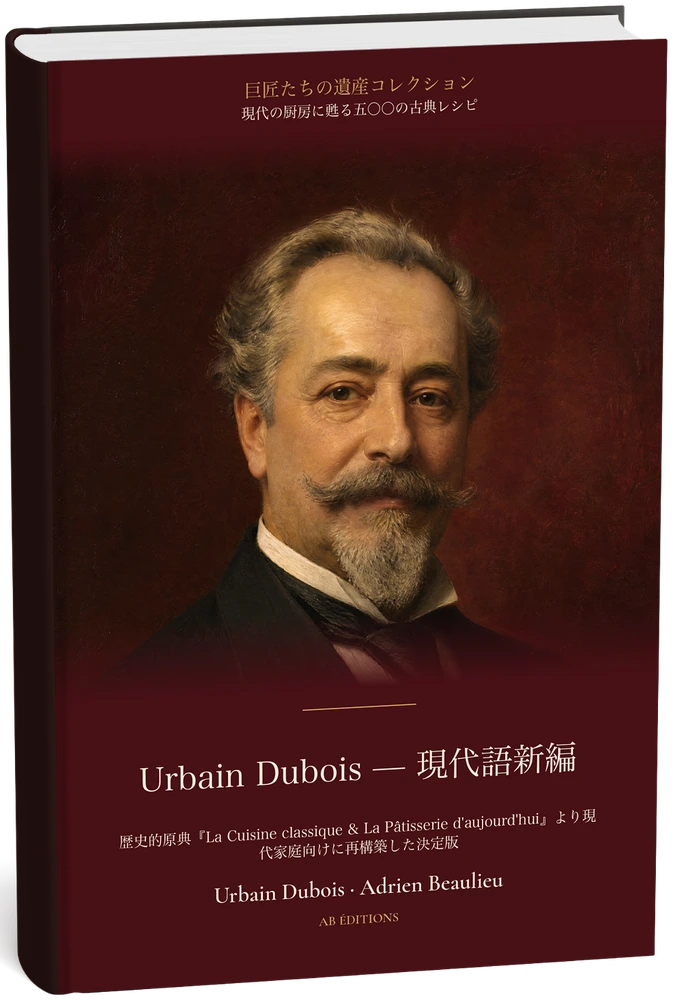
Urbain Dubois · Adrien Beaulieu
Édition internationale en Japonais · L'Héritage des Maîtres
Découvrir l’ouvrage →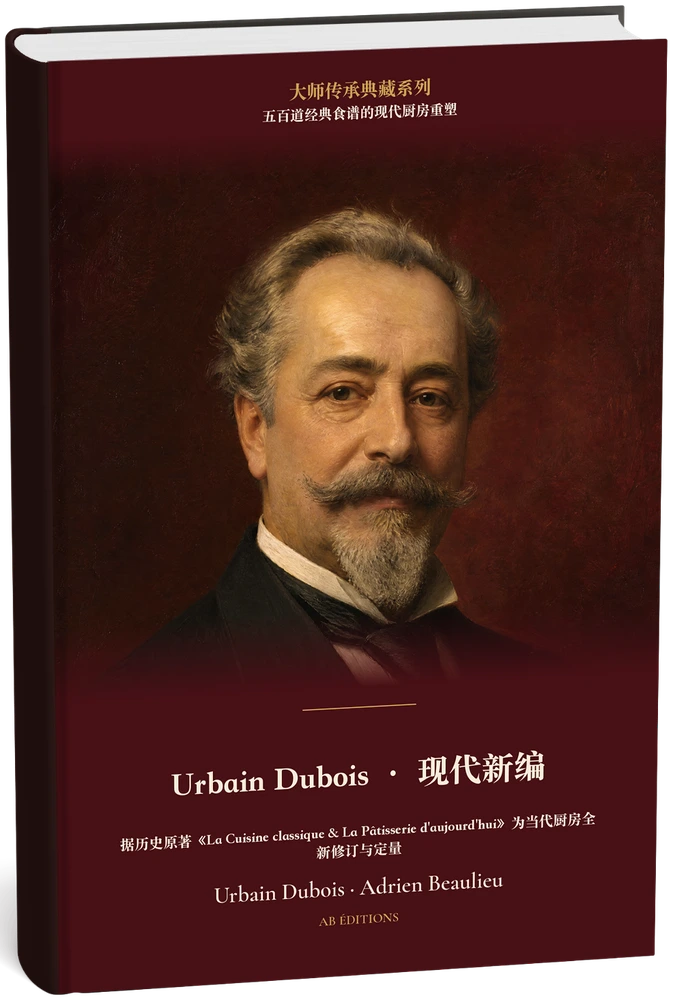
Urbain Dubois · Adrien Beaulieu
Édition internationale en Chinois · L'Héritage des Maîtres
Découvrir l’ouvrage →Urbain Dubois was born in Trets, in the Bouches-du-Rhône, on May 26, 1818, the son of a master weaver and a notary’s daughter. Archival traces of his early schooling are scant; one account suggests that the parish priest took the boy under his wing, imparting the rudiments of Latin. His culinary apprenticeship began locally under his uncle Jean Dubois, proprietor of a celebrated establishment and formerly master of the kitchens to a comrade-in-arms of Napoleon I. The training was uncompromising, for the master was as stern as he was exacting.
Arriving in Paris, he passed through the kitchens of the Rothschild family before making his mark in three of the capital’s most revered cafés: Tortoni, the Café Anglais—then presided over by Adolphe Dugléré—and Le Rocher de Cancale, where Langlais, creator of the *sole normande*, held sway. He subsequently departed for Russia to enter the service of Prince Alexei Fyodorovich Orlov. It was in the Prince’s grand household that he devised the celebrated *veau Orloff*, securing an enduring international reputation.
The decisive juncture of his career arrived circa 1864, when William I, King of Prussia, appointed him his *chef de bouche*. Dubois was to remain in royal service for more than two decades, until roughly 1880 or 1885, alternating monthly duties with Émile Bernard—each directing the royal kitchens two months out of every four. He turned this rhythm to literary account. The chronicler Victor Tissot recorded that each morning, once the physician had completed his examination, Dubois was ushered in to lay several proposed bills of fare before the sovereign, received not as a mere domestic servant, but as a dignitary of considerable consequence. The chef did not labor in the shadows: he composed, submitted, and debated his culinary designs.
In 1868, he married Marie-Virginie-Louise Boder in Potsdam. Five children were born of the union: Joseph-Émile, Albert-Félix, Ernest-Eugène, Julie-Marguerite, and Jeannette-Hélène. Félix, the second son, would achieve renown as a journalist. Even after the Franco-Prussian War of 1870, Dubois continued to serve the Prussian court, as did Bernard, who had likewise transferred his allegiance from Napoleon III to William I. Dubois passed away in Nice on March 14, 1901. His venerable life had spanned a profound transformation in culinary history: born under the Bourbon Restoration, he drew his last breath in the golden twilight of the Belle Époque.
The foundation stone of his renown was *La Cuisine classique*, co-authored with Émile Bernard and first published, in all likelihood, in 1856. Subsequent editions and reprints followed in 1864, 1868, 1888, and 1897. Its full title proclaimed the breadth of its ambition: *Practical, Reasoned, and Demonstrative Studies of the French School Applied to Russian Service*. The adjectives were chosen with precision. The work was no haphazard compendium of culinary curiosities; it professed to demonstrate the underlying reasons and methods governing every procedure. Bound for the most part in two imposing volumes, it codified thousands of recipes—numbering 3,544 in the 1888 edition—accompanied by magnificent engraved plates.
Having erected this initial monument, Dubois set about writing for every tier of society. *Cuisine de tous les pays* (1868 or 1872) assembled German, French, Italian, English, Russian, and Polish receipts. *École des cuisinières* (1871) set forth 1,500 accessible, thrifty recipes conceived for the domestic hearth. *Cuisine artistique* (1872 or 1882), often issued in two volumes, was an encyclopedic treatise on ornate presentation, prodigally illustrated. *La Nouvelle cuisine bourgeoise pour la ville et pour la campagne* (1878 or 1888) addressed the practical needs of town and country households alike. *Le Grand livre des pâtissiers et des confiseurs* (1883) was a specialized masterpiece of confectionery. *La Cuisine d'aujourd'hui* (1889) formed an instruction manual for aspiring chefs, famously detailing some 250 distinct manners of preparing eggs; while *La Pâtisserie d'aujourd'hui* (1894) was dedicated to grand and petite pastry, architectural table ornaments, entremets, ices, preserves, and celebratory banquet buffets.
This vast bibliography delineates the trajectory of a master who sought first to codify the gastronomy of the ruling elite, subsequently to elevate the standard of household cooking, and ultimately to educate the rising generation of culinary professionals. His illustrations were never intended as idle divertissements; they functioned as pedagogical diagrams—authoritative models for other chefs to execute. For Dubois understood that an art so bound to sculptural form could never be transmitted through the printed word alone.
The style of these engravings reflects the consummate aesthetic of his age: intricate architectural elevations, rigorous symmetry, monumental pedestals and socles, and an unwavering precision of detail. They depict elaborately dressed platters, theatrical *pièces montées*, ornate table dressings, and, on occasion, technical steps of preparation. The captions in *La Cuisine classique* refer systematically to these plates: “Number 14 represents a decorative skewer (*hâtelet*),” notes the text. One must perforce read the volume with the engraved plate held before the eye; a naked transcription of the prose cannot suffice. In *Cuisine artistique*, his most decorative opus, the technical descriptions evoke gouges for carving tallow or wax and iron armatures for anchoring tiered structures. Cooking here attained the status of ephemeral architecture.
*La Pâtisserie d'aujourd'hui* carried this structural ethos into the medium of sugar: checkerboards, baskets, towering centerpieces, and grand reception buffets. The pastry-cook was reimagined as a scenographer. The modern reader will discover therein cakes and entremets well within the reach of a home kitchen, alongside spectacular showpieces worthy of an exhibition window—the accounts of which we preserve faithfully, without demanding their literal reconstruction.
Dubois traversed the entire expanse of nineteenth-century culinary history: the post-Imperial dawn, the July Monarchy, the Second Empire, the Franco-Prussian War, and the emergence of the Belle Époque. He commanded sovereign kitchens, orchestrating banquets of twenty to fifty covers, while remaining intimately acquainted with those Parisian cafés that forged the global supremacy of French dining.
His table was emphatically that of *service à la russe*. In the antecedent *service à la française*, all dishes belonging to a single course were laid simultaneously upon the board in strict symmetry; the host would often carve the roasts directly before the assembled company. The spectacle was grand, yet the dishes inevitably cooled and the sheer profusion dispersed the diner’s contemplation. Under *service à la russe*, dishes were carved and dressed in the wings, then presented sequentially by the footmen. Each preparation arrived piping hot, portioned with precision, commanding the diner’s undivided sensory attention. This transition marked one of the cardinal gastronomic revolutions of the nineteenth century, and its deliberate inclusion in the title of *La Cuisine classique* underscores the paramount importance Dubois accorded it.
Yet this board remained an apparatus of courtly splendor. Grand pieces were elevated on sculptural socles, crowned with silver *hâtelets*, or nested within crisp croustades and fluted borders. Sustaining such structures demanded consummate dexterity, bordering on architectural science. Yet ornament was never an empty indulgence: Dubois codified master stocks, mother sauces, and garnishes designed to be combined with modular brilliance.
His conception of a feast cannot be grasped apart from its institutional theater. The princely houses he governed maintained vast culinary brigades to serve guests of eminent station. A single *relevé* was calculated for twenty, thirty, or fifty covers: hence those staggering formulas prescribing fourteen kilograms of beef and fifty liters of water for a simple *bouillon*, or eighteen truffles, twenty-five cock’s combs and kidneys, thirty-six mushrooms, and twenty-four escalopes of foie gras for a single garnish. None of this was whimsical extravagance; it was the native scale of an imperial court, and only through this prism can his texts be justly appreciated.
His century was likewise that in which cookery established itself as an intellectual discipline. Dubois wrote so that others might master the craft: his treatises invoked the concept of the “school” (*école des cuisinières*, *école des jeunes cuisiniers*, *école des jeunes pâtissiers*), employing the term “reasoned” where his forebears had fallen back on “secrets.” This supreme faith in rational method remains the most modern attribute of his mind.
Dubois’s influence radiated along three principal avenues. The first was his bibliography. By assembling and elucidating an unprecedented culinary repertoire, he codified standard procedures and established a universal technical vocabulary, transforming a trade into a recognized profession. The second was his lineage. Auguste Escoffier, universally hailed as the architect of modern French cuisine, looked upon Dubois as a mentor and a friend of thirty years, paying homage to his memory in the pages of *Le Guide culinaire*. The third was his international reach. His years in Russia and Prussia, coupled with his service to foreign monarchs, advanced the prestige of the French culinary school far beyond its native borders, while granting him firsthand mastery of foreign traditions.
His volumes remain enduring works of reference for their presentation techniques and their philosophy of the menu. Preserved in digital archives—notably on Gallica—their copperplate engravings constitute an indispensable resource for the history of nineteenth-century material culture, rendering visible every socle, symmetry, and silver ornament of the imperial banquet. A sustained interest in his oeuvre endures through scholarly reprints and the fierce competition for his first editions in antiquarian salerooms.
To open *La Cuisine classique* cold is to confront a formidable redoubt. The recipes cross-reference one another by numerical code; they are scaled for grand banquets; they call for obsolete ingredients; and they presuppose the instinctive, unwritten gestures of an experienced professional. *La Pâtisserie d'aujourd'hui*, for its part, was drafted in an austere, telegraphic cadence, stripped of articles and verbs.
*L'Héritage des Maîtres* has undertaken the task of presenting Dubois without betrayal. The fundamental sequence of operations remains untouched. His culinary verbs (*faire partir*, *réduire à glace*, *masquer*, *napper*, *abricoter*, *foncer*, *faire frapper*) are preserved, while his specialized terminology (*mirepoix*, *duxelle*, *salpicon*, *étamine*, *hâtelet*, *croustade*) is elucidated naturally within the sentence, dispensing with pedantic footnotes. The traditional appellations of the dishes remain inviolate. Proportions have been recast for tables of four to six; cooking times and temperatures are rendered in clear thermal coordinates (a lively oven, ca. 200°C/400°F; a gentle oven, 150°C/300°F; a moderate oven, 180°C/350°F; the ball stage for sugar, ca. 118°C/244°F; the crack stage, ca. 145°C/293°F). Where an obsolete ingredient demands a modern equivalent, it is explicitly identified, and internal cross-references have been superseded by a direct UDU code referencing the foundational recipe.
Consider, for example, the *sauce Robert*. In *La Cuisine classique*, its realization demands an Espagnole sauce—itself detailed elsewhere across hundreds of words—a blond veal stock, and an essence, each governed by its own independent formula. The contemporary reader possesses neither the leisure nor the inclination to mount such a campaign. Our adaptation preserves the pure essence of the preparation: finely diced onions stewed in butter, simmered with blond veal stock and a pinch of sugar; the Espagnole thinned with white wine and mushroom liquor, reduced by a quarter and passed through a fine tamis; the mustard folded in off the heat. Dubois’s cardinal counsel is maintained in all its vigor: the mustard must enter only at the final moment, for once brought to the boil, its pungency is lost forever.
So it is with the *filets de pigeon à la duxelle*: neatly trimmed, seared swiftly to remain succulent and rosy, coated in rich *duxelle*, double-breaded, crisped golden-brown ten minutes before dining, and dressed in a crown around an *émincé* of wild mushrooms. The architectural cadence is Dubois’s own; only the scale of the company has shifted.
To approach these recipes, begin always with the garnish, which Dubois announces at the outset. Locate the sauce, which often points back to a master recipe, remembering that sauce and garnish may be varied at will. As for the decorative flourishes, consider them entirely optional: the food may be presented simply on the plate without sacrificing an iota of its distinction. Lastly, heed the master’s causal clauses—the “for” and “because” (*car*) wherein Dubois imparts his finest counsel, preserved in the Chef’s Note that concludes each preparation.
1818 (May 26) — Born in Trets (Bouches-du-Rhône), the son of a master weaver and a notary’s daughter.
Formative Years — Apprenticeship under his uncle Jean Dubois in Trets, followed by positions in the kitchens of the Rothschild family, the Café Tortoni, the Café Anglais (under Dugléré), and Le Rocher de Cancale (under Langlais).
Before 1864 (Undated) — Enters the service of Prince Alexei Fyodorovich Orlov in Russia; creation of *veau Orloff*.
1856 — Probable publication of *La Cuisine classique*, co-authored with Émile Bernard.
Circa 1864 — Appointed *chef de bouche* to William I, King of Prussia, alternating kitchen service with Bernard.
1868 — Marriage to Marie-Virginie-Louise Boder in Potsdam; publication of *Cuisine de tous les pays* (1868 or 1872).
1870 — *Cosmopolitan Cookery* (English translation of *Cuisine de tous les pays*); outbreak of the Franco-Prussian War; Dubois remains in service at the Prussian court.
1871 — Publication of *École des cuisinières* (*The Household Cookery-Book*).
1872 (or 1882) — Publication of *Cuisine artistique*.
1878 (or 1888) — Publication of *Nouvelle cuisine bourgeoise pour la ville et pour la campagne*.
1883 — Publication of *Grand livre des pâtissiers et des confiseurs*.
Circa 1880–1885 — Retirement from his post at the Prussian royal court.
1889 — Publication of *La Cuisine d'aujourd'hui*.
1894 — Publication of *La Pâtisserie d'aujourd'hui*.
1901 (March 14) — Dies in Nice at the age of eighty-two; his widow survives him by fifteen years.
• La Cuisine classique (with Émile Bernard), 1856: *Practical, reasoned, and demonstrative studies of the French school applied to Russian service*; two volumes, engraved plates, comprising 3,544 recipes in the definitive 1888 edition. Dubois’s foundational masterpiece.
• Cuisine de tous les pays, 1868 or 1872 (*Cosmopolitan Cookery*, 1870): Compendium of German, French, Italian, English, Russian, and Polish recipes, among others.
• École des cuisinières, 1871 (*The Household Cookery-Book*, 1871): Elementary, economical methods for domestic cooking, pastry, and larder; 1,500 recipes.
• Cuisine artistique, 1872 or 1882: The modern school of elaborate presentation, lavishly illustrated, often bound in two volumes.
• Nouvelle cuisine bourgeoise pour la ville et pour la campagne, 1878 or 1888: Domestic culinary practice for urban and country households.
• Grand livre des pâtissiers et des confiseurs, 1883: Professional pastry and confectionery.
• La Cuisine d'aujourd'hui, 1889: An instructional manual for young cooks; service of luncheons and dinners, featuring 250 preparations of eggs.
• La Pâtisserie d'aujourd'hui, 1894: Instruction for apprentice pastry-cooks; large and small cakes, ornaments, entremets, ices, preserves, and grand buffet assemblies.
Recettes, histoires, parutions et éditions de collection — quelques lettres par an, jamais davantage.