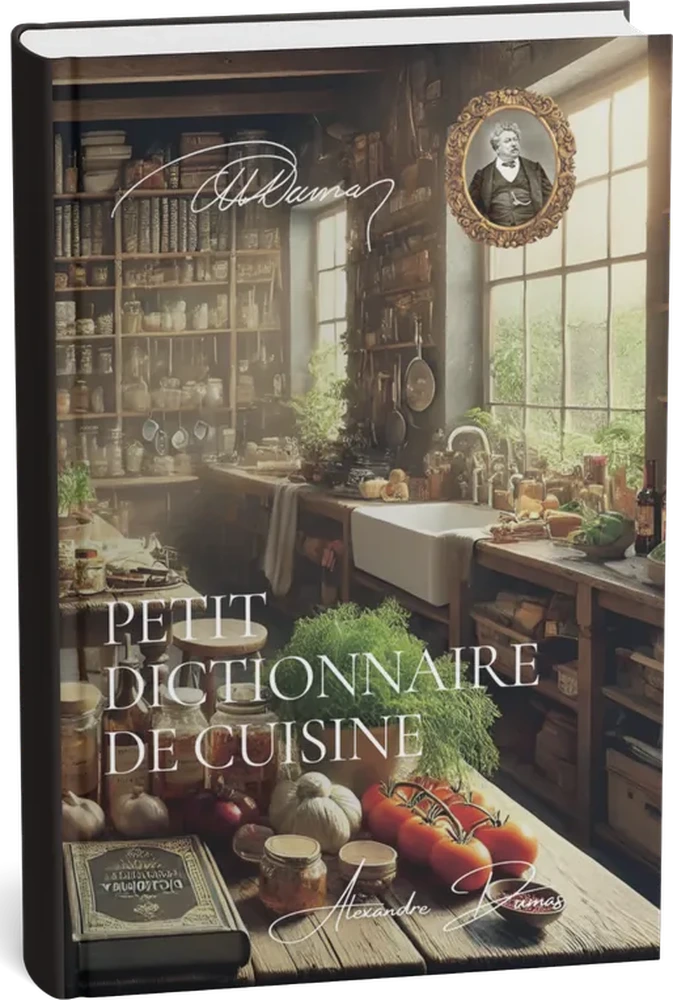
Petit Dictionnaire de Cuisine (1882) & Grand Dictionnaire de Cuisine (1873)
Alexandre Dumas
Les Grands Classiques (Originaux) · Le testament gastronomique et littéraire du père des Trois Mousquetaires
Découvrir l’ouvrage → MAISON BEAULIEUAB ÉDITIONS · CUISINE & LETTRES
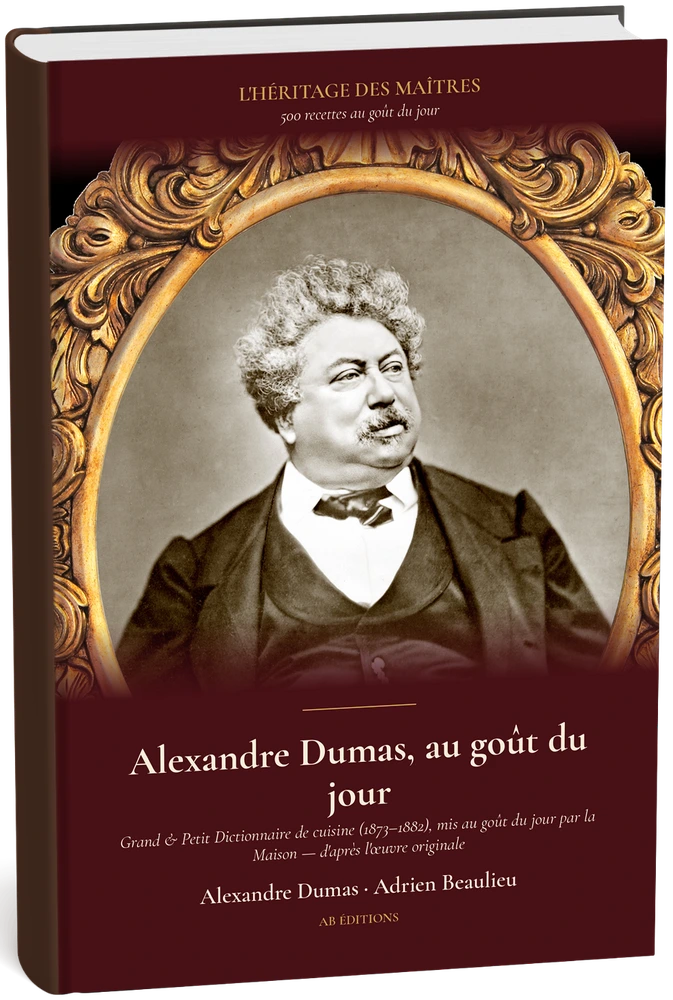
La Maison Beaulieu présente l’œuvre de Alexandre Dumas selon son architecture éditoriale complète : d’abord I. Les Grands Classiques (les textes originaux d’époque), puis II. L’Héritage des Maîtres (l’édition française modernisée — 500 recettes mises au goût du jour), et enfin III. Le Rayonnement International (l’édition modernisée traduite en 10 langues). Tarif officiel Cuisine AB Éditions : Ebook · 9,90 € · Broché (PB) · 24,90 € (+ port réel) · Relié Collector (HC) · 34,90 € (+ port réel).
Le texte historique intégral de Alexandre Dumas, établi et restauré dans sa typographie et sa langue d’origine, avec ses couvertures de collection originales.
Pour cuisiner réellement Alexandre Dumas aujourd’hui chez soi sans brigade : chaque recette est codifiée et structurée selon le protocole de la Maison (Ingrédients calibrés en grammes pour 4 personnes · Préparation pas à pas avec temps et températures exacts · Conseil du Chef), dans le respect absolu du goût et de l’esprit du Maître.
Conformément à la doctrine éditoriale de la Maison, ce n’est jamais le français archaïque d’époque qui est traduit, mais notre édition française modernisée (L’Héritage des Maîtres — 500 recettes au goût du jour), afin d’offrir aux lecteurs du monde entier des recettes claires, précises et immédiatement réalisables en 10 langues (EN, DE, ES, IT, PT, NL, SV, PL, JA, ZH) :
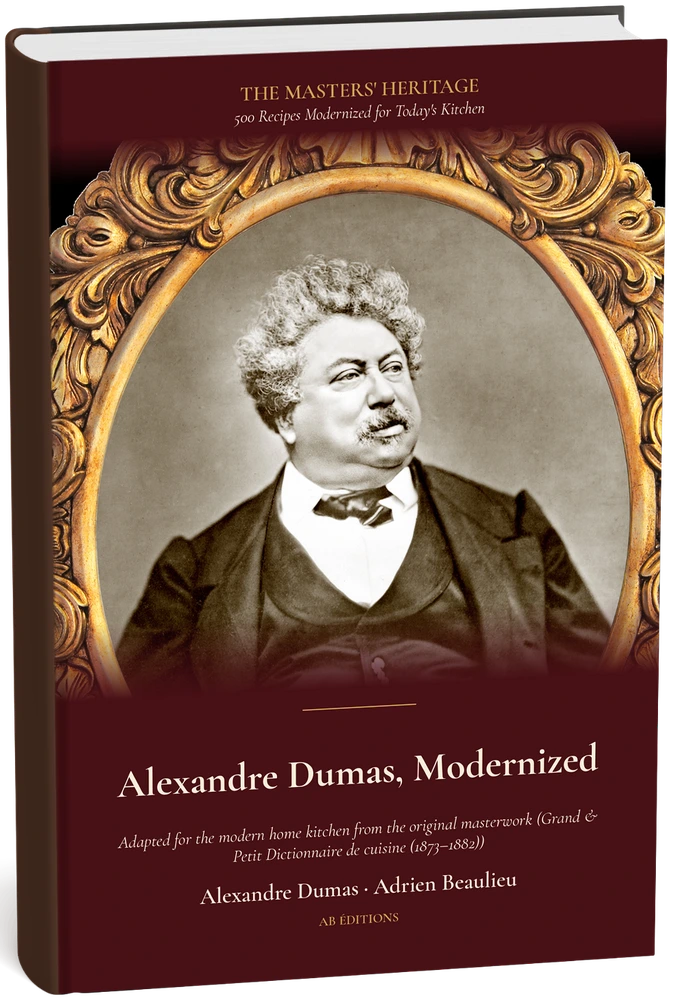
Alexandre Dumas · Adrien Beaulieu
Édition internationale en Anglais · L'Héritage des Maîtres
Découvrir l’ouvrage →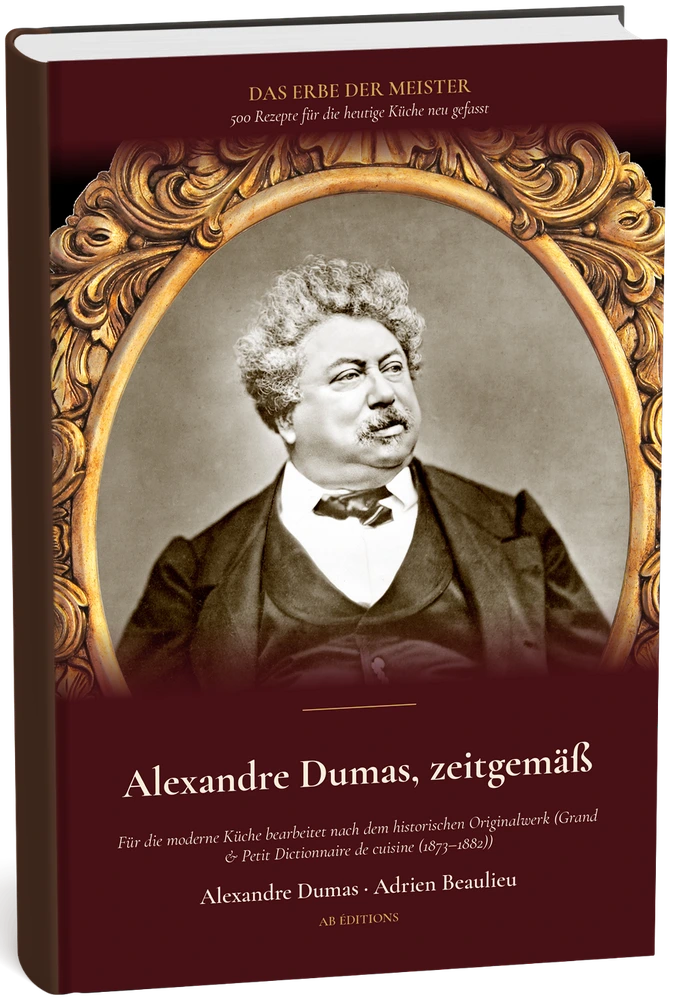
Alexandre Dumas · Adrien Beaulieu
Édition internationale en Allemand · L'Héritage des Maîtres
Découvrir l’ouvrage →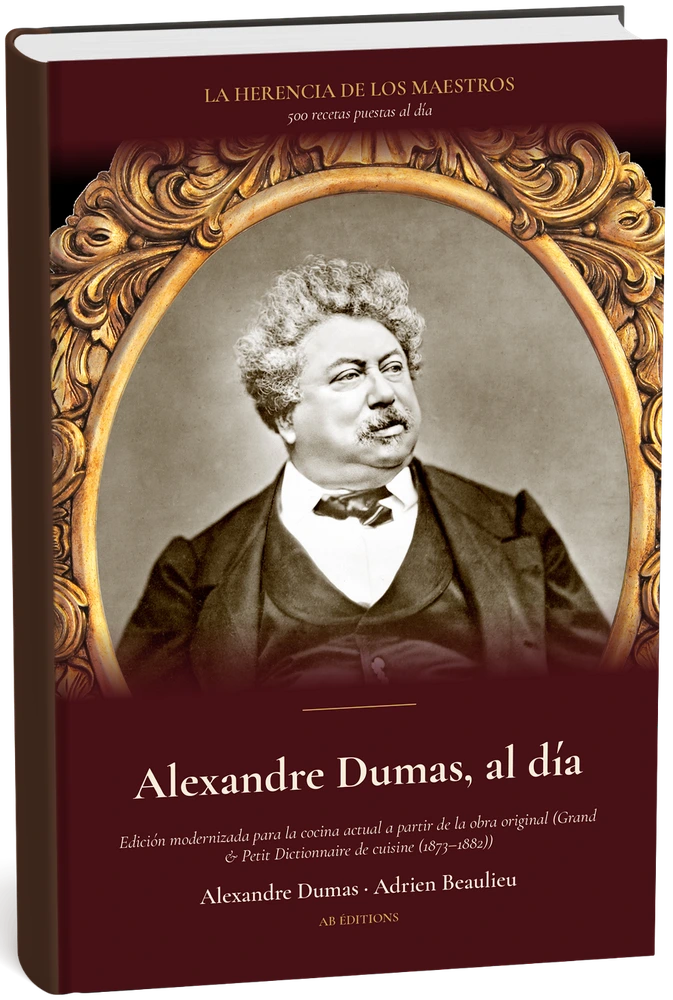
Alexandre Dumas · Adrien Beaulieu
Édition internationale en Espagnol · L'Héritage des Maîtres
Découvrir l’ouvrage →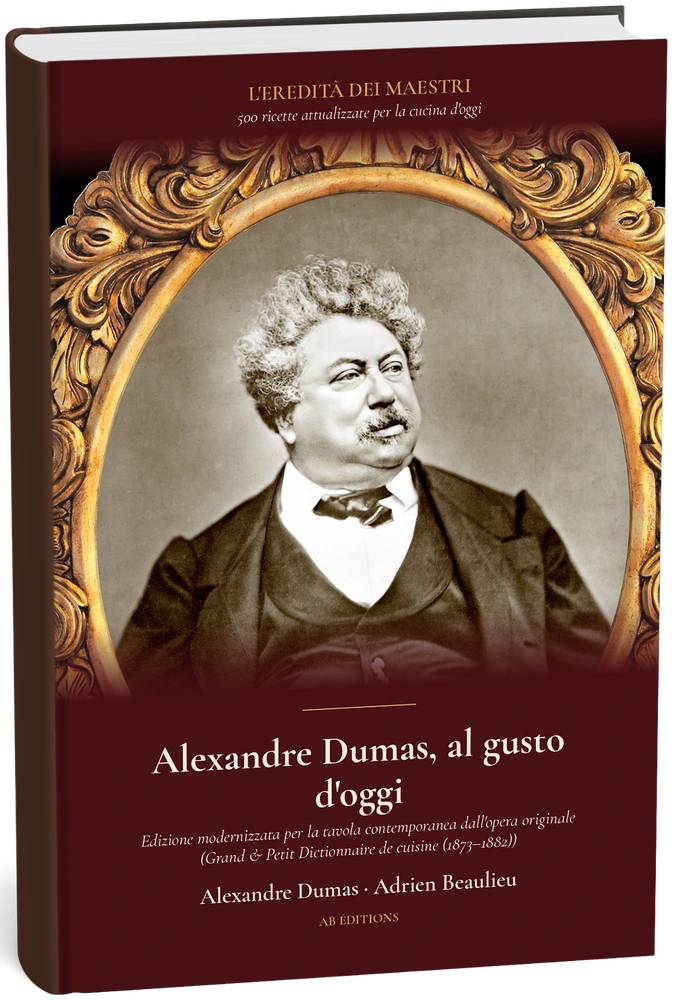
Alexandre Dumas · Adrien Beaulieu
Édition internationale en Italien · L'Héritage des Maîtres
Découvrir l’ouvrage →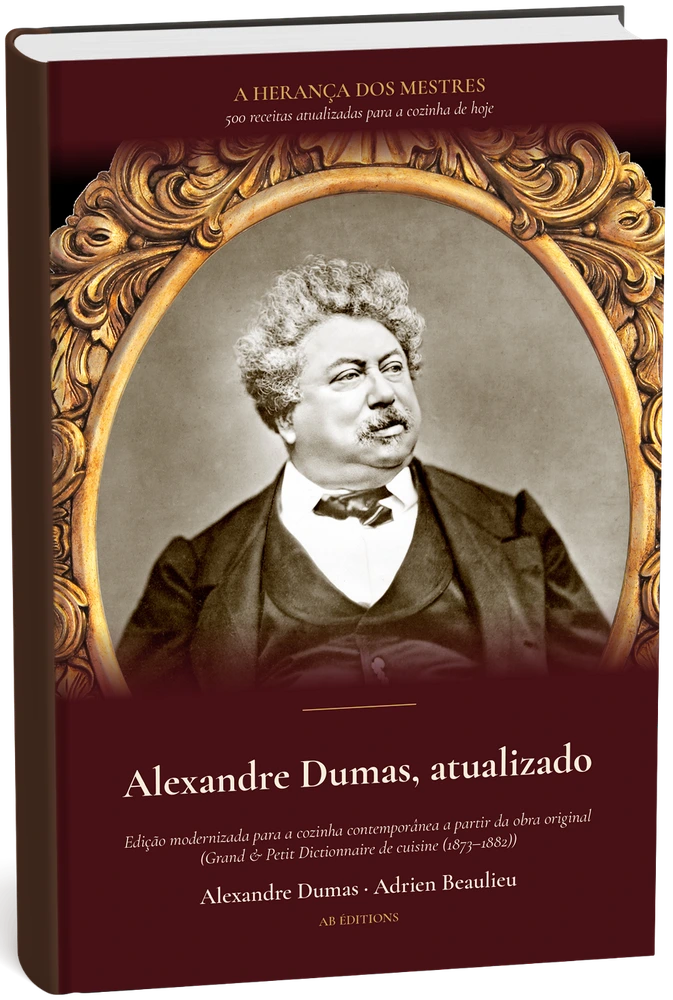
Alexandre Dumas · Adrien Beaulieu
Édition internationale en Portugais · L'Héritage des Maîtres
Découvrir l’ouvrage →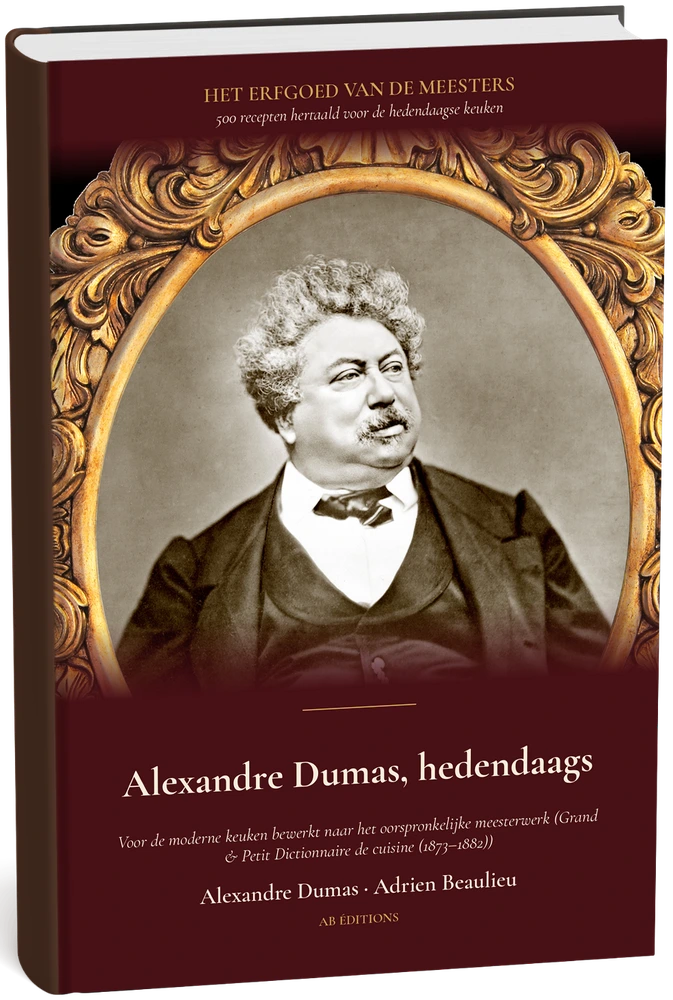
Alexandre Dumas · Adrien Beaulieu
Édition internationale en Néerlandais · L'Héritage des Maîtres
Découvrir l’ouvrage →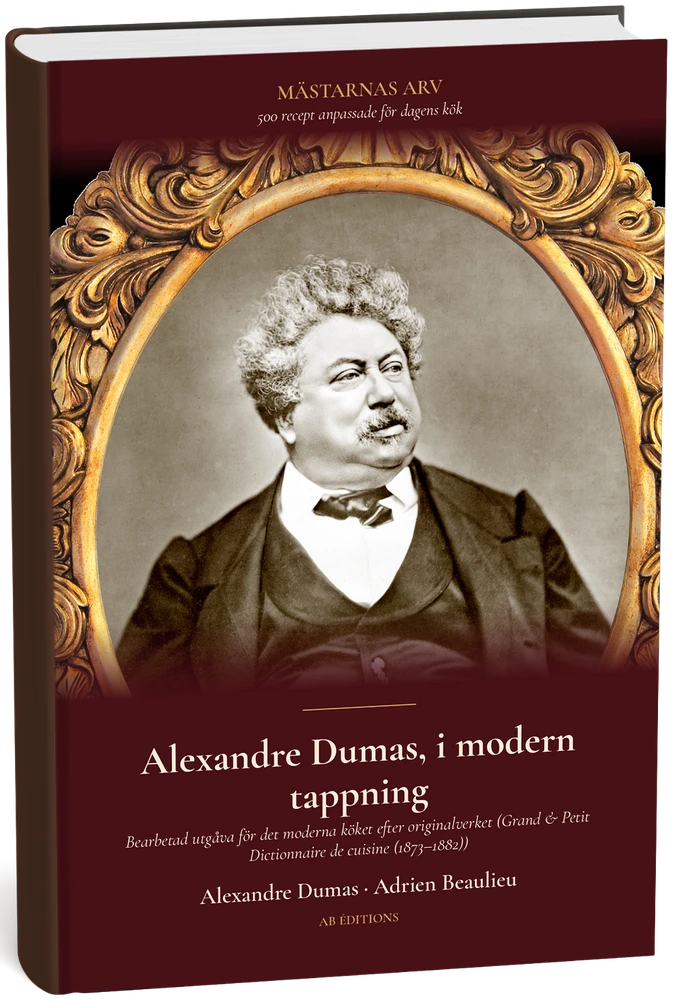
Alexandre Dumas · Adrien Beaulieu
Édition internationale en Suédois · L'Héritage des Maîtres
Découvrir l’ouvrage →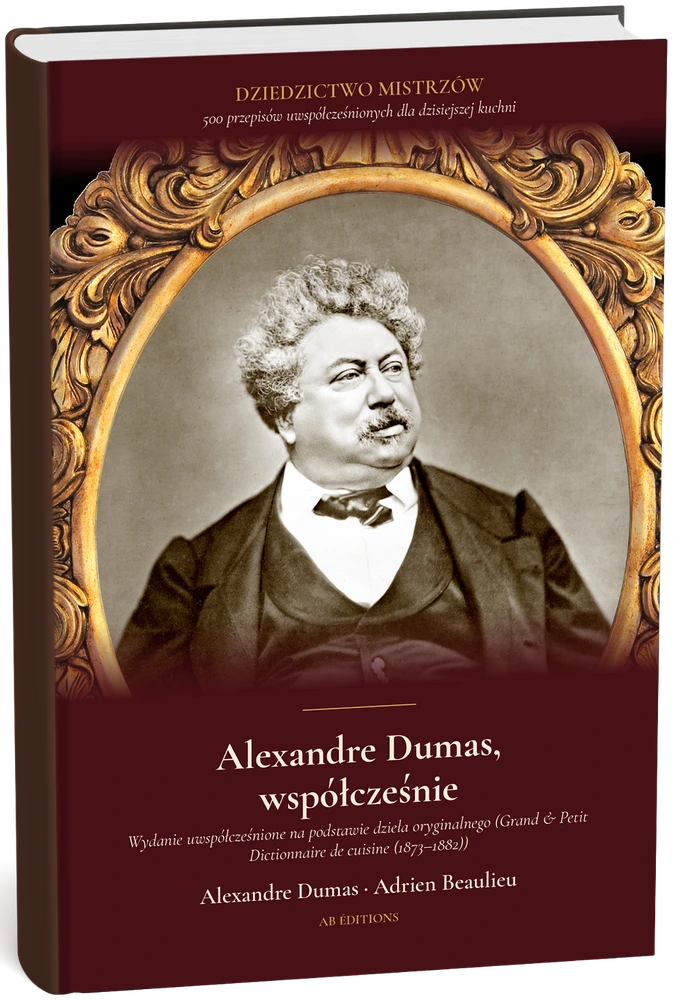
Alexandre Dumas · Adrien Beaulieu
Édition internationale en Polonais · L'Héritage des Maîtres
Découvrir l’ouvrage →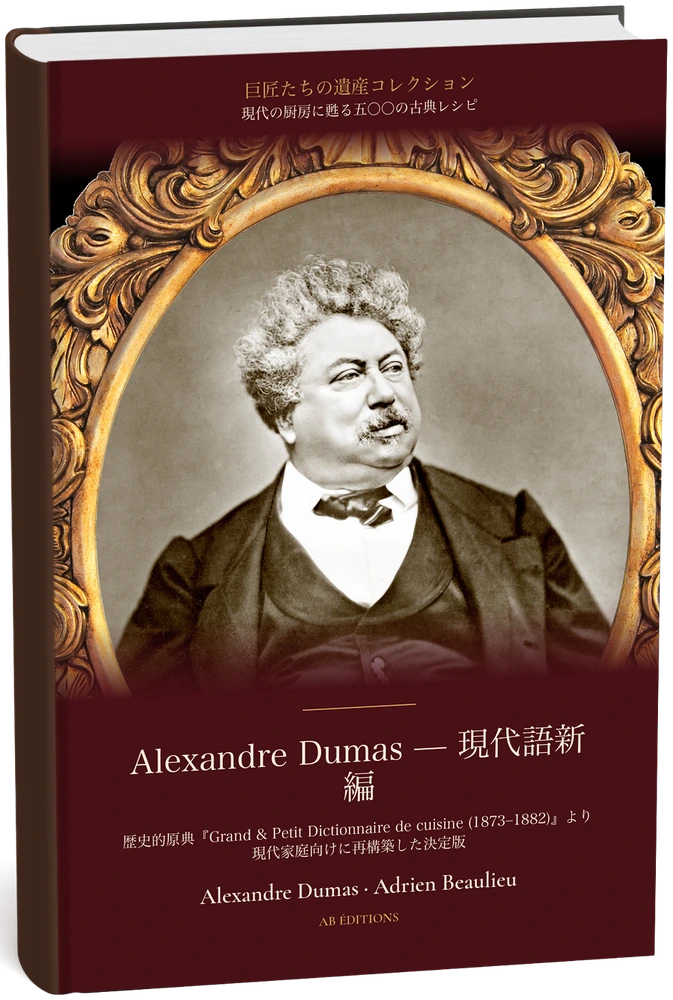
Alexandre Dumas · Adrien Beaulieu
Édition internationale en Japonais · L'Héritage des Maîtres
Découvrir l’ouvrage →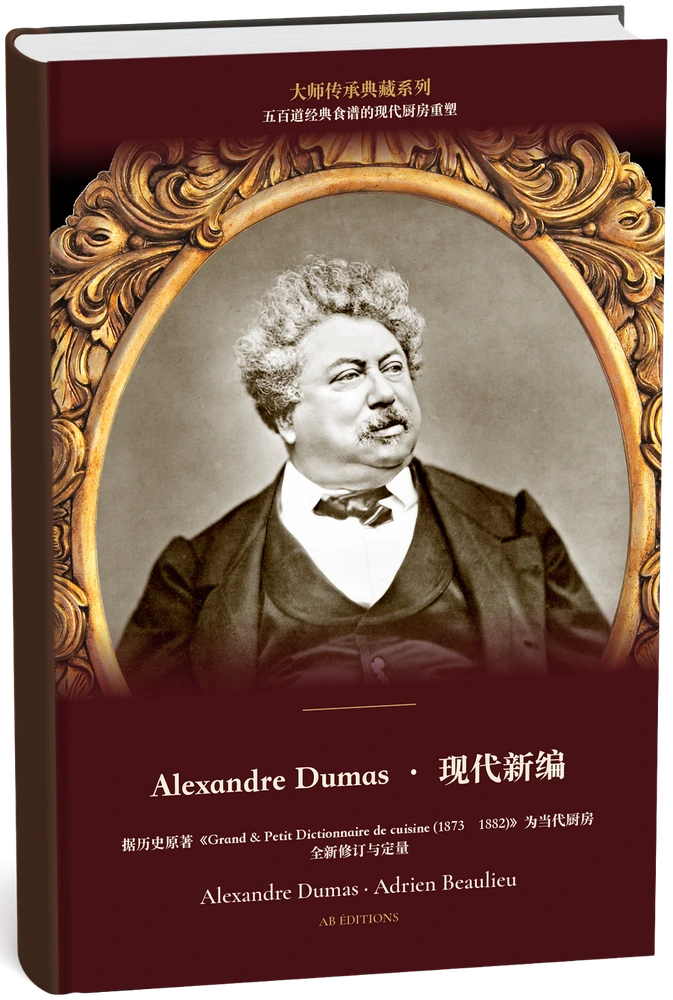
Alexandre Dumas · Adrien Beaulieu
Édition internationale en Chinois · L'Héritage des Maîtres
Découvrir l’ouvrage →Alexandre Dumas, though immortalized as a peerless romancer of adventure, bequeathed to posterity Le Grand Dictionnaire de Cuisine, a monumental testament to his abiding passion for the culinary arts. Blending recipes, antiquarian lore, and personal reflections, this singular compendium offers an irreplaceable portal into the grand appetite of the nineteenth century.
To the world at large, Alexandre Dumas remains the prolific architect of romance, celebrated for such sweeping epics as The Three Musketeers and The Count of Monte Cristo. Yet his devotion to gastronomy was no less defining a facet of his nature—a lifelong romance enshrined in his posthumous masterpiece, Le Grand Dictionnaire de Cuisine. Published in 1873, three years after the author had laid down his pen, this fascinating volume assembles recipes, historical vignettes, and philosophical meditations on the palate, marrying the novelist’s boundless imagination with an insatiable appetite for the pleasures of the table. In its pages emerges a Dumas erudite, insatiably inquisitive, and utterly enamoured of good cheer, offering an incomparable chronicle of nineteenth-century culinary culture.
Dumas was never a mere spectator of letters; he was an accomplished epicure who regarded cooking as a fine art in its own right. Throughout his flamboyant existence, he moved in the company of master chefs, collected regional receipts, and presided over legendary banquets. His far-flung travels continually introduced him to unfamiliar flavors, which he assimilated with equal gusto into his personal kitchen and his literary tapestries. In his writings, meals were never trivial diversions; he transfigured the dining table into a theatre of fellowship, wit, and creative expression.
His Grand Dictionnaire de Cuisine stands as the crowning monument to this devotion—a work where the culinary formula intertwines with historical romance, and technical instruction gives way to delightful reminiscence. Dumas did not intend this book merely for the brigade of the grand restaurant; he sought to address all who harboured a genuine love of the table, welcoming the wider public into the noble mysteries of the culinary art.
1. A Culinary Encyclopaedia
Above all else, Le Grand Dictionnaire de Cuisine is an exhaustive culinary encyclopaedia, embracing an astonishing breadth of dishes, provender, and techniques. Dumas gathered recipes ranging from peasant fare to the most exotic delicacies, unhesitatingly discussing ingredients then largely unfamiliar to European dining rooms, such as kangaroo or even elephant. Through such audacious inclusions, he bore witness to his boundless curiosity and his determination to stretch the boundaries of conventional French gastronomy.
Through this endeavor, Dumas also chronicled the everyday habits and professional practices of his era, preserving a living archive of nineteenth-century French table manners. The dictionary has thus endured as an essential reference for cooks and connoisseurs alike, who discover within its leaves not merely instructions for the stove, but rare historical accounts and charming narratives tracing the lineage of individual dishes.
2. A Melding of Receipts, Anecdotes, and Reflections
Perhaps the most captivating quality of the Grand Dictionnaire lies in its narrative charm. Breaking entirely with the austere brevity of ordinary household manuals, Dumas enriches his formulas with intimate reflections, vivid memories, and sparkling digressions. In setting down a recipe for mayonnaise, he pauses to recount the disputed origins of the sauce; in expounding upon the humble pot-au-feu, he waxes poetic over the deep, ancestral warmth of the family hearth. This seamless braid of culinary instruction and storytelling transforms the volume into a literary masterwork, ringing throughout with Dumas’s unmistakable voice.
Such an approach rendered the art of cooking both intimate and delightful, throwing wide the portals of haute cuisine to the curious amateur. By weaving together history, geography, and human comedy, Dumas elevated every dish into a voyage of discovery, inviting his readers to approach the stove as they would an exhilarating journey.
3. An Exploration of Ingredients and Technique
Dumas surveys an extraordinary spectrum of ingredients, from ordinary kitchen garden staples to the rarest foreign imports, dwelling with connoisseurial insistence upon the provenance and prime condition of each item. Far from a mere dilettante, he applies himself to technical methodology, imparting astute, practical guidance that demonstrates an intimate understanding of culinary physics and kitchen craft.
True to his nature as an inveterate wanderer, Dumas welcomed foreign culinary traditions into his pages, introducing touches from Italian, Creole, and Near Eastern repertories. This cosmopolitan generosity reflected the intellectual spirit of the nineteenth century—an era of exploration in which the table served as a fertile crossroads for disparate cultures.
1. A Reimagining of Gastronomy as Fine Art
To Dumas, cooking was never a mere biological necessity; it was an art de vivre, a profound mode of personal expression that, no less than literature, possesses the power to tell a story. In his eyes, every dish demanded a soul, an intention, and an inner harmony, and he drew frequent comparisons between composing an entrée and penning a romance. Throughout his fiction, sumptuous descriptions of feasts appear as emotional and thematic focal points, bridging the world of letters with the sensual realm of the palate.
His culinary dictionary, uniting evocative prose with refined flavors, elevated the standing of cooking in France, claiming for the kitchen the same intellectual dignity accorded the fine arts. This romantic vision of gastronomy as a noble discipline inspired generations of writers and practitioners, remaining to this day a cornerstone of the French culinary ethos.
2. The Democratization of the Table and the Education of the Palate
Dumas played a pioneering part in opening the culture of good eating to a broad, curious public. His compendium was composed not for an exclusive coterie of royal chefs, but for readers from every walk of life, allowing them to absorb sophisticated culinary principles while revelling in entertaining prose. By illuminating the origins of dishes and clarifying the logic of their execution, he nurtured a discerning taste across an entire generation, awakening ordinary citizens to the civilizing pleasures of the table.
As one of the most celebrated literary giants of his age, Dumas’s public championing of the kitchen lent unprecedented prestige to French food culture. He urged his countrymen to cherish their cooking not as mere sustenance, but as living art and national heritage—a conviction that remains firmly woven into the fabric of French identity.
1. A Touchstone for Cooks and Historians
Although received with polite perplexity by certain purists upon its posthumous appearance, Dumas’s Grand Dictionnaire de Cuisine swiftly achieved canonical status among cooks, historians, and literary epicures. It is consulted to this day for its unique synthesis of practical cookery and period lore, providing an indispensable window into the gastronomic spirit of the romantic age. The book continues to inspire contemporary chefs eager to reconnect with the historical roots of French cuisine, where every preparation carries narrative and cultural weight.
2. Influence upon Succeeding Authors and Gastronomes
Dumas’s ardent love for the table and his insistence upon its artistic legitimacy opened new horizons for culinary literature. His method paved the way for modern food writing, carrying forward the tradition of Jean Anthelme Brillat-Savarin and expanding the philosophical inquiry into how diet, culture, and society intersect. By casting so luminous a spotlight on the creative agency of the cook, Dumas helped redefine the chef: no longer a menial craftsman hidden behind the pantry door, but an artist deserving of public acclaim.
Alexandre Dumas enriched the heritage of French gastronomy in a manner uniquely his own. Le Grand Dictionnaire de Cuisine is far more than a treasury of recipes; it is a tapestry wherein culinary practice and imaginative literature are indelibly joined, each entry quickened by both appetite and intellect. His influence transcended the perimeter of the dining room, imparting to culinary writing a stylistic grandeur and intellectual stature it had seldom before enjoyed.
Today, Dumas stands honored not only as one of the sovereign storytellers of the nineteenth century, but as an enduring ambassador of the art of good cheer—a man who transformed the act of dining into an exhilarating cultural adventure. His legacy endures as a luminous reminder that the table, like the written word, is an instrument for deciphering the world, traversing distant cultures, and celebrating the generous pleasures of human life.
Recettes, histoires, parutions et éditions de collection — quelques lettres par an, jamais davantage.