Le Cuisinier (1656 — Édition Originale)
Pierre de Lune
Les Grands Classiques (Originaux) · Le traité fondateur de l'écuyer de cuisine du duc de Rohan
Découvrir l’ouvrage → MAISON BEAULIEUAB ÉDITIONS · CUISINE & LETTRES
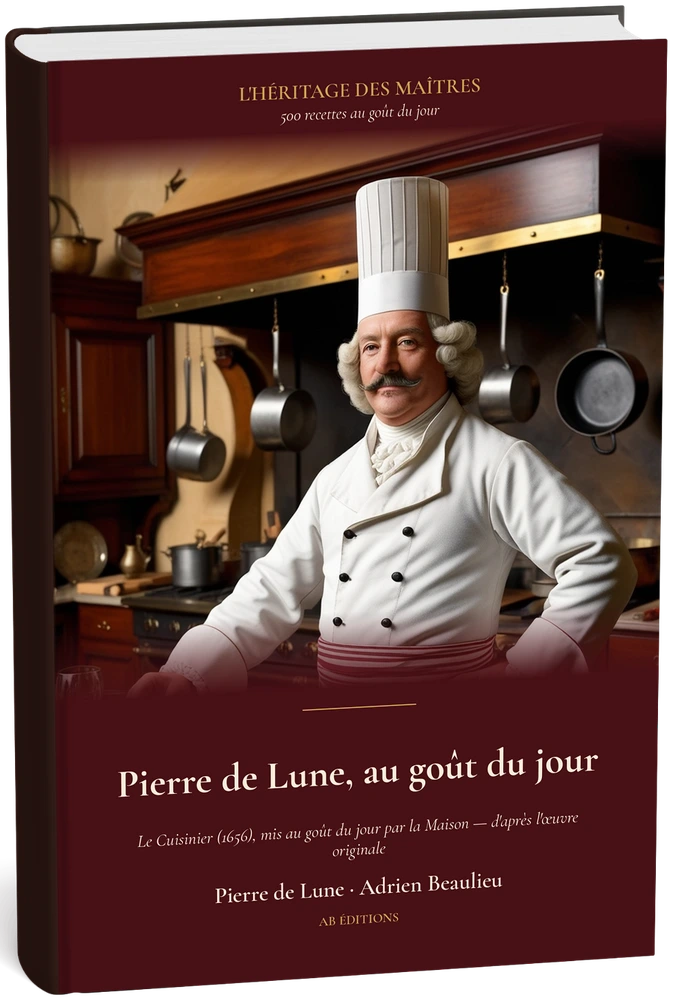
La Maison Beaulieu présente l’œuvre de Pierre de Lune selon son architecture éditoriale complète : d’abord I. Les Grands Classiques (les textes originaux d’époque), puis II. L’Héritage des Maîtres (l’édition française modernisée — 500 recettes mises au goût du jour), et enfin III. Le Rayonnement International (l’édition modernisée traduite en 10 langues). Tarif officiel Cuisine AB Éditions : Ebook · 9,90 € · Broché (PB) · 24,90 € (+ port réel) · Relié Collector (HC) · 34,90 € (+ port réel).
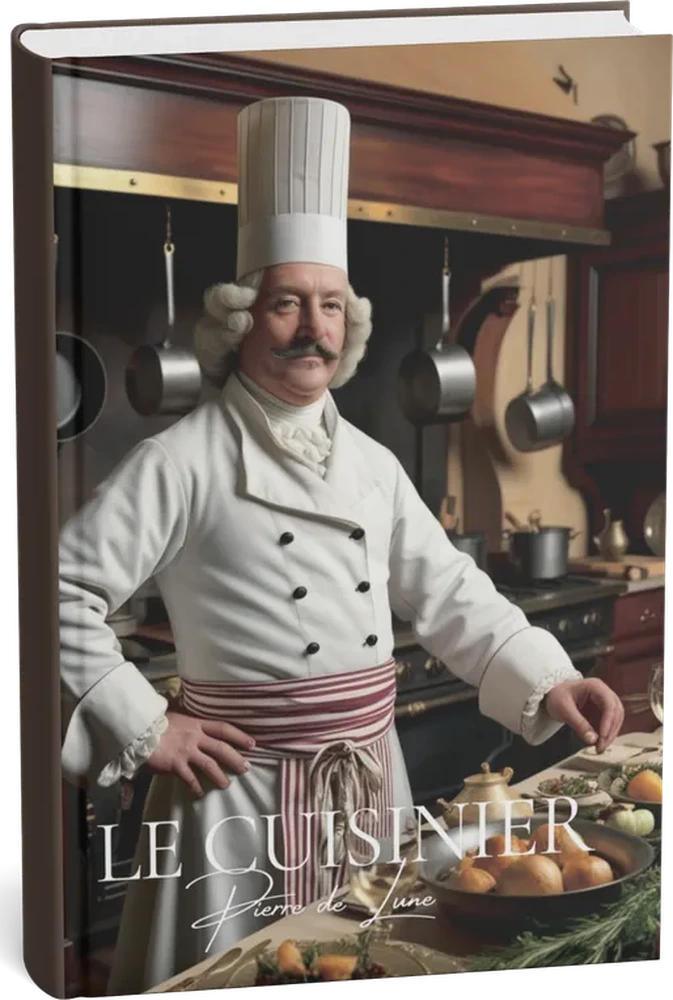
Le texte historique intégral de Pierre de Lune, établi et restauré dans sa typographie et sa langue d’origine, avec ses couvertures de collection originales.
Pour cuisiner réellement Pierre de Lune aujourd’hui chez soi sans brigade : chaque recette est codifiée et structurée selon le protocole de la Maison (Ingrédients calibrés en grammes pour 4 personnes · Préparation pas à pas avec temps et températures exacts · Conseil du Chef), dans le respect absolu du goût et de l’esprit du Maître.
Conformément à la doctrine éditoriale de la Maison, ce n’est jamais le français archaïque d’époque qui est traduit, mais notre édition française modernisée (L’Héritage des Maîtres — 500 recettes au goût du jour), afin d’offrir aux lecteurs du monde entier des recettes claires, précises et immédiatement réalisables en 10 langues (EN, DE, ES, IT, PT, NL, SV, PL, JA, ZH) :
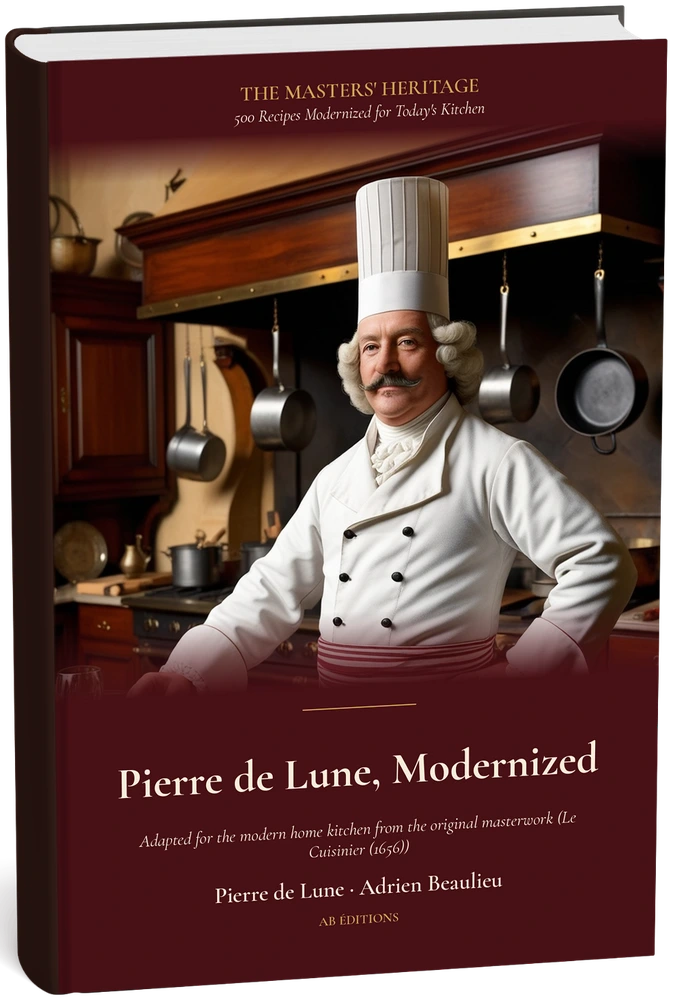
Pierre de Lune · Adrien Beaulieu
Édition internationale en Anglais · L'Héritage des Maîtres
Découvrir l’ouvrage →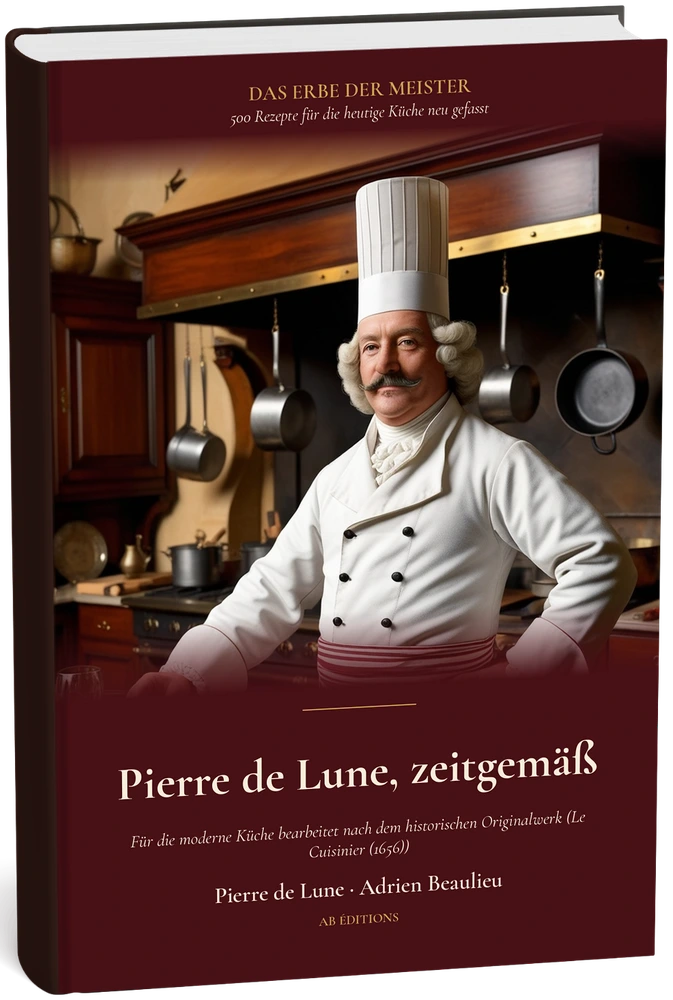
Pierre de Lune · Adrien Beaulieu
Édition internationale en Allemand · L'Héritage des Maîtres
Découvrir l’ouvrage →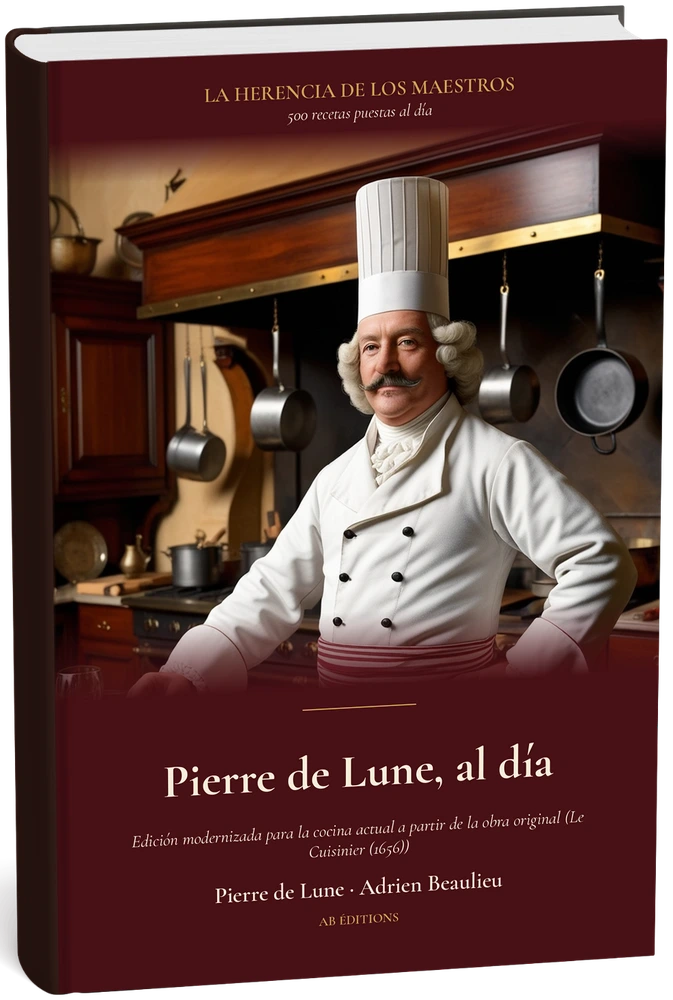
Pierre de Lune · Adrien Beaulieu
Édition internationale en Espagnol · L'Héritage des Maîtres
Découvrir l’ouvrage →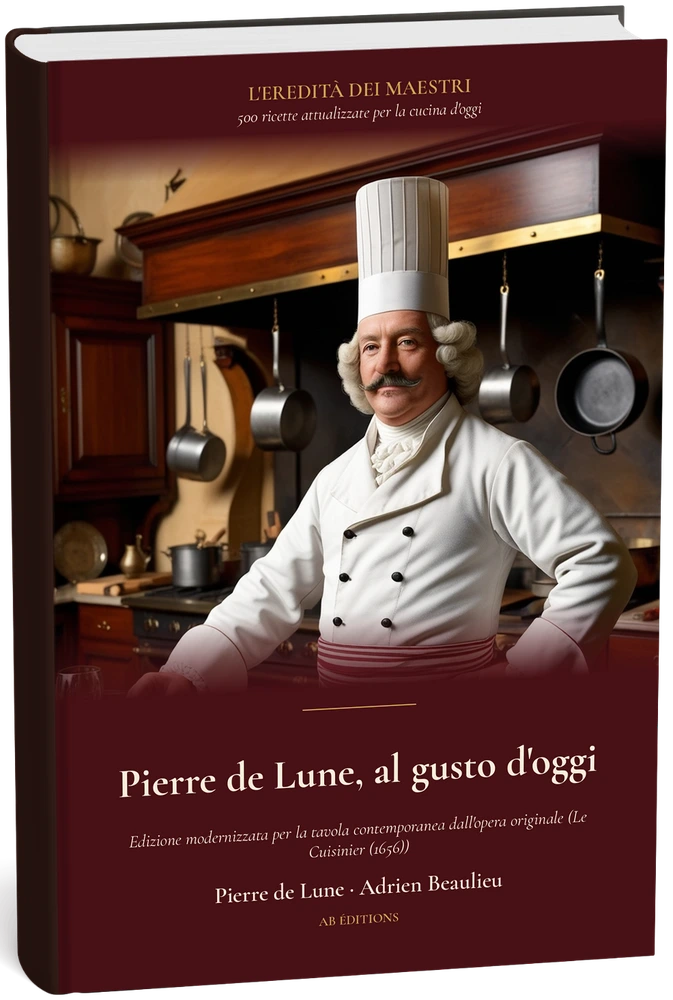
Pierre de Lune · Adrien Beaulieu
Édition internationale en Italien · L'Héritage des Maîtres
Découvrir l’ouvrage →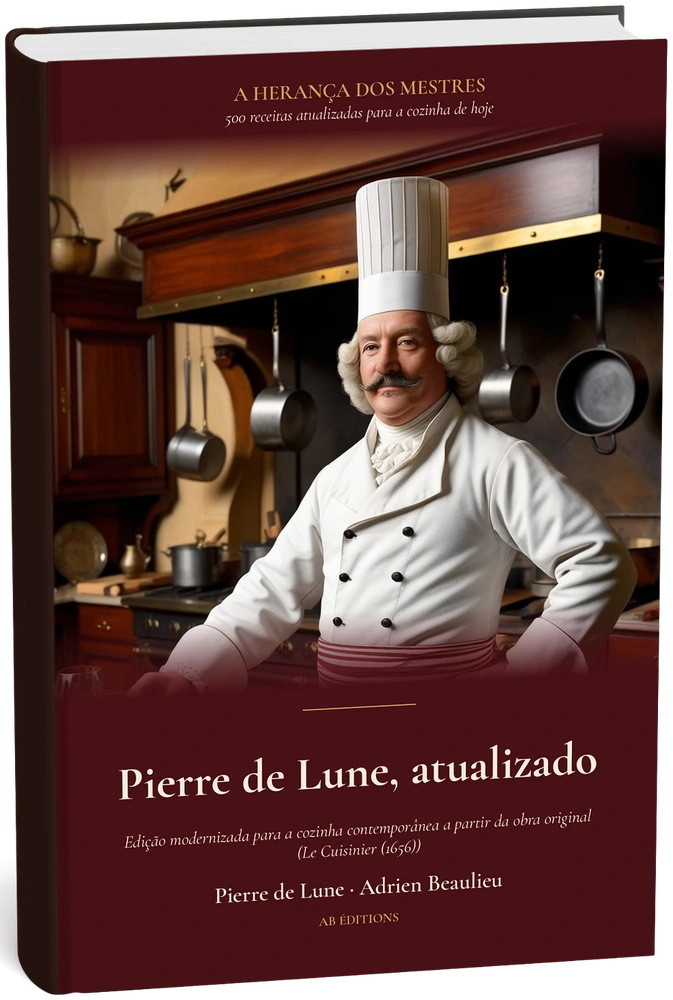
Pierre de Lune · Adrien Beaulieu
Édition internationale en Portugais · L'Héritage des Maîtres
Découvrir l’ouvrage →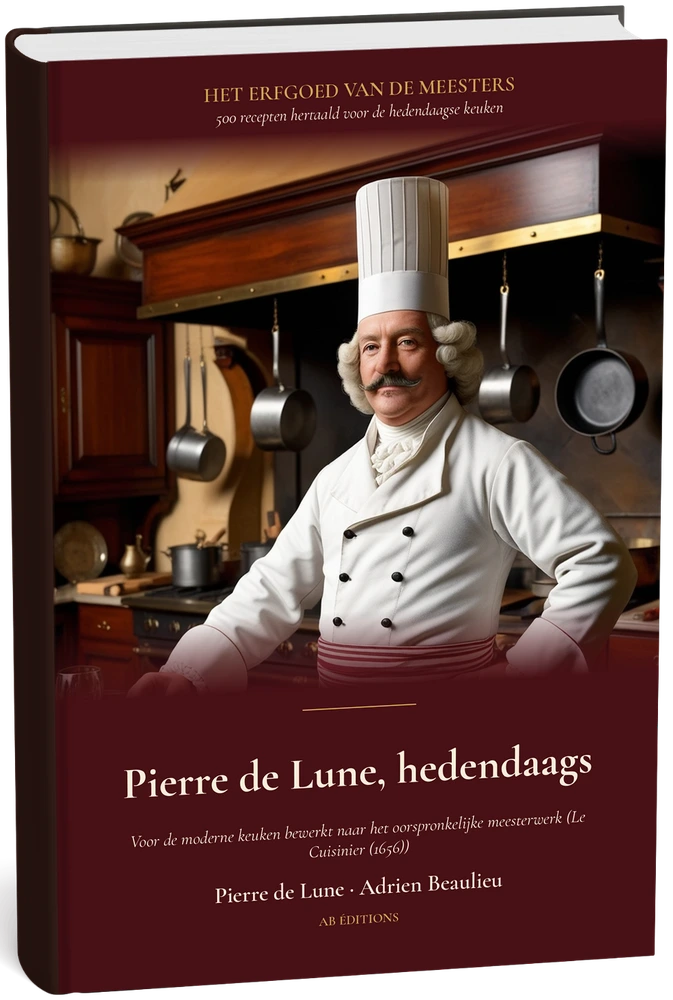
Pierre de Lune · Adrien Beaulieu
Édition internationale en Néerlandais · L'Héritage des Maîtres
Découvrir l’ouvrage →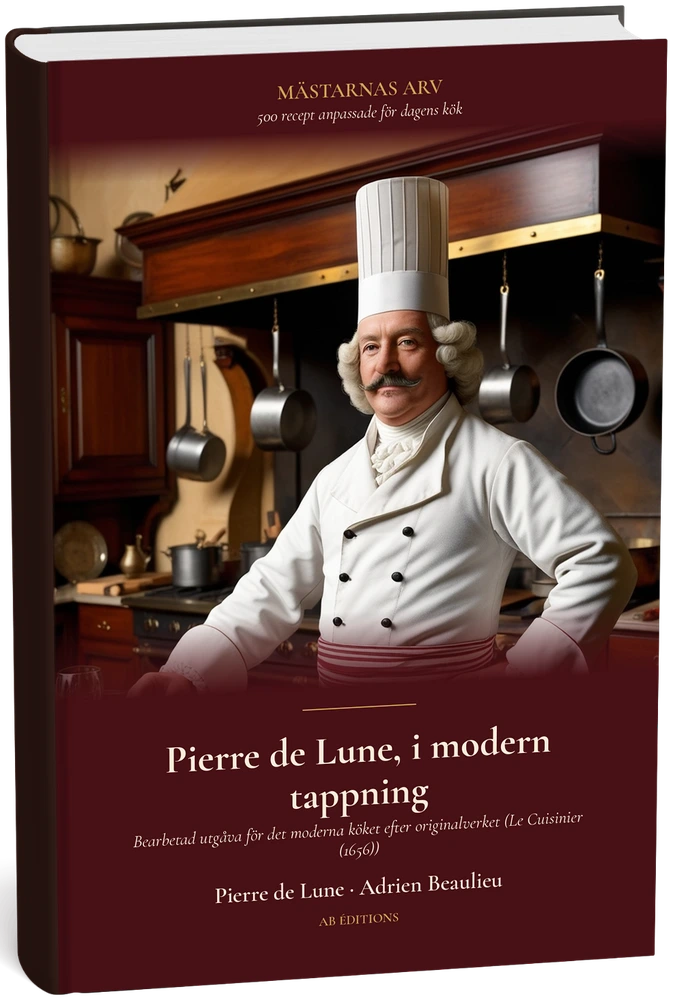
Pierre de Lune · Adrien Beaulieu
Édition internationale en Suédois · L'Héritage des Maîtres
Découvrir l’ouvrage →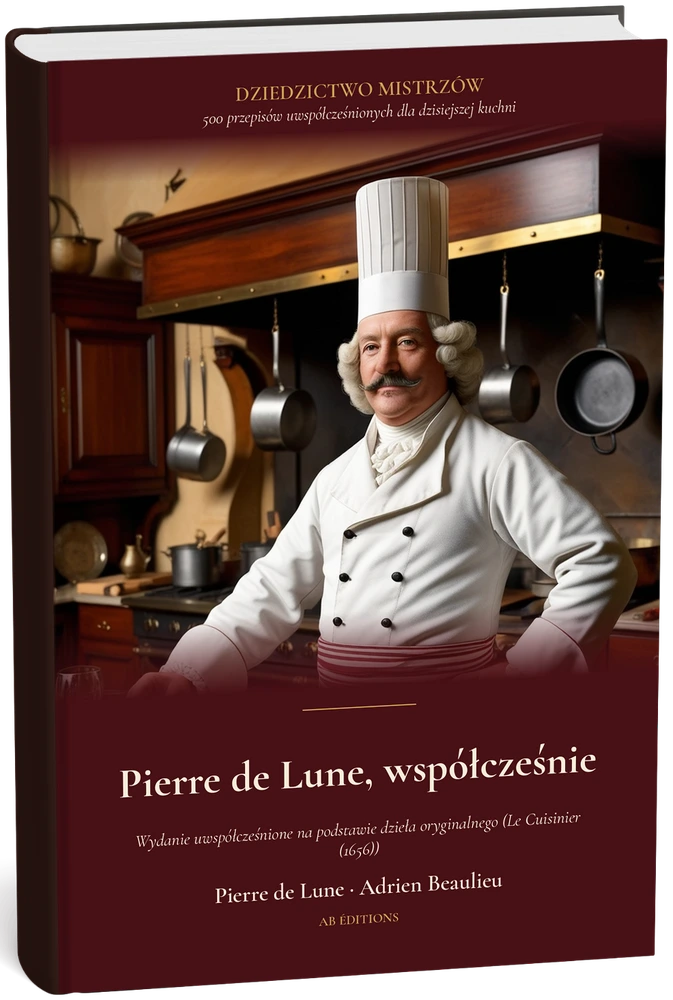
Pierre de Lune · Adrien Beaulieu
Édition internationale en Polonais · L'Héritage des Maîtres
Découvrir l’ouvrage →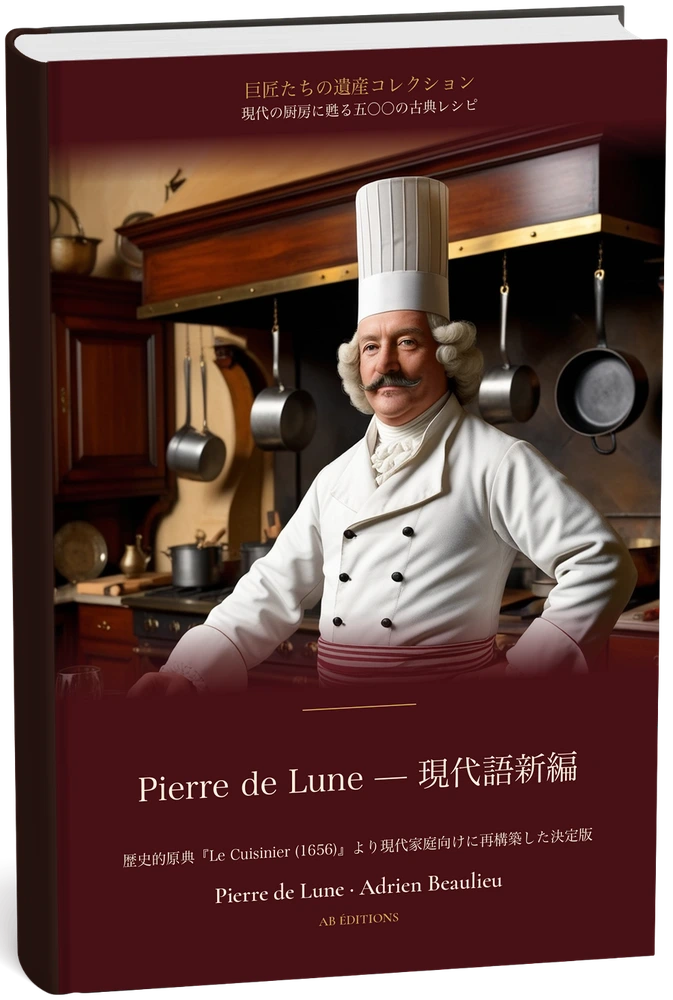
Pierre de Lune · Adrien Beaulieu
Édition internationale en Japonais · L'Héritage des Maîtres
Découvrir l’ouvrage →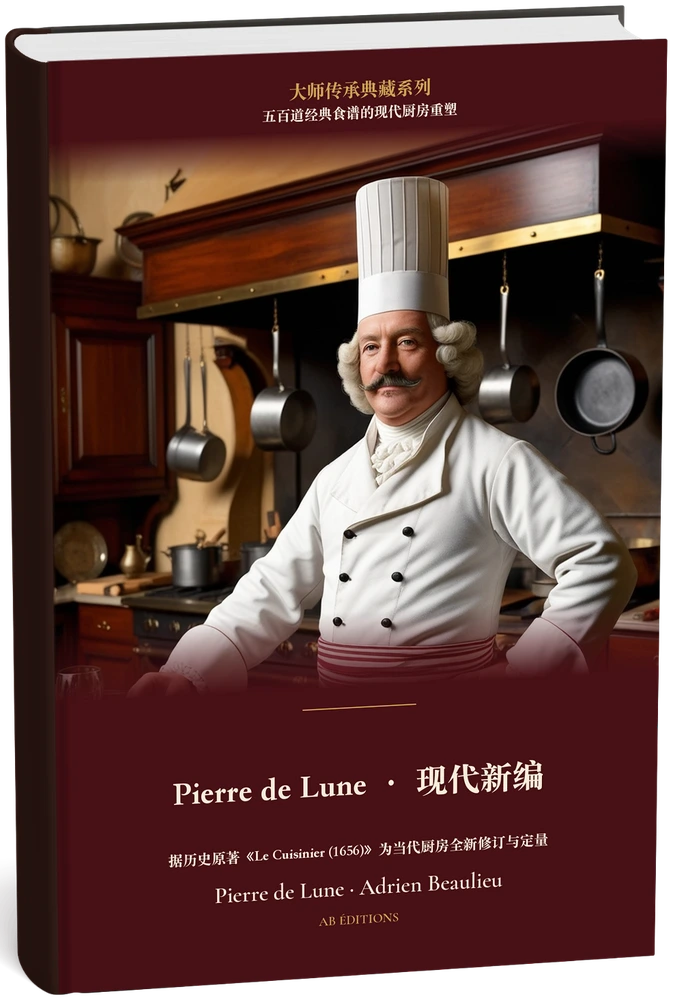
Pierre de Lune · Adrien Beaulieu
Édition internationale en Chinois · L'Héritage des Maîtres
Découvrir l’ouvrage →The seventeenth century was an era of profound transformation for France, marked by an evolution in the art of living that touched every stratum of society. This epoch bore witness to the rise of heightened culinary refinement—no longer reserved solely for the royal court, but sought after by affluent households eager to recreate within their own dining rooms the noble pleasures of the grand table. It was against this vibrant backdrop that Pierre de Lune, an enigmatic master of the kitchen, distinguished himself with his seminal treatise, Le Cuisinier, published in 1651.
Pierre de Lune served as écuyer de cuisine—master of the kitchen—to the Duke of Rohan, observing firsthand the grand culinary rituals of the aristocracy while remaining firmly committed to an accessible approach. The Grand Siècle also heralded the earliest democratization of French cookery, seeing the birth of recipe collections addressed not to palace chefs, but to domestic cooks serving prosperous urban homes. Pierre de Lune’s treatise caught the spirit of this burgeoning demand, turning its gaze toward an elegant yet practical gastronomy, attuned to the means and sensibilities of the rising bourgeoisie.
Pierre de Lune parted ways with his predecessors through his singular ambition: to deliver the virtues of fine dining into comfortable households without the ostentatious pomp of courtly excess. Where palace cooks prized rare provisions and labyrinthine preparations, Pierre de Lune championed practicality. His work favored recipes composed of prime, locally available ingredients and relied on techniques that demanded neither an army of scullions nor a guild-trained retinue.
What crowns Pierre de Lune as a true visionary is his capacity to marry simplicity with sophistication. Unlike the haughty tomes of haute cuisine, Le Cuisinier welcomed domestic hands, guided by a philosophy wherein true elegance springs from clarity. His methods were conceived to elevate ingredients without exaggeration, coaxing forth their natural virtues through thoughtful and temperate preparation.
His culinary ethos remained tethered to the sensibilities of his day, in which the harmonious marriage of sweet and savory reigned supreme. He made frequent use of fruits, delicate warm spices such as cinnamon and nutmeg, and gentle cooking methods that teased out balanced, pleasing bouquets. In this, Pierre de Lune heralded the birth of that genuine cuisine bourgeoise which would flourish in the eighteenth century and lay the bedrock for modern French gastronomy.
The recipes of Pierre de Lune demonstrate a consummate balance of finesse and restraint, bearing witness to his gift for demystifying culinary grandeur to make it more inclusive. Among his most celebrated creations are:
1. Tourte de Foie Gras
The tourte de foie gras stands among Pierre de Lune’s crowning creations. By calling upon exceptional ingredients without succumbing to needlessly complex technique, he rendered this opulent dish achievable for the prosperous homes of his era. The pie gathers rich foie gras, mushrooms, fine herbs, and larded pork, all encased in a tender, golden crust. This preparation epitomizes his philosophy: wedding noble produce to straightforward craftsmanship, thereby preserving every nuance of natural flavor.
• Main Ingredients: Foie gras, mushrooms, lard, fine herbs.
• Method: After being briefly plunged into hot water, the livers are arranged within a pastry-lined pie dish, seasoned with exquisite delicacy, and baked slowly to unveil their rich aromatic complexity.
2. Lamproie à la Bordelaise
This dish bears eloquent testimony to Pierre de Lune’s devotion to regional terroir. Lamprey, a prized river specialty of Bordeaux, is simmered in a bittersweet, spiced reduction of vinegar, sugar, and cloves. This sweet-and-sour counterpoint was emblematic of the seventeenth-century palate, for which the judicious balancing of flavors was paramount.
• Main Ingredients: Lamprey, vinegar, sugar, cloves.
• Method: The lamprey is first bled prior to cooking—an age-old practice ensuring an immaculate texture—before being gently simmered in a spiced vinegar court-bouillon, yielding a luscious, deeply fragrant sauce.
3. Canard Grand Siècle
The Canard Grand Siècle illustrates Pierre de Lune’s inventiveness in pairing exotic imports—such as green pistachios and candied dates—with local game. Stuffed with pistachios and dates, the duck is slowly roasted alongside white wine and spices, offering a dining experience at once mellow, aromatic, and robust.
• Main Ingredients: Duck, pistachios, candied dates, white wine.
• Method: The duck is stuffed, slow-roasted, and lovingly basted with white wine. This method allows the meat to remain tender while absorbing the sweet perfumes of the fruit and the warm complexity of the spices.
These dishes demonstrate Pierre de Lune’s remarkable gift for aligning straightforward technique with prime ingredients, thereby enabling domestic cooks to dress tables worthy of princes without recourse to inaccessible culinary artifice.
Pierre de Lune’s imprint upon French culinary history is profound, for he was among the first to render the art of fine dining approachable and open. By introducing formulas adapted to the modest provisions and practical skills of domestic cooks, he paved the way for that grand tradition of cuisine bourgeoise which would define the eighteenth century. This manner of dining—rooted in honest produce, meticulous care, and a disdain for vulgar extravagance—remains one of the foundations of French gastronomy.
A cardinal tenet of his legacy is the conviction that culinary distinction relies not upon technical virtuosity or scarce rarities, but upon devotion to the product and scrupulous care at every stage of execution. By vindicating dishes that were unpretentious yet noble, Pierre de Lune exerted a lasting influence on succeeding generations, including figures such as François Pierre de La Varenne, who would codify bourgeois cuisine a century later.
Pierre de Lune’s Le Cuisinier remains an invaluable sourcebook for historians and gastronomes alike. It serves as an enduring reminder that cooking, beyond pecuniary wealth, is first and foremost an act of generosity and communion. His oeuvre reveals that gastronomy may be simultaneously majestic and humble, and that authentic sophistication dwells ever in the pursuit of harmony and reverent respect for ingredients.
Today, the shadow of Pierre de Lune falls across our contemporary devotion to fresh, seasonal integrity and the pursuit of understated refinement that defines so much of French cookery. Through his recipes and his ethos, he helped shape an enlightened art of dining and hospitality, founded upon the conviction that any meal, no matter how modest, may become a singular and refined experience.
Pierre de Lune endures as a mysterious yet foundational figure in the annals of French culinary history. His pragmatic and graceful vision continues to inspire, proving that even without the gilded pageant of royal courts, cooking can touch the sublime and nourish the soul across the generations.
Recettes, histoires, parutions et éditions de collection — quelques lettres par an, jamais davantage.