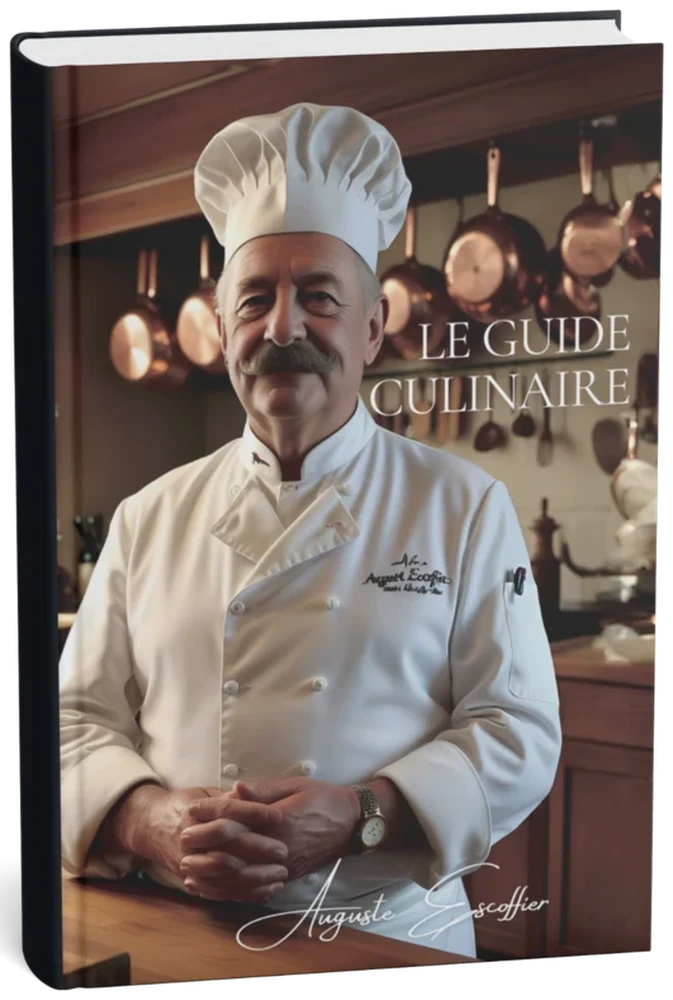
Le Guide Culinaire (1903 — 772 pages, 3 075 formules)
Auguste Escoffier
Les Grands Classiques (Originaux) · L'aide-mémoire immortel de la cuisine moderne
Découvrir l’ouvrage → MAISON BEAULIEUAB ÉDITIONS · CUISINE & LETTRES
La Maison Beaulieu présente l’œuvre de Auguste Escoffier selon son architecture éditoriale complète : d’abord I. Les Grands Classiques (les textes originaux d’époque), puis II. L’Héritage des Maîtres (l’édition française modernisée — 500 recettes mises au goût du jour), et enfin III. Le Rayonnement International (l’édition modernisée traduite en 10 langues). Tarif officiel Cuisine AB Éditions : Ebook · 9,90 € · Broché (PB) · 24,90 € (+ port réel) · Relié Collector (HC) · 34,90 € (+ port réel).
Le texte historique intégral de Auguste Escoffier, établi et restauré dans sa typographie et sa langue d’origine, avec ses couvertures de collection originales.
Auguste Escoffier
Les Grands Classiques (Originaux) · L'aide-mémoire immortel de la cuisine moderne
Découvrir l’ouvrage →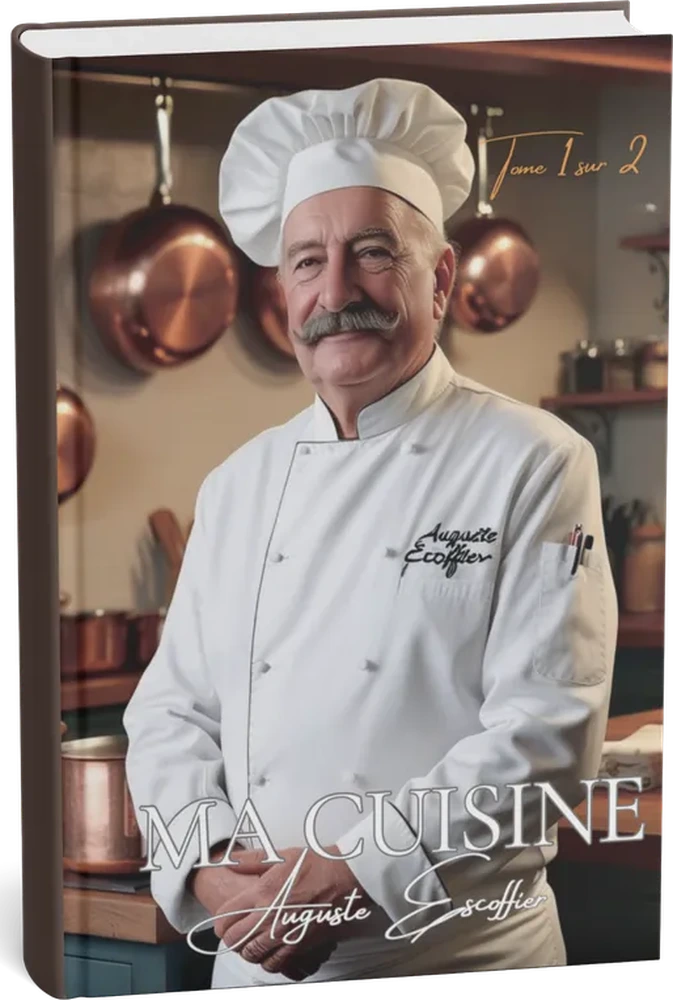
Auguste Escoffier
Les Grands Classiques (Originaux) · Les 2 500 recettes dédiées aux familles et aux maîtresses de maison
Découvrir l’ouvrage →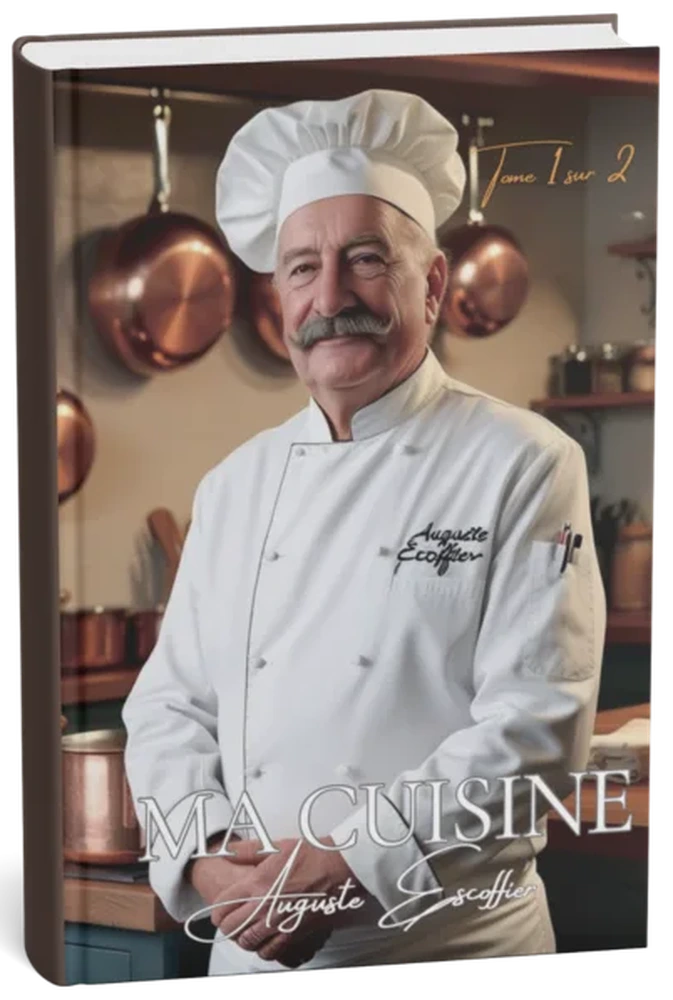
Auguste Escoffier
Les Grands Classiques (Originaux) · Fonds, sauces, potages, hors-d'œuvre, œufs et poissons
Découvrir l’ouvrage →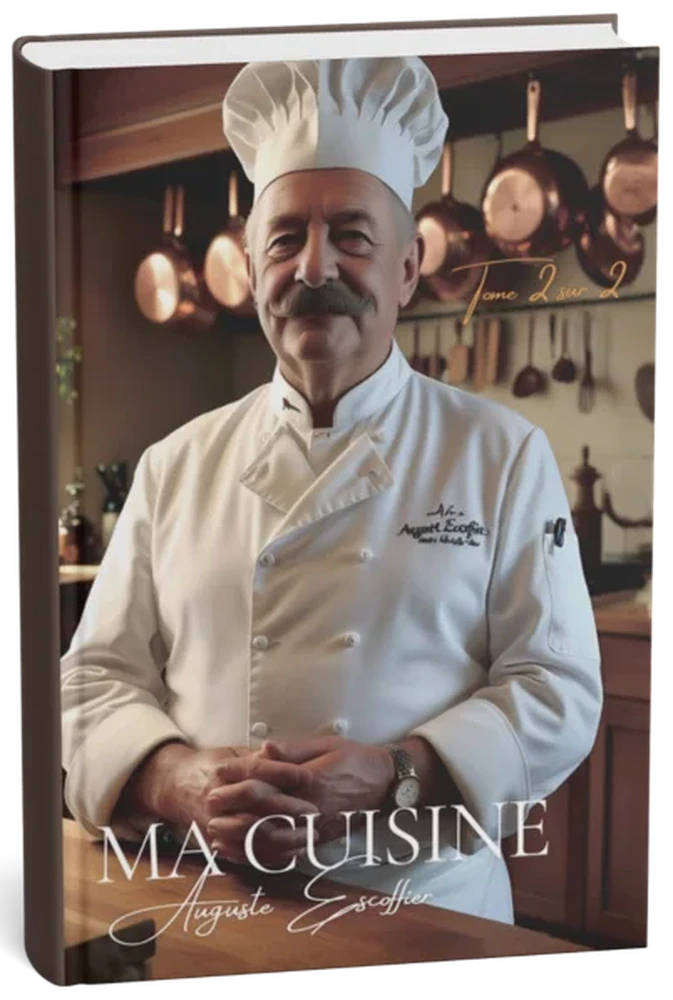
Auguste Escoffier
Les Grands Classiques (Originaux) · Viandes, volailles, gibiers, légumes, entremets et glaces
Découvrir l’ouvrage →Pour cuisiner réellement Auguste Escoffier aujourd’hui chez soi sans brigade : chaque recette est codifiée et structurée selon le protocole de la Maison (Ingrédients calibrés en grammes pour 4 personnes · Préparation pas à pas avec temps et températures exacts · Conseil du Chef), dans le respect absolu du goût et de l’esprit du Maître.
Conformément à la doctrine éditoriale de la Maison, ce n’est jamais le français archaïque d’époque qui est traduit, mais notre édition française modernisée (L’Héritage des Maîtres — 500 recettes au goût du jour), afin d’offrir aux lecteurs du monde entier des recettes claires, précises et immédiatement réalisables en 10 langues (EN, DE, ES, IT, PT, NL, SV, PL, JA, ZH) :
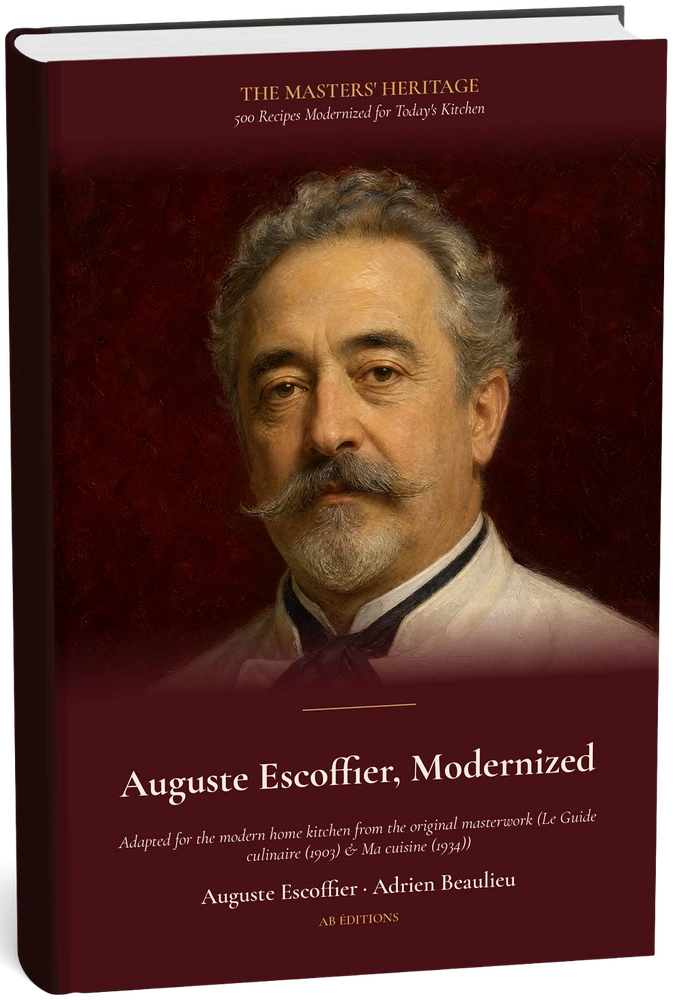
Auguste Escoffier · Adrien Beaulieu
Édition internationale en Anglais · L'Héritage des Maîtres
Découvrir l’ouvrage →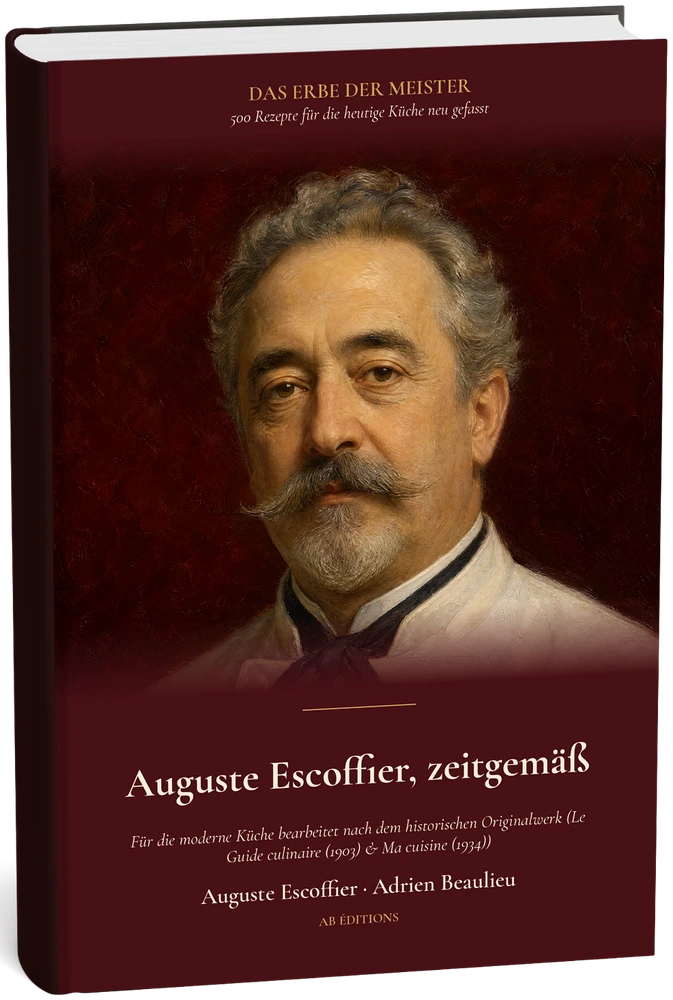
Auguste Escoffier · Adrien Beaulieu
Édition internationale en Allemand · L'Héritage des Maîtres
Découvrir l’ouvrage →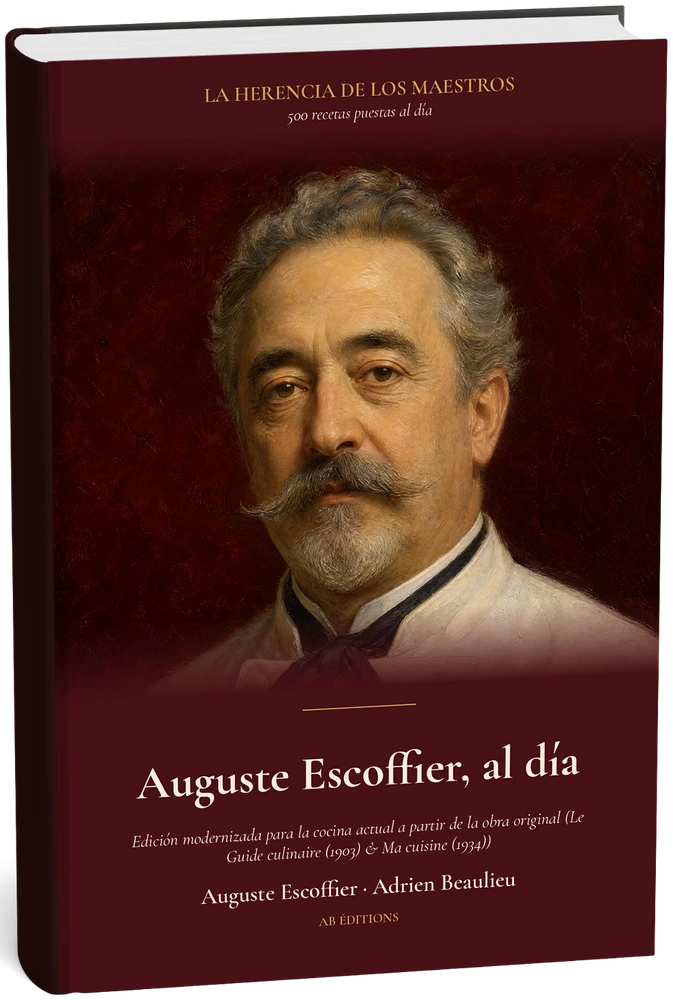
Auguste Escoffier · Adrien Beaulieu
Édition internationale en Espagnol · L'Héritage des Maîtres
Découvrir l’ouvrage →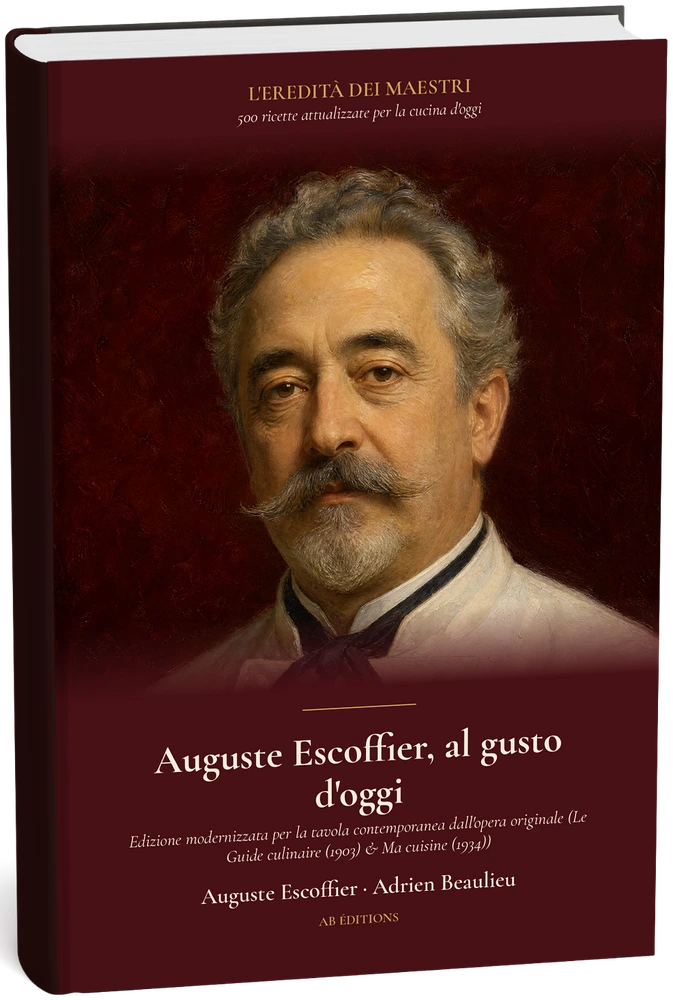
Auguste Escoffier · Adrien Beaulieu
Édition internationale en Italien · L'Héritage des Maîtres
Découvrir l’ouvrage →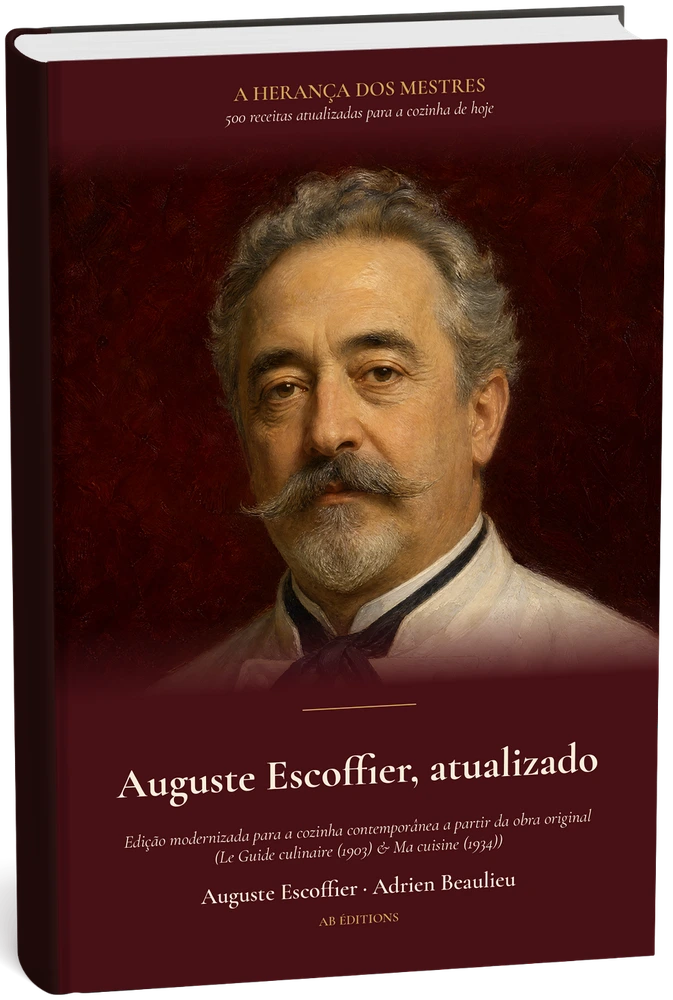
Auguste Escoffier · Adrien Beaulieu
Édition internationale en Portugais · L'Héritage des Maîtres
Découvrir l’ouvrage →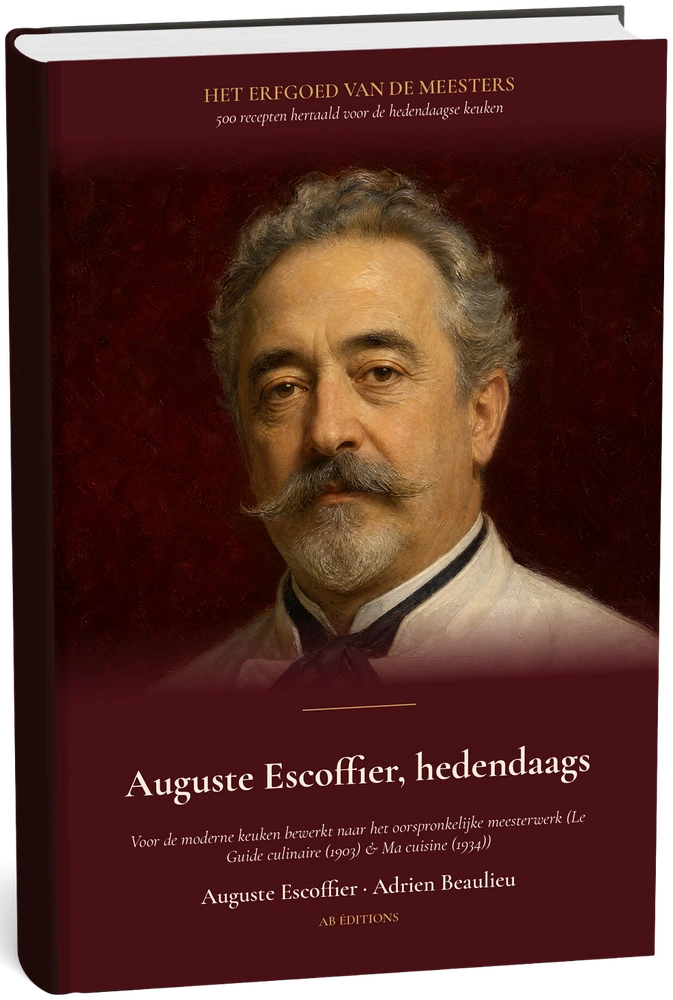
Auguste Escoffier · Adrien Beaulieu
Édition internationale en Néerlandais · L'Héritage des Maîtres
Découvrir l’ouvrage →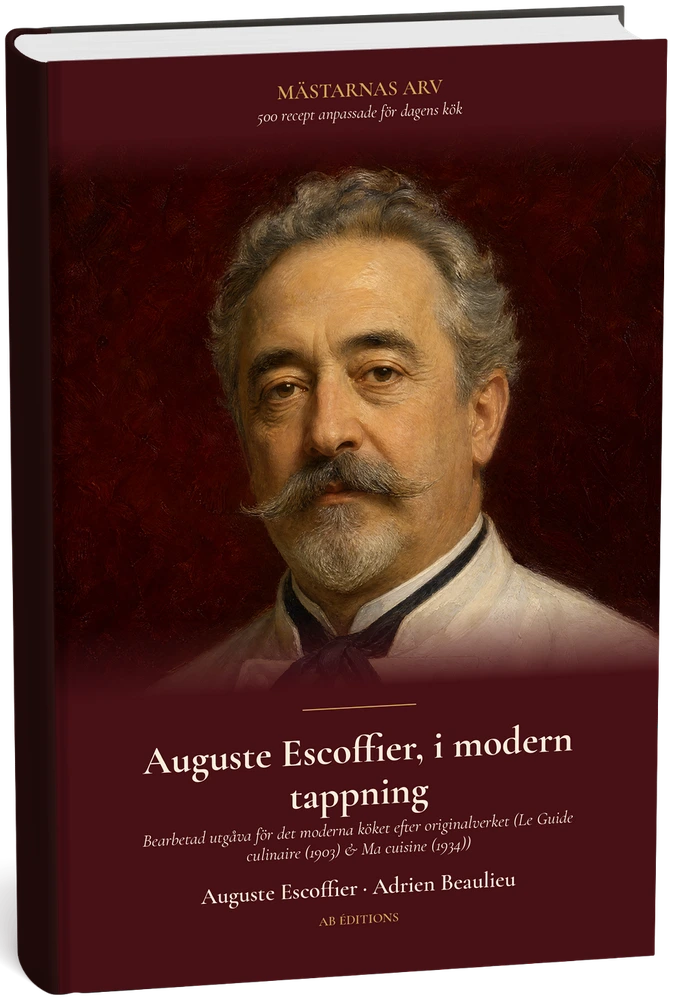
Auguste Escoffier · Adrien Beaulieu
Édition internationale en Suédois · L'Héritage des Maîtres
Découvrir l’ouvrage →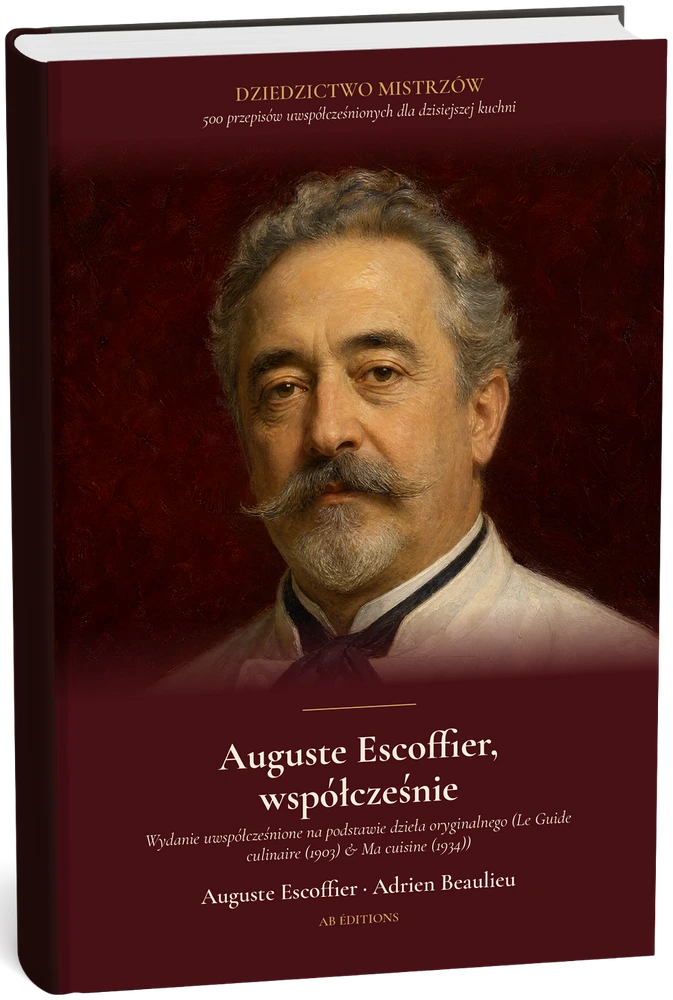
Auguste Escoffier · Adrien Beaulieu
Édition internationale en Polonais · L'Héritage des Maîtres
Découvrir l’ouvrage →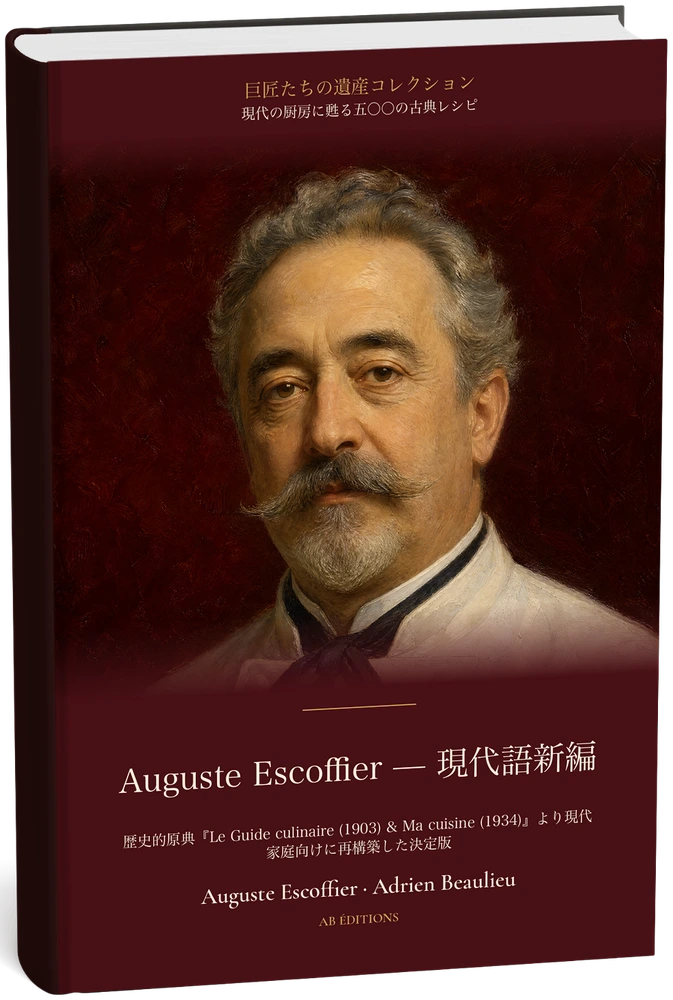
Auguste Escoffier · Adrien Beaulieu
Édition internationale en Japonais · L'Héritage des Maîtres
Découvrir l’ouvrage →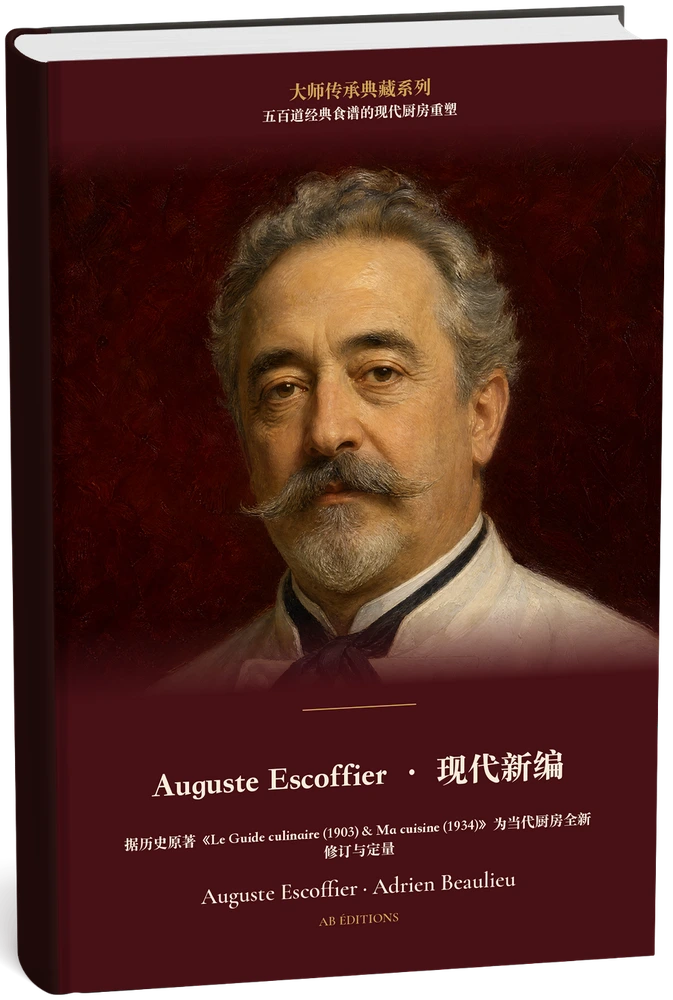
Auguste Escoffier · Adrien Beaulieu
Édition internationale en Chinois · L'Héritage des Maîtres
Découvrir l’ouvrage →Outre Le Guide Culinaire et Ma Cuisine, la Maison publie l’intégrale du Livre des Menus (1912) en 4 Grands Tomes de bibliothèque ainsi qu’en 19 Petits Livres thématiques et saisonniers :
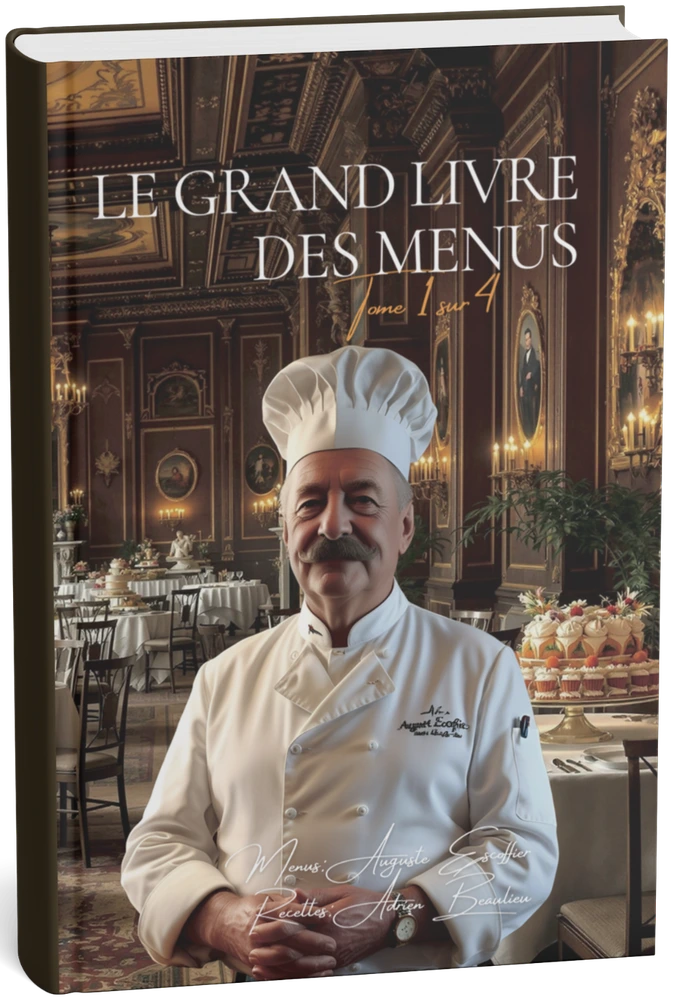
Auguste Escoffier · Adrien Beaulieu
Édition commentée et adaptée du Livre des Menus (1912) · Tome 1/4
Découvrir l’ouvrage →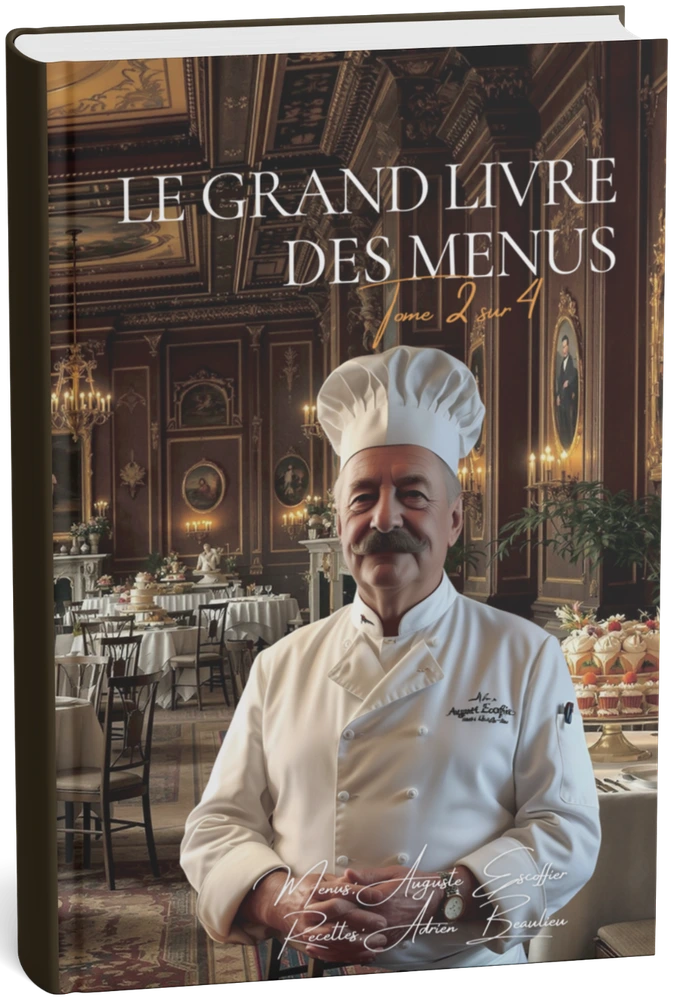
Auguste Escoffier · Adrien Beaulieu
Édition commentée et adaptée du Livre des Menus (1912) · Tome 2/4
Découvrir l’ouvrage →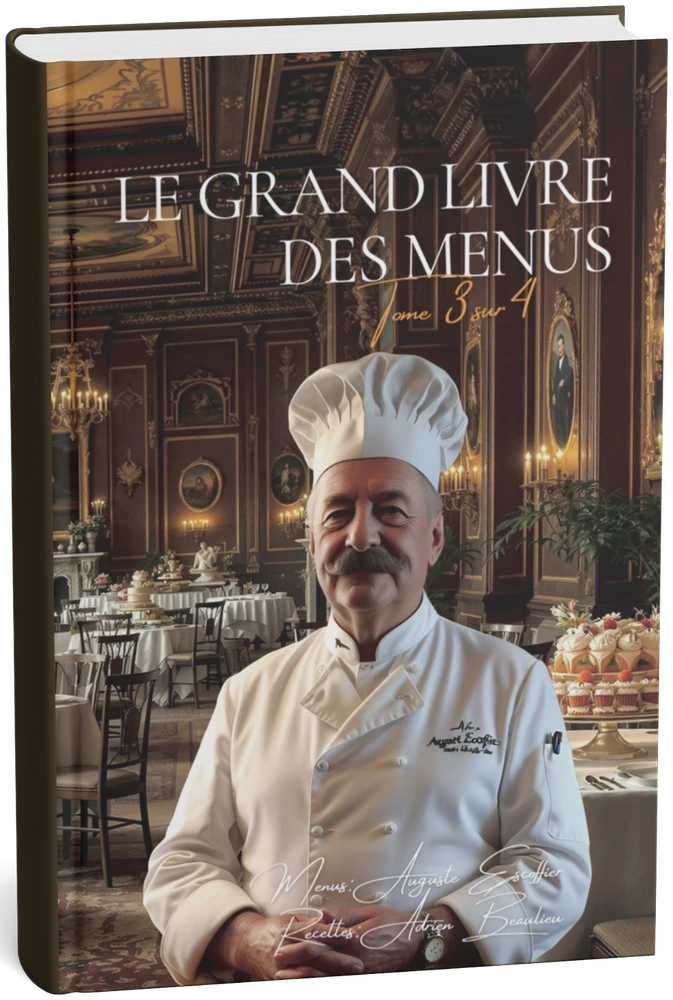
Auguste Escoffier · Adrien Beaulieu
Édition commentée et adaptée du Livre des Menus (1912) · Tome 3/4
Découvrir l’ouvrage →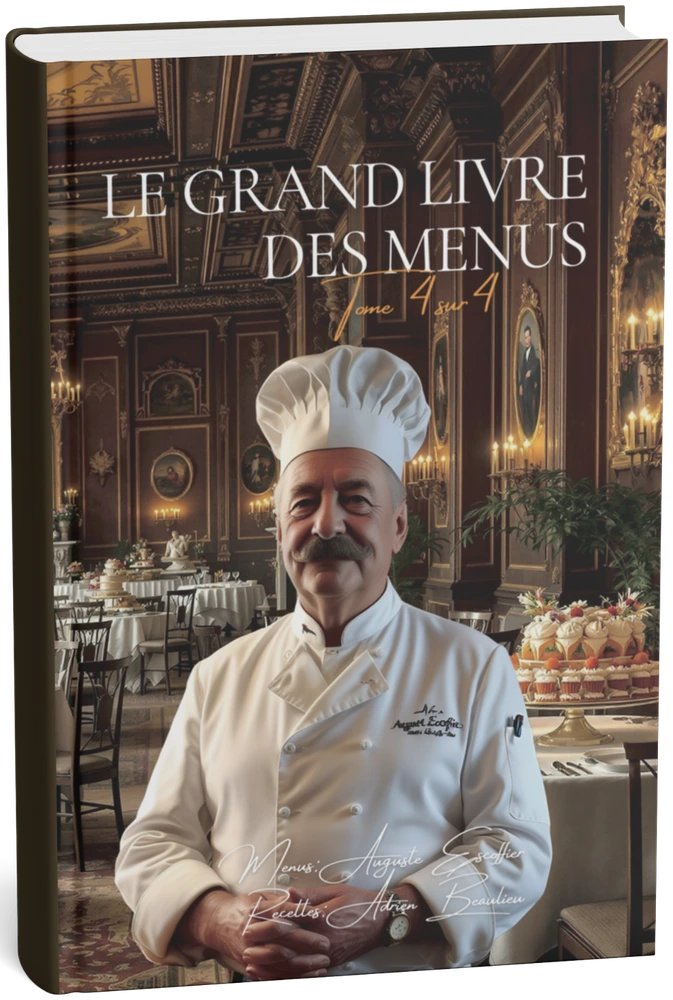
Auguste Escoffier · Adrien Beaulieu
Édition commentée et adaptée du Livre des Menus (1912) · Tome 4/4
Découvrir l’ouvrage →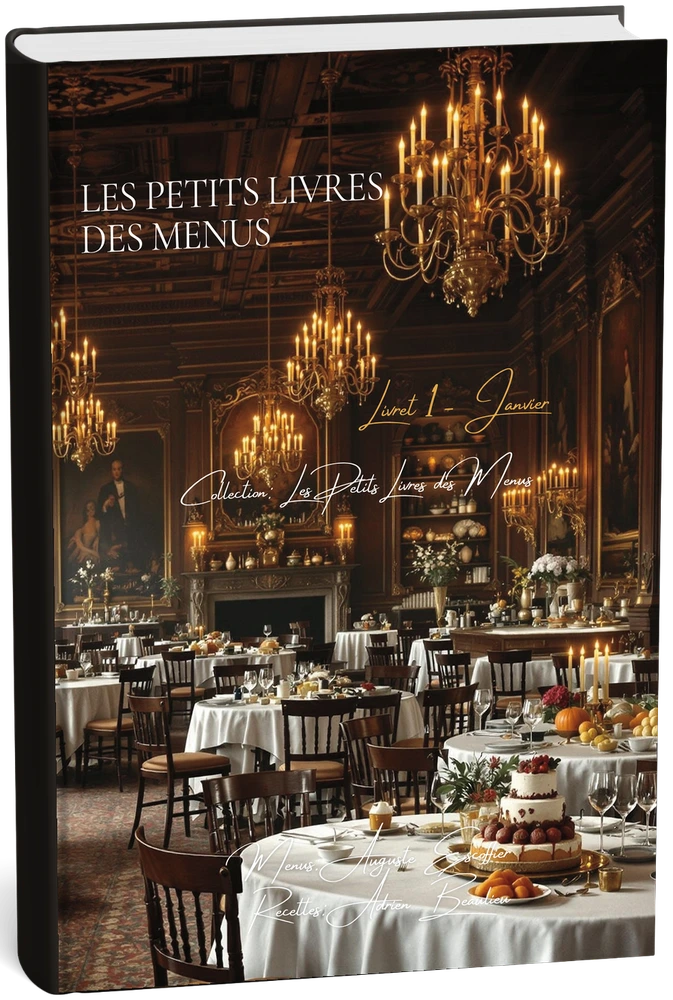
Auguste Escoffier
Collection Les 19 Petits Livres des Menus d'Escoffier · Vol. 1/19
Découvrir l’ouvrage →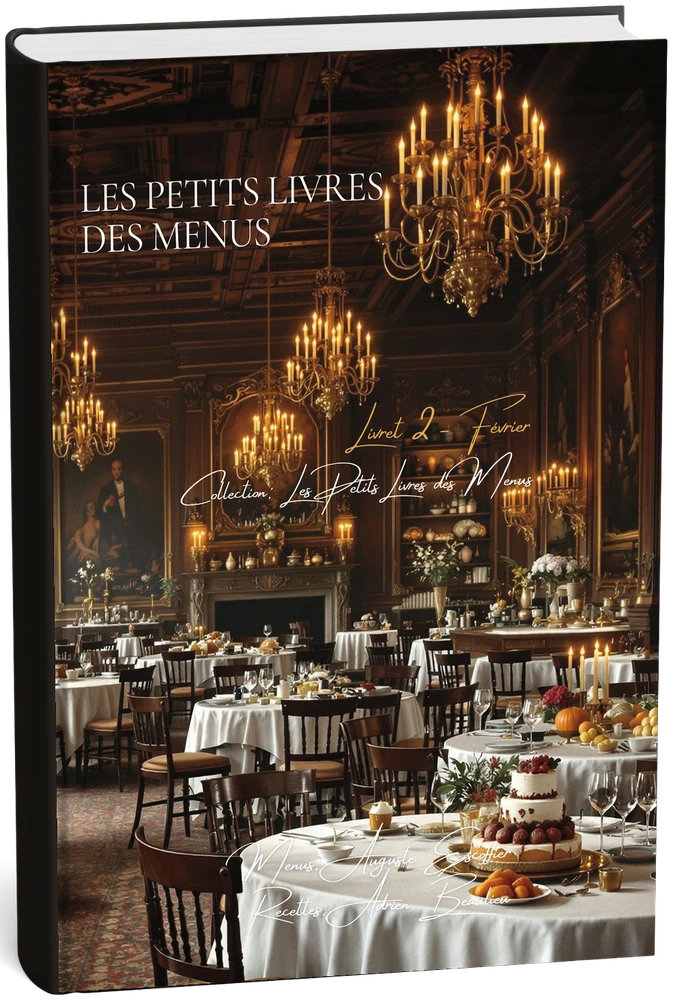
Auguste Escoffier
Collection Les 19 Petits Livres des Menus d'Escoffier · Vol. 2/19
Découvrir l’ouvrage →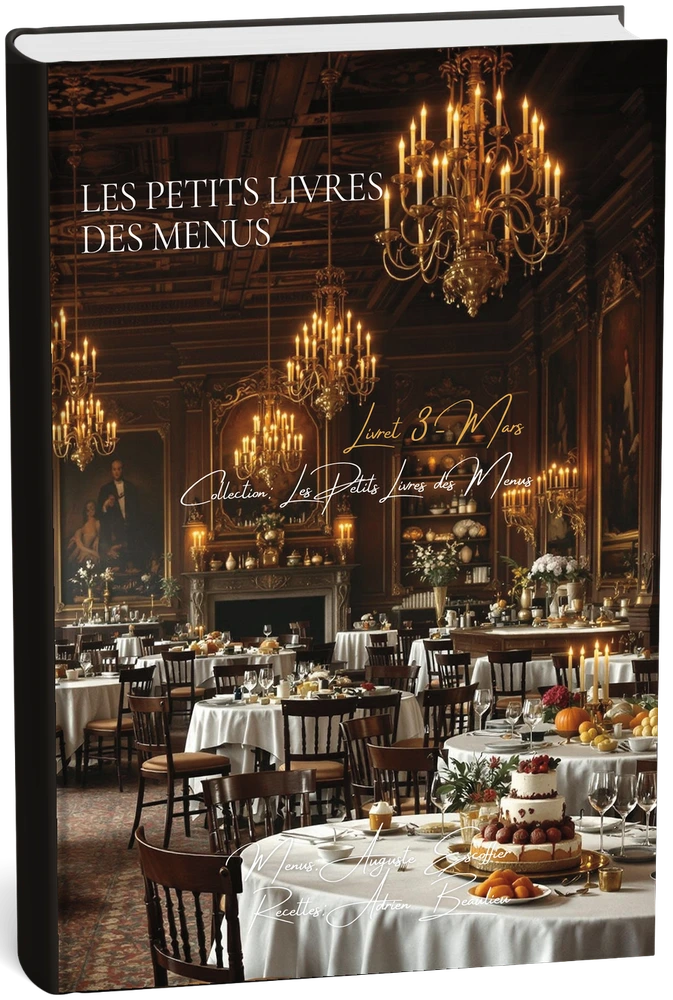
Auguste Escoffier
Collection Les 19 Petits Livres des Menus d'Escoffier · Vol. 3/19
Découvrir l’ouvrage →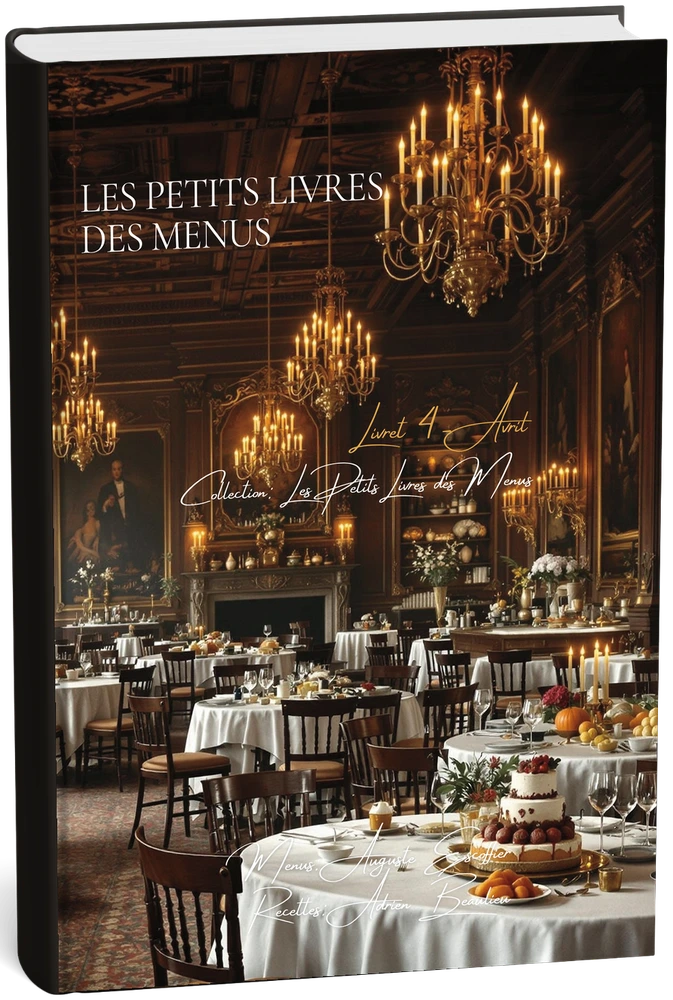
Auguste Escoffier
Collection Les 19 Petits Livres des Menus d'Escoffier · Vol. 4/19
Découvrir l’ouvrage →
Auguste Escoffier
Collection Les 19 Petits Livres des Menus d'Escoffier · Vol. 5/19
Découvrir l’ouvrage →
Auguste Escoffier
Collection Les 19 Petits Livres des Menus d'Escoffier · Vol. 6/19
Découvrir l’ouvrage →
Auguste Escoffier
Collection Les 19 Petits Livres des Menus d'Escoffier · Vol. 7/19
Découvrir l’ouvrage →
Auguste Escoffier
Collection Les 19 Petits Livres des Menus d'Escoffier · Vol. 8/19
Découvrir l’ouvrage →
Auguste Escoffier
Collection Les 19 Petits Livres des Menus d'Escoffier · Vol. 9/19
Découvrir l’ouvrage →
Auguste Escoffier
Collection Les 19 Petits Livres des Menus d'Escoffier · Vol. 10/19
Découvrir l’ouvrage →
Auguste Escoffier
Collection Les 19 Petits Livres des Menus d'Escoffier · Vol. 11/19
Découvrir l’ouvrage →
Auguste Escoffier
Collection Les 19 Petits Livres des Menus d'Escoffier · Vol. 12/19
Découvrir l’ouvrage →
Auguste Escoffier
Collection Les 19 Petits Livres des Menus d'Escoffier · Vol. 13/19
Découvrir l’ouvrage →
Auguste Escoffier
Collection Les 19 Petits Livres des Menus d'Escoffier · Vol. 14/19
Découvrir l’ouvrage →
Auguste Escoffier
Collection Les 19 Petits Livres des Menus d'Escoffier · Vol. 15/19
Découvrir l’ouvrage →
Auguste Escoffier
Collection Les 19 Petits Livres des Menus d'Escoffier · Vol. 16/19
Découvrir l’ouvrage →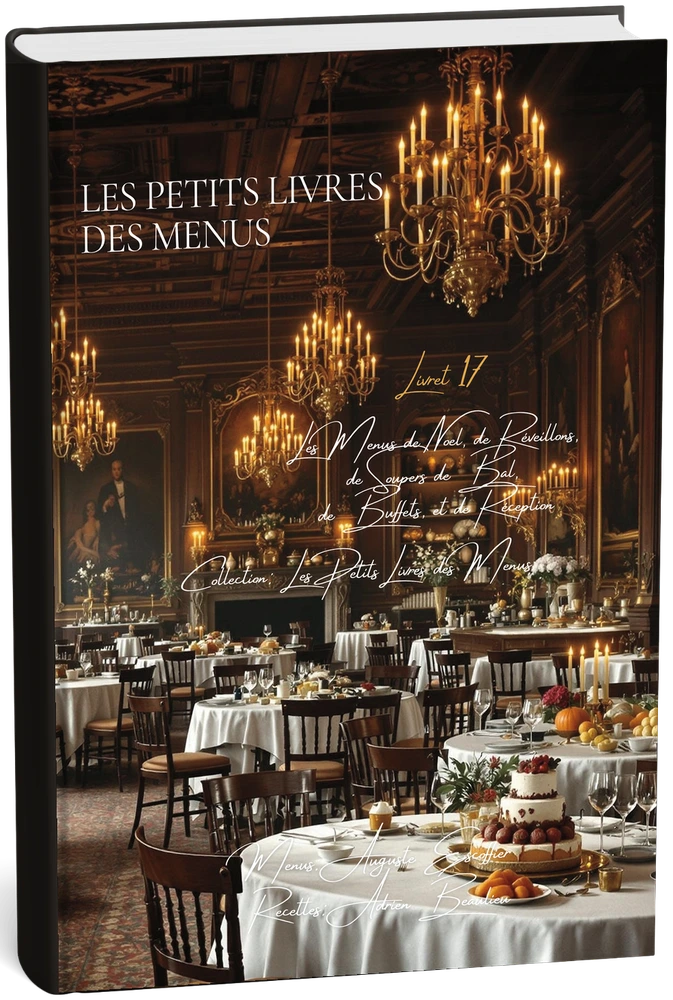
Auguste Escoffier
Collection Les 19 Petits Livres des Menus d'Escoffier · Vol. 17/19
Découvrir l’ouvrage →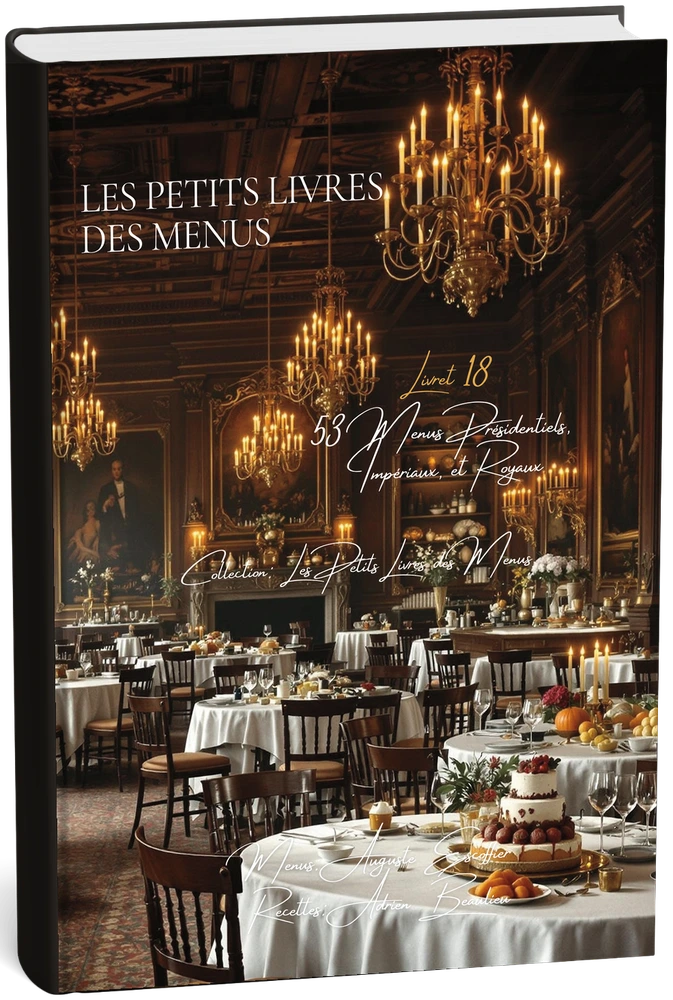
Auguste Escoffier
Collection Les 19 Petits Livres des Menus d'Escoffier · Vol. 18/19
Découvrir l’ouvrage →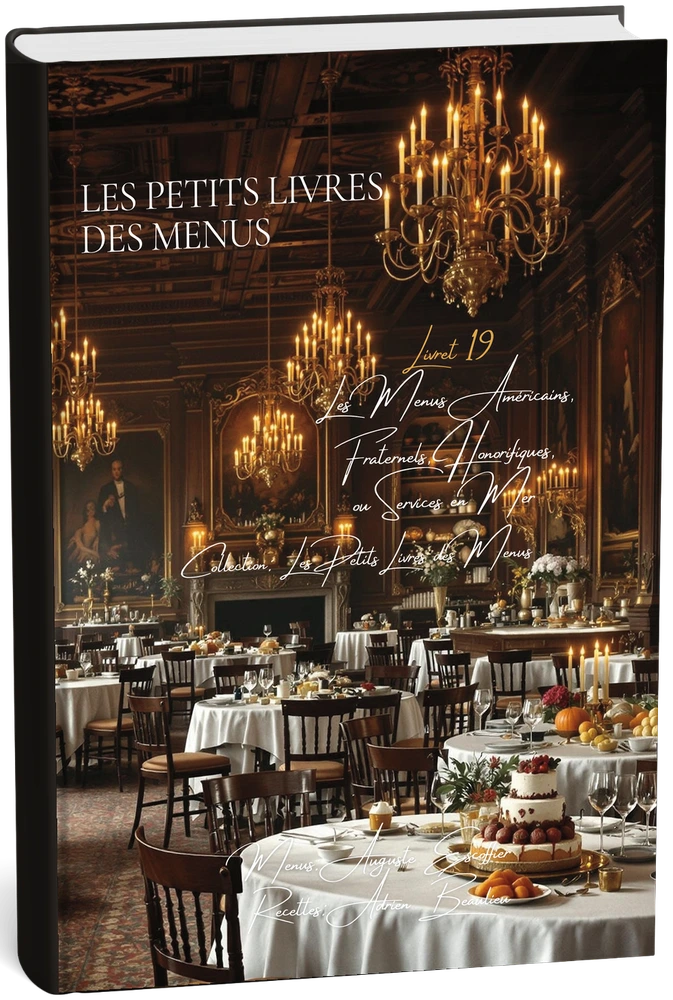
Auguste Escoffier
Collection Les 19 Petits Livres des Menus d'Escoffier · Vol. 19/19
Découvrir l’ouvrage →Auguste Escoffier was born on October 28, 1846, in Villeneuve-Loubet, in the Alpes-Maritimes, the son of a blacksmith who, according to certain chronicles, also plied the trades of tanner and tobacco cultivator. The modest house of his nativity now shelters the Escoffier Museum of Culinary Art. As a child, his fancy leaned toward the arts; it was his grandmother, a cook of renowned skill, who first awakened in him the reverence for the table. Around his twelfth or thirteenth year, his father withdrew him from school and bound him in apprenticeship to his uncle at the Restaurant Français in Nice. There, amid a strict and at times bruising discipline for which he would later profess profound gratitude, he mastered the fundamentals of the craft, the cardinal importance of service, and the judicious selection of provisions. Thereafter, he made a brief passage through the Hôtel Bellevue near Nice.
At nineteen years of age, in 1865, he entered Le Petit Moulin Rouge in Paris as a commis-rôtisseur. In this fashionable haunt of the Parisian elite, he rose to the rank of saucier. The Franco-Prussian War of 1870 brutally interrupted this ascent: mobilized into service, he was appointed chef de cuisine to the general staff of the Army of the Rhine at Metz. There, cast into adversity, he directed his mind toward the preservation of foodstuffs—notably through canning—and observed the rigorous mechanics of military command that would subsequently inspire his brigade system. Taken prisoner following the fall of Metz, he was retained to minister to the culinary needs of Marshal MacMahon, likewise in captivity, at Wiesbaden.
Following a season at the Hôtel Luxembourg in Nice in 1872–1873, he assumed the helm of the kitchens at Le Petit Moulin Rouge, governing them from 1873 to 1878. There he ministered to such luminaries as the tragedienne Sarah Bernhardt, while enforcing his earliest ordinances: an atmosphere of composure, unbroken concentration, and an absolute ban on alcohol and tobacco during service. In 1876, he established Le Faisan Doré in Cannes, an emporium of fine provisions allied with an intimate dining room. In 1878, he wed Delphine Daffis; their union produced Paul, who would pursue the dramatic arts, Daniel, an infantry lieutenant fallen on the field of honor for France during the Great War, and Germaine. Following a succession of family bereavements on his wife’s side, he sold his Cannes establishment, returned to the capital, and successively directed the kitchens of Maison Chevet and Maison Maire.
In 1884, at Monte Carlo, fate brought him together with César Ritz. Thus commenced an alliance that would prove long, devoted, and singularly fruitful. Escoffier accompanied Ritz to Lucerne for the summer season, then to London, where Ritz assumed the directorship of the Savoy in 1890. Under their joint ascendancy, the Savoy became the nexus of European aristocracy, nascent fortunes, and celebrated personages: the Prince of Wales, Sarah Bernhardt, and Dame Nellie Melba took their place at its tables. In 1898, Ritz and Escoffier departed the Savoy under dramatic and contentious circumstances recounted elsewhere; Escoffier forthwith set about organizing the grand kitchens of the Hôtel Ritz on the Place Vendôme in Paris during its inaugurating months. In 1899, the Carlton of London opened its doors; there, Escoffier commanded a brigade of sixty cooks until his final retirement in 1920. Ritz, broken by infirmity, withdrew from worldly affairs around 1902 and departed this life in 1918.
Even in retirement, Escoffier never laid down his pen. He accepted the honorary chief editorship of La Revue culinaire. He died at Monte Carlo on February 12, 1935, in his eighty-ninth year, scarcely a fortnight after the passing of his devoted wife. Conformably to his wishes, his remains were borne to the ancestral vault at Villeneuve-Loubet.
The profound achievement of Escoffier may be distilled into three deliberate movements: to simplify, to organize, to write.
To simplify. While Escoffier held Marie-Antoine Carême in immense esteem, he deemed his predecessor’s monumental architecture overly intricate and at times ostentatious. Escoffier stripped away the superfluous garnishes, cleansed the presentation, and enthroned the ingredient itself: fresh, seasonal, and of impeccable provenance. He applied an inquiring mind to canning and stood among the earliest pioneers to introduce mechanical refrigeration into professional kitchens. He rationalized the sauce system into five foundational mother sauces: béchamel, velouté, espagnole, tomate, and hollandaise. Moreover, he sought lighter preparations, grounded in natural extractions and clear essences rather than heavy bindings of flour. His governing maxim remained: “Above all, make it simple.” Simplicity, in his doctrine, signified pure clarity, never austerity: the ingredient must instantly declare itself on the plate.
To organize. If he was not the sole inventor of the brigade system, he codified it and deployed it upon an unprecedented scale. Within the great palace hotels, hundreds of covers had to be dispatched with speed, precision, and elegance at each service. The brigade answered this imperative through a rigorous hierarchy: chef de cuisine, sous-chefs, chefs de partie, commis, apprentices, and kitchen porters. Each chef de partie was master of his province: the saucier ruled over sauces, stocks, and sautés; the poissonnier over fish; the rôtisseur over roasts and grills; the entremétier over soups, vegetables, and egg dishes; the garde-manger over cold preparations; the pâtissier over desserts. Herein lay a fertile paradox: this quasi-military discipline did not extinguish creative impulse; it liberated it, relieving the chef from manual execution so that he might compose menus and invent anew.
To write. Le Guide culinaire appeared in 1903, drafted in concert with Philéas Gilbert and Émile Fetu. Therein, Escoffier rendered reverent homage to Carême, Urbain Dubois, and Émile Bernard. The volume assembled thousands of recipes and culinary garnishes, marshaled with methodical rigor. It was conceived as an indispensable aide-mémoire for the trade: setting forth exacting standards, a shared terminology, and a durable vessel for transmission. It was reissued in revised editions in 1907, 1912, and 1921, translated into the major tongues of the world, and remains an enduring touchstone in hotel academies to this day. Around this monument arose a satellite library: Le Livre des menus (1912), L'Aide-mémoire culinaire (1919), Mémoires d'un cuisinier de l'Armée du Rhin (1883), a treatise on the art of modeling wax flowers (1886, 1910), the journal Le Carnet d'Épicure (1911–1914), works of domestic economy (Le Riz, 1927; La Vie à bon marché. La morue, 1929), and Ma cuisine (1934), addressed to the homemaker. His unpublished memoirs, Souvenirs inédits, were issued posthumously in 1985.
Escoffier’s career coincided with the rise of the railways and the flowering of high international tourism. The grand hotels evolved into majestic centers of sociability, and their dining rooms became acceptable, and subsequently fashionable, for women of worldly station. The kitchens of his youth were, by all accounts, an inferno: deafening, sweltering, filthy dens where liquor flowed without restraint. Escoffier countered this barbarism with hygiene, silence, courtesy, spotless uniforms, and the pristine tall toque. For his staff, he even formulated a refreshing, non-alcoholic barley tisane to combat the scourge of intemperance.
In the dining room, he championed service à la russe: dishes were presented in succession, each served at its precise temperature, in the deliberate sequence determined by the chef, supplanting the older service à la française wherein all platters were laid upon the table at once. To him is also credited the creation of the first à la carte menu at the Carlton—though, as we note below, this attribution warrants historical nuance.
He possessed a flair for the evocative dedication. There was the Pêche Melba, created for Dame Nellie Melba at the Savoy circa 1893: poached peaches cradled upon vanilla ice cream and bathed in a pure raspberry coulis. There was the Poire Belle-Hélène, in homage to Offenbach’s opéra bouffe; the Fraises Sarah Bernhardt; the Poularde La Tosca; the Salade Réjane; the Mignonnettes de cailles Rachel; and the Poularde Adelina Patti. As for Tournedos Rossini, whose genesis remains disputed—ascribed by turns to Carême, Dugléré, or Casimir Moisson—it was Escoffier who recorded its canonical expression. These christenings seamlessly tied the table to the grand affairs of the age, to the opera, and to the stage.
Escoffier’s legacy belongs first to the profession: the brigade, strict hygiene, methodical discipline, dignified bearing, and the elevation of culinary labor to an honorable calling. He is estimated to have trained or profoundly influenced more than two thousand cooks, who carried his doctrines across the globe. He took part in founding Westminster College in London to instruct young people in the culinary and dining arts. Several institutions bear his name, such as the Auguste Escoffier School of Culinary Arts, while sodalities such as the Disciples Escoffier and Les Dames d’Escoffier unite thousands of practitioners. He was likewise the instigator of the Ligue des Gourmands and the legendary Dîners d’Épicure, where the exact same menu was served on the same evening across scores of cities worldwide.
His legacy is also social: the establishment of a mutual benefit society for cooks in 1903, a project for mutual assistance published in 1910, the daily donation of kitchen surpluses to the Little Sisters of the Poor, a relief fund for the families of mobilized chefs in 1914, and modest recipe books designed to help humble households live well on slender means.
Finally, through a compelling paradox, his classicism provided a springboard for the future. Though he codified grand classical cuisine, his insistence on lightness, fresh ingredients, and seasonal rhythms laid the groundwork, many argue, for the Nouvelle Cuisine of the 1970s. Fernand Point, that transitional giant, built upon Escoffier’s foundations to push simplification still further. The master’s memory is enshrined at the Escoffier Museum of Culinary Art, inaugurated in 1966 within his birthplace, administered by the Auguste Escoffier Foundation, and honored with the prestigious French label Maison des Illustres.
Official recognition was commensurate with these monumental achievements. He was made a Knight of the Legion of Honor on November 11, 1919, an accolade conferred in person by President Raymond Poincaré on state visit to London, and was elevated to Officer in 1928—the very first chef to achieve that rank. In 1923, he received the Cross of the Order of the Dannebrog from the King of Denmark. A famous anecdote, though dated diversely in the annals, recounts that Emperor Wilhelm II remarked to him during an imperial cruise: “I am the Emperor of Germany, but you are the Emperor of Chefs.”
To read Escoffier is to read an artisan’s musical score, concise, purposeful, and free of ornamental adjectives. Two monuments, two voices. Le Guide culinaire (1903) speaks directly to the initiate: curt phrasing, an overarching foundational formula followed by variants, proportions measured for ten covers, and cooking times frequently omitted as self-evident to the master. Ma cuisine (1934), by contrast, addresses the mistress of the house: its cadence is more expansive, recipes are measured for six guests, cooking times are charted in minutes, oven temperatures are noted, and it contains charming domestic asides beginning, “In a home kitchen…”
For the Heritage of the Masters series, we have chosen Ma cuisine as the central framework, as it already establishes the natural progression, the restrained portions, and the precise durations; onto this armature we have grafted the finest substance of Le Guide culinaire: its professional vocabulary, its elaborate garnishes, its named variants, and those decisive “Notas” that illuminate the underlying craft. Where a dish appears in both works, we follow Ma cuisine while importing the technical authority of the Guide. Where a dish appears solely in the Guide, we unfold its telegraphic shorthand to the domestic clarity of Ma cuisine, never exceeding that scope.
To approach these recipes, certain principles should be kept in view. The directions are rendered in the imperative: arrange, add, cover. The historical professional terms (mouiller, singer, dépouiller, glacer, mettre à point, étuver, déglacer) are retained and glossed once directly within the sentence. The classical titles of the dishes remain untouched—“à la Bourdaloue” or “Hussarde”—free from modern distortions. Yields have been brought to four covers; cooking times and oven heats are stated, derived from closely related preparations in Ma cuisine. Escoffier’s personal admonitions, commonly introduced by “Nota” or “we advise,” have been preserved: they are his most precious gift, for they explain the reasons behind the craft. Where an archaic ingredient has vanished from our markets—such as sago, larks, or diamondback terrapin—we address the fact openly in the chef’s note rather than silently substituting it.
Never do we make Escoffier say that which he did not say: no interpolated steps, no altered garnishes, no unauthorized ingredients. Sobriety was his signature, and it is that sobriety which we revere.
October 28, 1846 — Birth of Georges Auguste Escoffier in Villeneuve-Loubet
circa 1859 — Enters apprenticeship at his uncle’s Restaurant Français in Nice
1865 — Commis-rôtisseur at Le Petit Moulin Rouge in Paris, subsequently appointed saucier
1870 — Appointed chef de cuisine to the general staff of the Army of the Rhine in Metz; taken prisoner following the surrender of the fortress
1873–1878 — Head chef at Le Petit Moulin Rouge; bans alcohol and tobacco in the kitchens
1876 — Establishes Le Faisan Doré in Cannes
1878 — Marries Delphine Daffis
1884 — Meets César Ritz in Monte Carlo
1890 — Takes charge of the kitchens of the Savoy in London alongside Ritz
circa 1893 — Creates the Pêche Melba for Dame Nellie Melba
1898 — Dismissal from the Savoy; organizes the opening kitchens of the Hôtel Ritz in Paris
1899 — Opening of the Carlton Hotel in London, commanding a brigade of sixty cooks
1903 — Publication of Le Guide culinaire; establishes a mutual benefit society for cooks in Great Britain
1910 — Publication of Projet d'assistance mutuelle pour l'extinction du paupérisme
1919–1920 — Named Chevalier of the Legion of Honor (1919); retires from the Carlton (1920)
1928 — Elevated to Officer of the Legion of Honor; first president of the World Association of Chefs Societies
1934 — Publication of Ma cuisine
February 12, 1935 — Dies in Monte Carlo at the age of eighty-eight
• Mémoires d'un cuisinier de l'Armée du Rhin (1883), reminiscences of the campaign of 1870.
• Traité sur l'art de travailler les fleurs en cire (1886, rev. 1910), a treatise on the decorative art of wax modeling for the table.
• Le Guide culinaire (1903; revised editions in 1907, 1912, and 1921), in collaboration with Philéas Gilbert and Émile Fetu: an aide-mémoire of practical cookery and a master compendium of culinary preparations.
• Projet d'assistance mutuelle pour l'extinction du paupérisme (1910), a proposal outlining a system of mutual social welfare.
• Le Carnet d'Épicure (1911–1914), a monthly gastronomic revue.
• Le Livre des menus (1912), a technical guide to the architectural composition of menus.
• L'Aide-mémoire culinaire (1919), an abridged technical manual.
• Le Riz (1927) and La Vie à bon marché. La morue (1929), collections of economical receipts.
• Ma cuisine (1934), culinary guidance composed for the home cook.
• Souvenirs inédits (published posthumously in 1985), personal memoirs.
• Luke Barr, Ritz and Escoffier: The Hotelier, The Chef, and the Rise of the Leisure Class, 2018.
• Paul Levy, “Ritzy Business,” The New York Review of Books, July 2018.
• Stanley Turkel, “Hotel History: Cesar Ritz and Auguste Escoffier” (Nobody Asked Me, But…, No. 200).
• Musée Escoffier de l'Art Culinaire, Villeneuve-Loubet: biographical notice “Auguste Escoffier” and monograph “Le style Escoffier.”
• Disciples Escoffier, “Biographie d'Auguste Escoffier” (consulted 2025).
• Auguste Escoffier: la vie savoureuse du roi des cuisiniers (biography published in French; author uncredited).
• “Auguste Escoffier,” Encyclopaedia Britannica and Wikipedia (consulted 2025).
• “Blue-Collar Heroes, White-Collar Crooks,” TASTE (on the Savoy affair; author uncredited).
Recettes, histoires, parutions et éditions de collection — quelques lettres par an, jamais davantage.